








Why your heat won't reach upstairs in New Mexico

After this form, you can stop searching for a furnace pro.

Hand it off

Why won't heat from my furnace reach the upstairs?

You keep the thermostat where it should warm the whole house, but upstairs still feels cold while the downstairs rooms are fine. You've checked the vents, maybe even changed the filter, and the gap between floors hasn't closed. Before it turns into a bigger problem, you want to know why heat isn't making it up there and whether it's something worth having looked at now rather than waiting out the winter.

Heat rises, but your ducts have to carry it there first

Warm air naturally wants to rise, so in theory the upstairs should hold heat better than the downstairs does. When it doesn't, the furnace and the ductwork feeding those rooms aren't keeping up. A duct run that's too long, a damper that's closed or stuck, or a blower that can't push air far enough all show up the same way: the downstairs gets warm first and the upstairs lags behind or never catches up. In a two-story house this is common enough that it's rarely one mysterious cause. It usually means the system is working harder than it should to reach the far end of the house, and that imbalance tends to get worse, not better, as the weather gets colder.

  1. Warm air rises and cools before it reaches the second floor registers.

  2. Long duct runs to upstairs rooms lose heat along the way.

  3. A single return pulls air back faster from downstairs than upstairs.

  4. Closed or blocked upstairs vents starve those rooms of warm air.

A dark high-efficiency furnace on a concrete pad in a basement, connected to galvanized ductwork, white PVC vent pipes, and copper and black gas piping, with concrete walls and wood framing nearby.
The system is running a steady cycle, pushing warm air through the main trunk with no strain on the blower.
A gas furnace with a louvered upper panel stands on a concrete pad in a basement, flanked by sheet-metal ductwork, white PVC and metal pipes, and insulated columns.
The flexible conduit and aging cabinet point to a furnace working harder than it should to reach the far end of the ducts.

What the Cold Spot Costs You

  • You end up running space heaters upstairs most nights, which adds to your electric bill on top of what you pay for gas.
  • Bedrooms that stay cold make people nudge the thermostat up, so the furnace runs longer to try to fix a problem it can't fix.
  • A furnace working to push air that far can wear out its blower motor or igniter sooner than it should.
  • Kids or guests sleeping upstairs end up under extra blankets while the downstairs thermostat reads exactly where you set it.
  • Cold upstairs rooms in a dry New Mexico winter can mean dry air and static on top of the temperature gap.
  • Ignoring the gap for a full winter usually means the same complaint again next year, only the ducts or blower are a year older.

Right now the gap between floors is just an annoyance. Left alone through a New Mexico winter, it starts showing up in places you don't expect. The space heater running upstairs every night adds to your electric bill, even though you're already paying for gas to run a furnace that isn't doing its job up there. Each time someone nudges the thermostat up to chase that cold bedroom, the furnace runs longer without actually fixing the room it's meant to help. That extra runtime falls on the same blower motor and igniter that are already working harder to push air that far through the ducts. Parts wear under strain, not just age. There's comfort on the line too. Guests or kids sleeping upstairs end up piling on blankets while the thermostat downstairs reads exactly where you left it, which makes the house hard to explain to anyone visiting. Dry winter air makes it worse. A cold room holds less moisture, so static and dry skin tend to show up right along with the temperature drop. None of this fixes itself. The furnace, the ducts and the return are the same age next winter, only a year further along, and the complaint that brought you here tends to come back exactly as is, sometimes worse, unless something about the system changes.

A smiling man in a navy long-sleeve shirt sits at a wooden table in a kitchen and dining area, with a ceramic mug, a potted plant, and a sliding glass door behind him.
A smiling bearded man in a green henley shirt stands at a kitchen island with a gray mug, looking off to the side, with a dining area and shelves blurred behind him.
A smiling bearded man in a navy sweater sits at a white kitchen island with a ceramic mug, with open shelves, potted plants and a range hood behind him.
A smiling man in a dark olive long-sleeve shirt sits in a kitchen beside a counter with a dark mug, with a dining table, sideboard and hallway visible in the blurred background.

Your furnace sends air out through a trunk line, and the shortest, widest path off that trunk usually runs to the downstairs rooms. Whatever air is left over has to travel farther, through narrower branch ducts, often through attic space that isn't heated or cooled. By the time it reaches an upstairs register, it has lost pressure and lost heat. The blower only moves so much air total. It doesn't send more to make up for a long run, so the far rooms just get what's left. Dampers make this worse when they're not fully open. A damper set years ago, even by someone doing the job right at the time, can end up choking off a whole floor without anyone noticing until a cold season makes it obvious. Most two-story homes run on one thermostat and one return vent, usually downstairs, which means there's no way to tell the system to favor the upstairs when it needs it. The system has no sense that one floor is colder than the other. It just keeps pushing air the same way, down the easiest path, every time it runs.

How the Duct System Loses the Upstairs

  • A furnace sized for the whole house pushes air down the shortest, widest trunk line first, which usually feeds the downstairs.
  • Upstairs branch ducts are often narrower and run through unconditioned attic space before they reach a register.
  • The blower moves a fixed volume of air, so rooms farthest from the furnace get whatever pressure is left over.
  • Static pressure builds in a duct system the same way it would in a hose with too many branches off one line.
  • A damper partly closed at the trunk, even one installed correctly years ago, can choke off an entire upstairs zone.
  • Two-story homes built with one thermostat and one return often have no way to balance heat between floors at all.
An older beige furnace with a louvered vent panel stands on a concrete basement floor beside galvanized sheet-metal ductwork, a metal flue pipe and vertical pipes along a concrete wall.
Before you get your furnace repair
A beige high-efficiency furnace with white PVC vent pipes stands beside galvanized sheet-metal ductwork in a basement with a concrete floor, exposed wood studs, and metal piping along the wall.
After you get your furnace repair

Done looking for a furnace pro

Skip searching for a furnace pro and answer a few questions instead.

Asking costs nothing, and the choice to hire stays yours.

What a duct test can show

A contractor can hook up a duct pressure test or just feel each supply register with a hand. A register blowing weak air while the one downstairs blows strong points to a duct problem somewhere in that run, not a thermostat setting or a bad sensor. Static pressure readings at the furnace tell a technician whether the blower is working against more resistance than it should. That number, compared to what the furnace is rated for, says whether the duct layout itself is the bottleneck upstairs.


Why insulation changes the outcome

Attic insulation around the ductwork matters more than people expect. Supply ducts running through an uninsulated attic space lose heat to that space before the air ever reaches the register. Wrapping or replacing that insulation is sometimes part of the repair, not just sealing joints or adjusting dampers. In a house where the attic run is long, insulation can account for more heat loss than any leak in the duct itself, which is why a contractor checks it before deciding what to fix.

A man in a blue T-shirt sits on a light gray sofa, laughing while looking at an open laptop in the foreground, with a framed picture, lamp and potted plant behind him.
A bearded man in a blue and brown plaid flannel shirt stands indoors looking out a window at snow-covered trees, with a ceramic mug on the windowsill.

Living with it until it's fixed

You can keep shutting the downstairs vents partway to force more air upstairs, but that just makes the furnace work against itself and doesn't fix the duct run that's losing the heat. Closing a few registers each winter becomes one more thing to remember, and most people forget by February. A space heater in the coldest bedroom handles the symptom for one room at a time, but it does nothing for the hallway or the room next to it, and it's running on your electric bill while the furnace runs on gas. Checking filters and vents is worth doing, but once those are ruled out, the cause is in the ducts or the blower, and that part isn't something you can see or adjust from inside the house.

Having someone trace it

A contractor can find out in one visit whether the upstairs problem is the duct run, the return, or the blower not pushing enough air that far. That's the difference between guessing and knowing, and it means you stop testing fixes that were never going to solve it. You don't have to find that contractor yourself. Send the form once and the search, the calls, and the back and forth explaining the same cold upstairs bedroom to three different companies are no longer on your list. Someone licensed to work on New Mexico furnaces takes it from there, and the only thing left for you to do is let them in.

Winter nights average 23°F statewide

On a 23°F night, the air your furnace sends upstairs has already given up a lot of its heat by the time it clears that long duct run. Downstairs, next to the furnace, you'd never notice. Upstairs is where the gap shows up.

NOAA nClimDiv 1991-2020 county normals weighted by homes

A gray high-efficiency furnace with two PVC vent pipes stands in an unfinished basement beside sheet-metal ductwork, a framed and plastic-covered wall, and a bare concrete wall with vertical pipes.

Furnace running as it should

The cabinet is tight, the flue pipes run straight, and the gas line sits solid against the wall. Air moves out through the trunk line without the furnace straining to push it. A setup like this gets even heat to both floors when the ducts feeding upstairs are sized and sealed right.

A gray furnace cabinet in a basement, connected to galvanized sheet-metal ductwork and white PVC pipes, against a concrete wall with exposed metal piping and insulation overhead.

Furnace losing the fight

This one sits propped on a pallet, which tells you the base underneath gave out or was never right to begin with. Nothing about the hookup looks wrong on its own, but a furnace installed this way is already working from a bad starting point, and the upstairs rooms are usually the first to feel it.

What are you actually noticing upstairs right now

The bedrooms upstairs feel noticeably cooler than the living room, even with the thermostat set the same for the whole house. You put a hand up to the register and the air feels weak, maybe barely moving, where the one downstairs pushes out steady and warm. Blankets have started piling up on the beds. Someone in the house has probably started closing their door at night just to hold in what little heat makes it up there. If this has been going on for more than one winter, the furnace has been running longer each time to chase a problem that isn't about how hard it works, it's about where the heat is going before it reaches the top of the stairs.

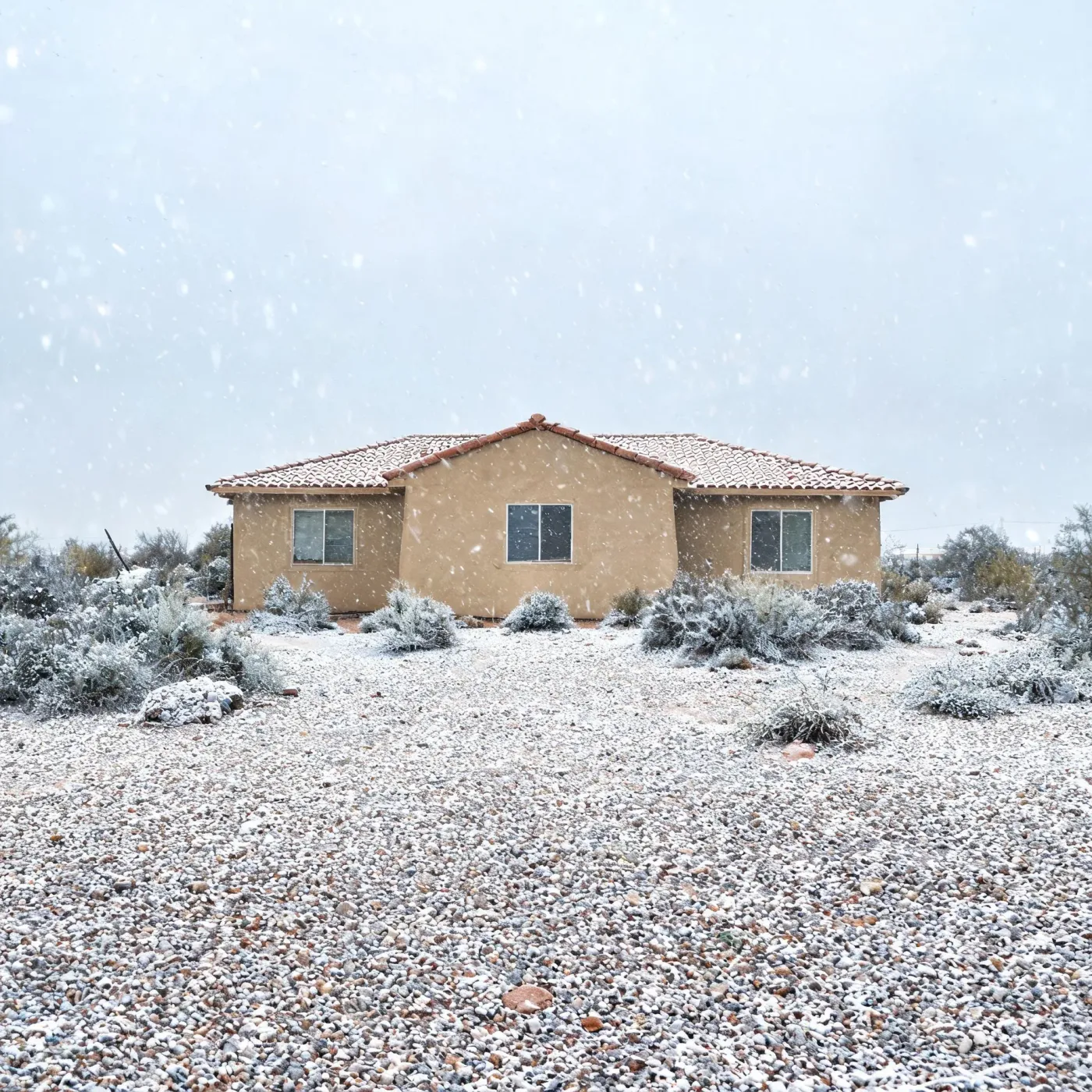
A single-story tan stucco house with a tile roof stands behind snow-dusted desert shrubs and a gravel yard during falling snow.

New Mexico winter nights average 23°F statewide, according to the National Weather Service. That's the air sitting in the attic above your upstairs ducts for hours at a stretch. Warm air leaving your furnace has to travel through that cold space before it reaches the bedrooms, and the colder the attic, the more heat it gives up along the way. Downstairs, next to the furnace, you'd never notice this. The air hasn't had far to go or anywhere cold to cross. Upstairs is where a 23°F night turns a duct problem into a cold bedroom, and it's why the gap between floors gets worse on the coldest nights instead of staying steady.

NOAA nClimDiv 1991-2020 county normals weighted by homes

The cold upstairs isn't a thermostat problem. It's warm air losing its heat on the way through a long duct run, or a blower that can't push enough of it past the downstairs rooms to reach the second floor. A contractor can find out which, and whether it's the ducts, the register sizing, or the furnace itself, and fix that instead of you guessing room by room all winter. Finding that contractor is the part you don't have to do. You won't need to search around, call a handful of companies, explain the same cold bedrooms to each one, then sit with a stack of quotes trying to tell them apart. Send the form once and that work is off your plate. You still deal with a New Mexico winter and a furnace that needs a repair, but you stop carrying the job of finding someone to trust with it.

A dimly lit unfinished basement with concrete walls and floor, exposed floor joists, a small window at left, and a dark furnace with PVC venting and sheet metal ductwork at right.

It's off your list after this

One form replaces the calls you'd make to find a furnace pro.

RepairFurnace or heatingNew Mexico
Step 1 of 2

What ZIP code is the job in?