














What to do when the heat goes out in New Mexico

RepairFurnace or heatingNew Mexico
Step 1 of 2

What ZIP code is the job in?

What do I do when my furnace stops heating in winter?

A New Mexico winter night with no heat is not something to sit on. Most homes here run on gas furnaces, and when one quits, the house cools fast and keeps cooling. Before anything else, you want to know what's safe to check yourself and what needs a contractor, especially if there's a pilot light out or the system won't respond at all.

Check the thermostat and breaker first, then call for repair if the furnace still won't start

Start with the simple things. Make sure the thermostat is set to heat and a few degrees above room temperature, and check the breaker panel for a tripped switch. If your furnace has a pilot light, see if it's lit. None of that works, the problem is likely the igniter, a flame sensor, or the blower motor, and those need a licensed contractor to diagnose. Gas furnaces shut themselves off as a safety response when something is wrong, so a furnace that won't stay lit or won't start at all is doing what it's supposed to do. Don't keep trying to relight it over and over. With gas heat common across New Mexico homes, a furnace repair call is usually the fastest way back to a warm house.

A gray residential furnace with two panel doors stands against a plain light wall in a concrete-floored room, connected to metal ductwork and white and copper pipes.

Check the igniter first

Most gas furnaces use a hot surface igniter instead of a standing pilot. It glows to light the burners each time the thermostat calls for heat, and it wears out over years of cycling on and off. If the furnace runs through its startup but never lights, or shuts off right after, a cracked or weak igniter is often the reason. It is a small part, but the furnace cannot produce heat without it.

A gray high-efficiency furnace with white PVC venting pipes stands against a plain wall in a basement, connected to sheet-metal ductwork on a concrete floor.

Why the blower still matters

A furnace that lights but never warms the house may have a blower problem rather than a burner problem. The blower pushes heated air through your ducts, and if the motor fails or the fan wheel is clogged, that heat stays in the furnace cabinet. Some furnaces will shut themselves down on a high limit switch to keep from overheating. You will hear the burners fire, then hear everything stop.

Why does the house feel colder than the thermostat says

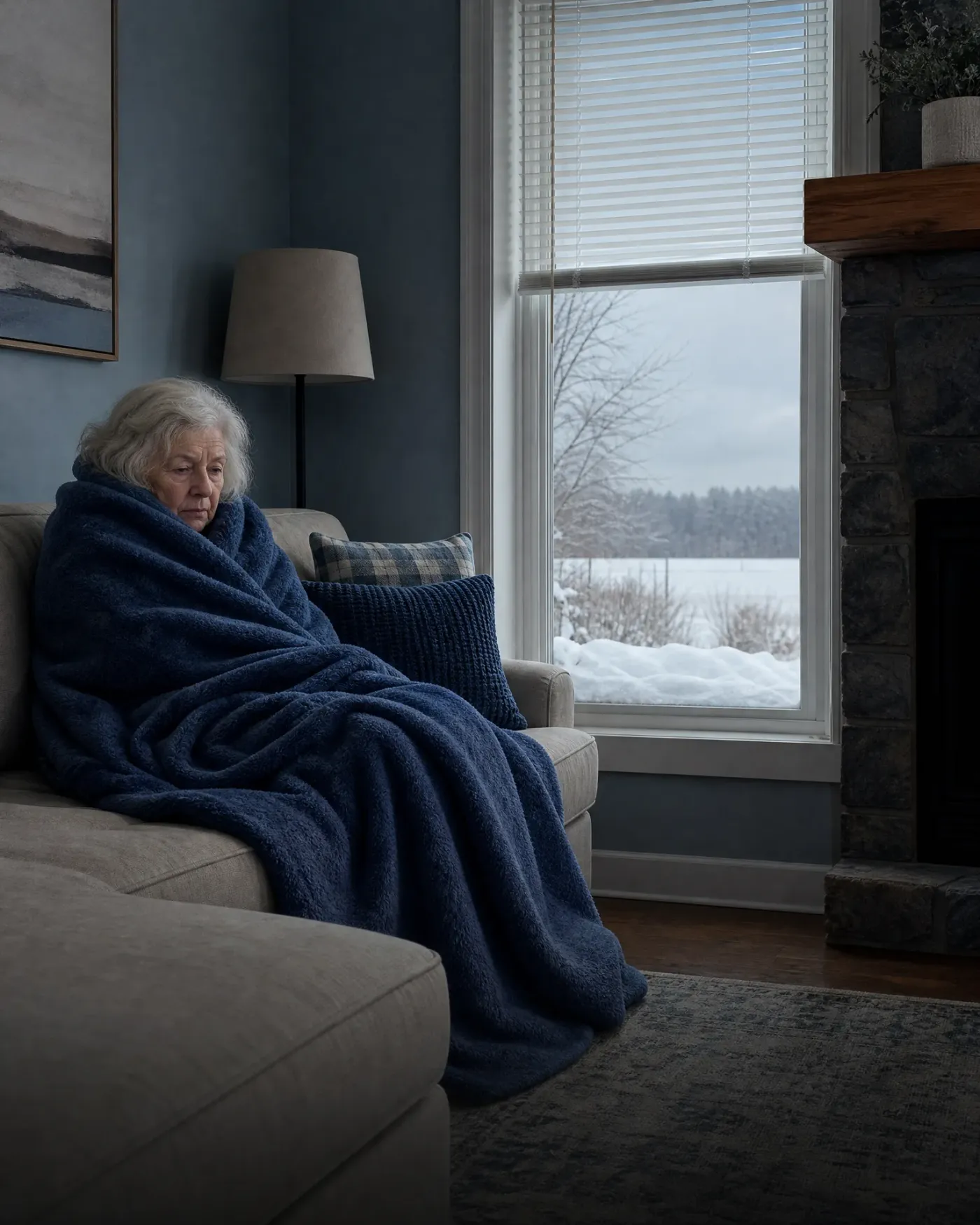
You set the thermostat to 68 and the air coming out of the vents feels cool, not warm. Maybe the furnace clicks and tries to start but shuts off again after a few seconds. Maybe it runs nonstop and the house still doesn't climb past 60. You might hear a clicking sound with no flame following it, or notice the blower running while no heat comes through the ducts at all. In a New Mexico winter, a house without working heat loses warmth quickly once the sun goes down, and that matters most for the people in it who feel the cold first, young kids, older family members, anyone who's home all day while the temperature keeps dropping.

A woman with dark hair in a bun wearing a cream knit sweater sits on a gray sofa in a bright living room, looking off to the side.
A woman wrapped in a knit blanket sits on a gray sofa in a living room, looking toward a bright window with houseplants and an armchair in the background.
A woman in a gray cowl-neck sweater sits on a light sofa with cushions, smiling and looking to the side, with a kitchen and window visible behind her.
A woman with dark hair in a bun, wearing a light linen shirt, sits on a sofa and looks to the side, with a window, houseplants and a kitchen with pendant lights blurred behind her.

Call now or wait until morning

Call for repair now

  • A furnace that won't light at all, trips its breaker repeatedly, or smells like gas needs a technician out the same day, not a wait-and-see.
  • If the house is already below 60 and dropping, especially with older adults or small kids in it, the cold itself becomes the emergency.
  • A cracked heat exchanger or a carbon monoxide alarm going off means the furnace stays off until someone licensed clears it, no exceptions.
  • Parts like igniters and flame sensors are specific to your furnace's make and model, so a same-day fix depends on a tech who carries or can source the right one.
  • If the furnace ran fine yesterday and quit outright today, that sudden failure usually points to one part giving out rather than a slow decline.

You can wait until morning

  • If the house is still holding in the 60s and the furnace is running, just weaker or shorter cycles than usual, space heaters can bridge you to a daytime appointment.
  • A thermostat with a dead battery or a wrong setting looks exactly like a furnace failure and costs nothing to rule out before calling anyone.
  • A tripped breaker you can safely reset yourself is worth trying once; if it trips again right away, stop and let a technician find out why.
  • Weekday daytime calls are easier to schedule and give a technician more time to track down a less obvious problem than an after-hours visit does.
  • If the pilot light or igniter sequence seems to be trying and failing intermittently, it may hold through the night on lower settings while staying watched.
A gray high-efficiency furnace in a basement, connected to sheet-metal ductwork on the left and white PVC vent pipes above, with black gas and drain piping and an exposed wood-stud wall with OSB sheathing on the right.
A furnace running right pushes warm air steadily through the ducts, with no burning smell and no short-cycling.
An older gas furnace with two louvered front panels stands on a concrete basement floor beside galvanized sheet-metal ductwork, pipes, and a weathered concrete wall.
Rust on the cabinet, staining on the walls around it, and a furnace that struggles to keep up both point to a unit past its best years.

A furnace has more going on than a burner and a fan. If the thermostat shows the wrong room temperature, check the battery first, or think about whether it sits somewhere drafty that throws off the reading. The furnace also needs a clear path for combustion air in and exhaust out through a sealed pipe outside, and anything blocking that pipe, even a bird nest or a buildup of ice, shuts the unit down as a safety measure. Inside the furnace, a flame sensor has to see the burner flame or it cuts the gas within seconds, so a sensor coated in a little residue can stop a furnace that lit just fine. A limit switch does something similar on the other end, killing the burners if the heat exchanger runs too hot, which often comes down to a filter so clogged it chokes off airflow. The blower and the burners run on separate controls, so it's possible for the furnace to heat the exchanger without the fan ever moving that heat into the house. And if the furnace condenses exhaust into water, a clogged or frozen drain line trips a switch that stops everything.

Why the furnace won't run right

  • A thermostat set to heat but reading the room wrong usually traces to a dead battery or a sensor fooled by a drafty hallway.
  • The furnace draws combustion air and vents exhaust through a sealed pipe, and a bird nest or ice blocking that pipe will shut the whole unit down.
  • A dirty flame sensor reads the burner flame as absent and cuts gas within seconds, even though the igniter lit it just fine.
  • Furnaces run on a limit switch that kills the burners if the air around the heat exchanger gets too hot, often from a clogged filter choking airflow.
  • The blower motor and the burners are controlled separately, so a furnace can light and heat the exchanger while the fan never pushes that warmth into the ducts.
  • A condensing furnace drains acidic water from its exhaust, and a clogged drain line or frozen trap trips a safety switch that stops the unit cold.
A gray-haired woman in a cream knit sweater stands in a dimly lit kitchen at night, looking to her right, with a round loaf of bread in the foreground and a dark window and potted plant behind her.
A woman and a sleeping child wrapped together in a cream knitted blanket on a couch, with a potted plant, framed photo and lit lamp in the background.
A gray high-efficiency furnace with two white PVC vent pipes stands against sheet-metal ductwork in an unfinished basement with concrete floor and walls and exposed wood joists.

Get the right pro for your furnace

Describe what your furnace is doing once, in one form.

A local pro who knows furnaces gets your details and gets in touch.

Connect with a pro

Asking costs nothing, and the choice to hire stays yours.

A woman in a cream sweater and jeans stands in the open doorway of a white stucco house, holding the dark door, while a man in a dark quilted jacket seen from behind walks toward the entry past potted plants.

What a dead furnace does to your house overnight

A New Mexico house loses heat fast once the furnace quits, especially on a clear winter night when the outside temperature drops hard after dark. Pipes along outside walls are the first thing to worry about. Floors go cold underfoot, and anyone in the house who gets cold easily, a baby, a grandparent, someone recovering from being sick, feels it before the thermostat even shows a real drop.

You don't have to spend the evening calling around to find out who can come look at it. Sorting through contractors, explaining the same problem on the phone four or five times, and weighing quotes against each other is its own kind of work, on top of a cold house. Submitting your information once gets you matched with a contractor who handles what you're dealing with, and they reach out to you directly from there.

A gray upholstered sofa with a matching cushion sits beside a potted plant and a wooden table holding a small green plant in a stone pot, near a curtained window.
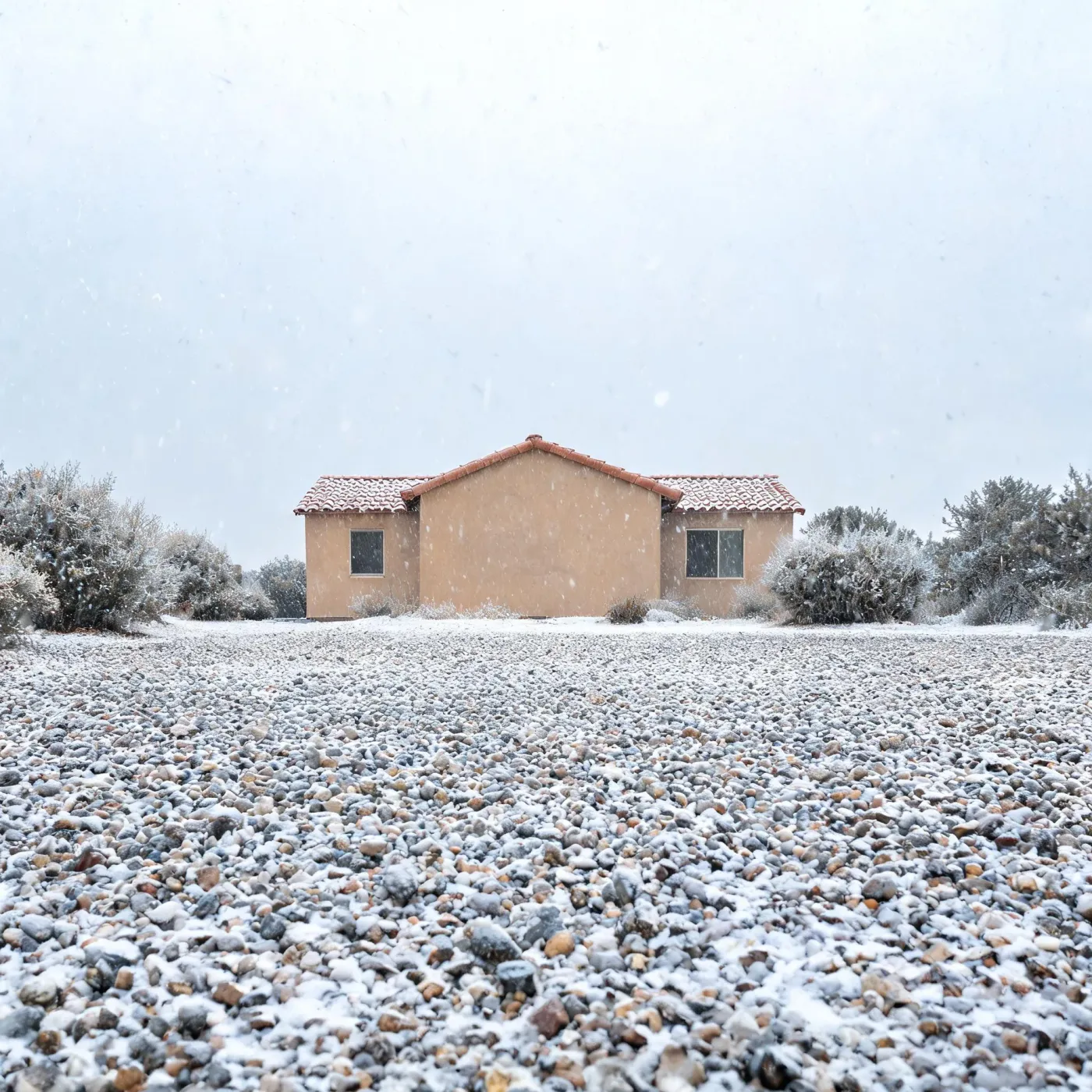
A single-story tan stucco house with a red tile roof stands behind a wide gravel yard dusted with snow, flanked by low shrubs, under a pale overcast sky with falling snowflakes.

Statewide, winter nights average 23°F, according to NOAA climate data. That's the kind of cold that doesn't let up once your furnace stops working. A house that loses its furnace at that temperature doesn't just get chilly, it loses heat steadily hour after hour, and the drop is faster near windows and outside walls. If you're keeping the place warm for kids or older adults, a furnace down on a night like that isn't something to leave until morning. The same cold that makes the furnace work hard also makes any outage show up fast, in cooling floors, cold air at the vents, and a house that won't hold 68 no matter where the thermostat is set.

NOAA nClimDiv 1991-2020 county normals weighted by homes

A gray sheet-metal furnace with flue pipe and adjacent ductwork stands against a stone basement wall on a concrete floor, with white PVC and metal pipes running nearby.
Before you get your furnace repair
A gray high-efficiency furnace with white PVC vent pipes stands against a concrete basement wall beside sheet-metal ductwork, a small condensate pump on the floor, and exposed wood framing at left.
After you get your furnace repair

Waiting it out another night

You run space heaters, pile on blankets, and hope the furnace restarts on its own in the morning. Sometimes it does, if the problem was a tripped breaker or a thermostat glitch. But if the igniter is dead or the pressure switch has failed, nothing changes by waiting, and you've spent another night with the house dropping into the 50s. Space heaters draw a lot of power if you run several at once, and they don't heat the whole house the way your furnace does. Meanwhile pipes along outside walls keep losing their buffer against the cold.


Getting a technician out

You explain what the furnace is doing once, to one person, and a licensed technician comes to look at it instead of you guessing from a list of possible causes. They can test the igniter, the pressure switch, and the venting directly and tell you which one actually failed. That skips the calling around to find someone available, the repeating your story to three different companies, and the comparing of quotes that don't mean much if they're based on a symptom instead of an inspection. Your house starts warming up on their schedule, not whenever you happen to guess right.

Winter nights average 23°F statewide

23°F is a hard floor to hit with no furnace running. At that overnight low, a house with no heat won't just feel cold by morning, it will have been losing ground for hours while everyone was asleep.

NOAA nClimDiv 1991-2020 county normals weighted by homes

Where this leaves you

  • A furnace that won't light, trips its breaker, or smells like gas needs a technician the same day you notice it.
  • Hot surface igniters, flame sensors, and blocked vent pipes account for most no-heat calls in New Mexico homes.
  • A house with no furnace running will keep losing heat through a 23°F night, not level off on its own.
  • Checking the igniter and thermostat yourself can rule out the simple causes before you decide the furnace needs a repair visit.
  • Finding a contractor, calling around for availability, and explaining the same problem twice takes time you don't have on a cold night.
  • Matching with a contractor who already knows the situation means you explain it once and skip the comparison shopping.

A furnace that stops heating on a New Mexico winter night isn't a problem that waits well. The house keeps losing ground, and statewide lows near 23°F mean morning can bring a cold house, frozen pipes, or both. Most of the time the cause is something specific: a worn igniter, a flame sensor that's lost its signal, a vent pipe blocked by ice or a nest. A dead thermostat battery or a tripped breaker can look the same from the couch but take five minutes to rule out. What you can check yourself, check. What's left after that is a repair call, and that's where the real cost shows up, not in the furnace part but in the hours around it. Finding a contractor who answers on a cold night, calling two or three more when the first one can't come out, describing the same no-heat problem each time you dial a new number, then weighing quotes against each other while the house keeps cooling. None of that warms anyone up. Getting matched with a contractor means you walk through what's happening once, to someone who already has the details, instead of narrating it over and over to find out who's even available. The furnace still needs fixing, and that part takes what it takes. But the search for who's going to fix it doesn't have to eat into a night when the temperature outside is doing the opposite of what your house needs.

Sunlight falls across a beige upholstered sofa with a textured woven cushion and a chunky knit throw, beside a dark wood cabinet holding a ceramic vase with green leafy branches, near a white-framed window.
A sunlit corner of a room with a wooden side table holding a ceramic vase of green foliage and a wooden bowl, beside a light upholstered sofa with a knit throw and rust-colored pillow, with window shadows cast on a beige wall.
A sunlit room corner with beige walls, a white-framed window with sheer cream curtain, wood floor with a light rug, and a woven basket holding a knit blanket.
A beige ceramic vase holding a leafy green branch sits on a wooden cabinet in a corner, with sunlight through a sheer curtain casting leaf shadows on the wall.
A grey upholstered sofa with a rust-orange velvet cushion and a textured throw sits beside a window with linen curtains, next to a wooden side table holding a pale ceramic vase of olive branches.

A pro who works on furnaces

Describe your furnace job once, to one pro.

Find a pro near me

No fee to send it, and nothing to sign.


