






New Mexico HVAC Pros
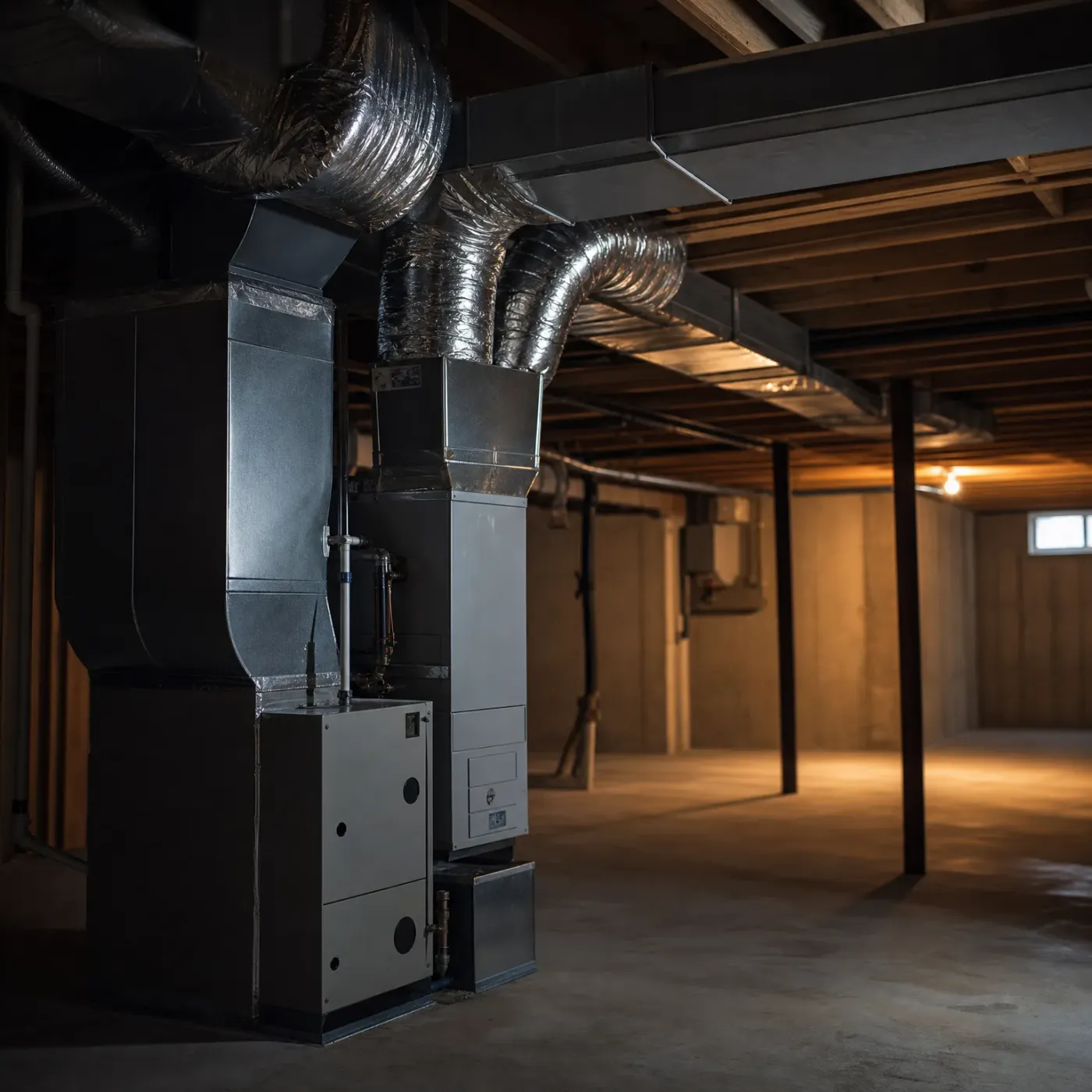
Unfinished basement with concrete floor and walls, exposed wood joists, steel support columns, and two furnace-type units connected to sheet-metal and flexible insulated ducts.

Get your ductwork to the right pro

Signs of mold in your air ducts in New Mexico

Mold in a duct system is easy to suspect and hard to confirm yourself, especially in a dry climate like New Mexico where you'd expect it not to happen at all. This page walks through the signs worth checking, a musty smell when the air kicks on, dark spots near vents, and what actually causes it even with low humidity outside. If it looks like your system needs a closer look, you can get matched with a local contractor who handles duct cleaning and will reach out about what you're seeing.

Get a local pro

A musty smell when the furnace or the air handler kicks on is the clearest sign, especially if it fades after the system has run a while and comes back once it cycles off and on again. Dark spots around vent covers or along the seams of visible ductwork are another, along with a dustiness in the air that comes back fast after cleaning. Mold needs moisture, and in New Mexico that usually means a condensate line that isn't draining right, or ductwork that runs through a crawlspace or attic where humidity collects even in a dry climate. A leaky duct joint can pull in damp air from one of those spaces every time the blower runs. If you're seeing these signs, it means there's a moisture source feeding the system somewhere, and it won't go away on its own. Dust and debris in the ducts can also hide mold growth and make the smell worse, which is why a visual check alone sometimes isn't enough to know for sure.

A woman wrapped in a cream textured blanket sits in an armchair beside a lit lamp and a dark window, with an open book in the foreground.
A bearded man in a plaid flannel shirt stands indoors looking out a frost-covered window, with a steaming dark blue mug on the wooden sill and snow-covered trees outside.

Mold needs moisture, and in a duct system that moisture almost always traces back to one place: where humid air meets something cold. The evaporator coil in the air handler is the usual spot. Dust along the duct wall holds enough moisture to let mold take hold too, even if nothing is actually leaking nearby. A condensate drain that runs slow does the same thing from another angle. It keeps the air handler damp long after the system shuts off, and that standing moisture is what mold needs to grow. If your home has any flexible duct runs, check those first. A torn or sagging liner inside flex duct holds moisture in a way rigid metal duct doesn't, so the same leak shows up as mold sooner there. None of this means the whole system is affected. Mold around one vent, or a smell that's stronger at one register than the others, usually points to a single bad run rather than a problem spread through every duct in the house.

Where mold actually starts

  • Mold needs moisture, so growth in a duct usually tracks back to a spot where humid air meets a cold surface, often right at the evaporator coil in the air handler.
  • Dust itself holds enough moisture in a humid spell to let mold take hold on the inside wall of a duct, even without a leak anywhere nearby.
  • A condensate drain that runs slow or backs up can keep the air handler damp long after the system shuts off, which gives mold the standing moisture it needs.
  • Flexible ductwork with a torn or sagging inner liner traps moisture differently than rigid metal duct, so the same leak shows up as mold sooner in flex duct.
  • Mold around a single vent usually points to a local problem like a leak or poor seal at that run, not mold throughout the whole system.
  • A musty smell that is strongest at one register and fainter at others tells you which branch of the duct system to check first.
A gray-haired, bearded man in a dark coat dusted with snow stands smiling in a dimly lit room with a lamp, mirror, framed art, and a sofa in the background.
An older man with white hair and a beard, wearing a dark snow-dusted coat and scarf, stands in a warmly lit interior hallway with a framed landscape picture, a table lamp and a potted plant behind him, and a snowy view through a window at left.
An older man in a dark snow-flecked overcoat and scarf stands smiling in a warmly lit home entryway, with a glass-paned door showing darkness outside and a lamp-lit room visible through a doorway behind him.
An older man with gray hair and a beard, wearing a dark snow-dusted jacket and scarf, stands smiling in a warmly lit interior hallway with a lit table lamp, a vase of dried branches, and a framed picture in the background.
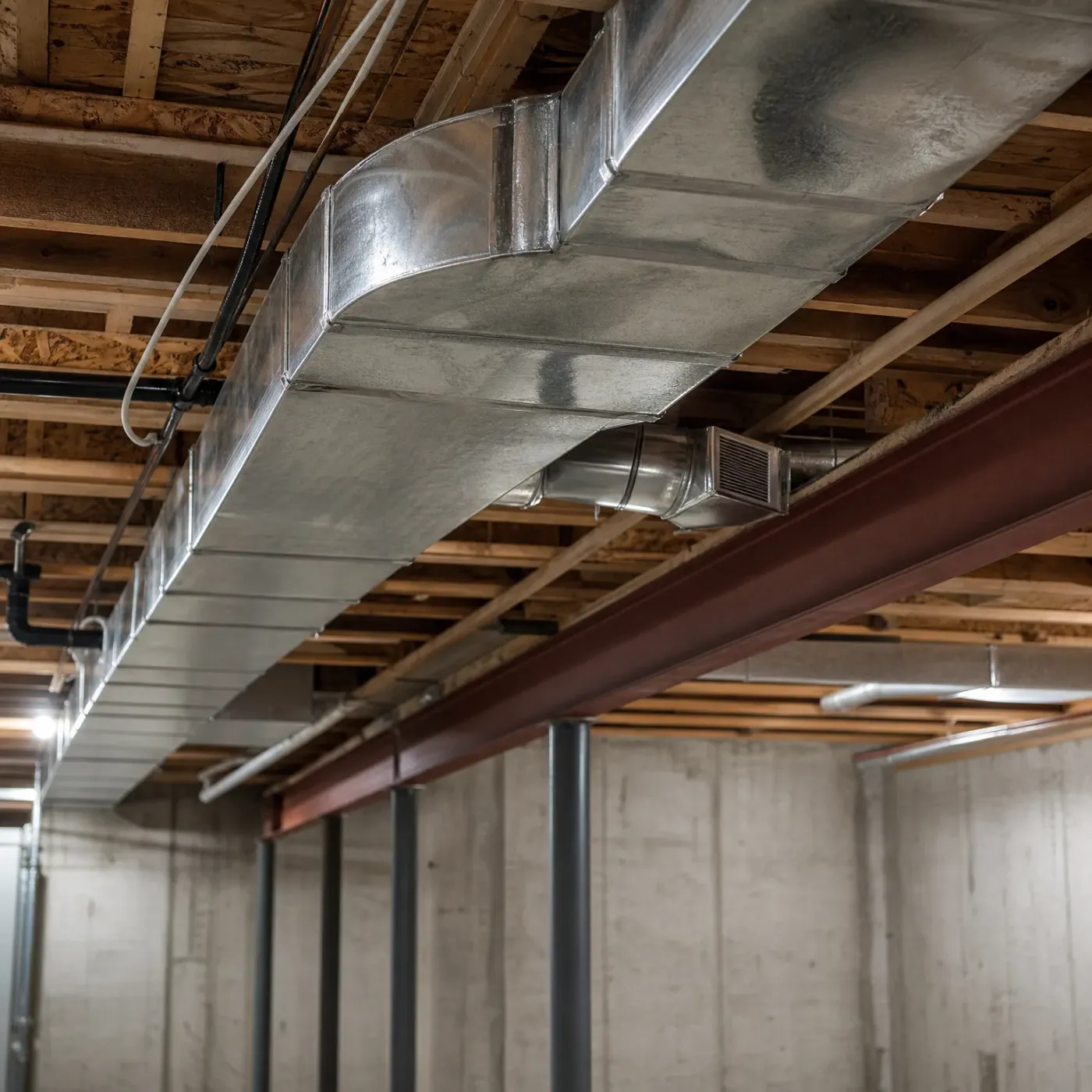
Galvanized sheet metal trunk ductwork with a round branch and register running beneath wood floor joists in an unfinished basement, alongside pipes, wiring, a steel beam and concrete walls.

The right pro for this job

Your duct cleaning request goes to one local pro.

A local pro who cleans ducts gets in touch with you.

Match me with a pro

Asking costs nothing, and the choice to hire stays yours.

Is that musty smell coming from your vents

Walk past a vent and catch a smell like a closed-up room, then lose it a minute later. That's usually the first thing people notice. Some rooms might feel stuffier than others even with the system running, or you'll see a faint gray or black ring on the vent cover that wipes off but comes back. If anyone in the house has been coughing more, or an allergy that usually settles down this time of year hasn't, that's worth paying attention to alongside the smell. None of this means the whole system is contaminated. But mold left alone doesn't go away on its own, and the longer it sits in the ductwork, the more of the house it touches every time the air runs.

Unfinished basement with bare concrete floor and walls, exposed wood joists, metal ductwork, a furnace unit, steel support posts, and a small window.

Ducts running clean

This is what a duct system looks like when nothing's wrong. Metal joints are dry, the insulation around the furnace and water heater lines is intact, and there's no staining on the duct surfaces. Air moves through without picking up any smell on the way to the register.


Empty basement with bare concrete walls and floor beneath an exposed wood-joist ceiling carrying galvanized sheet-metal ductwork, round ducts and pipes.

Trouble at the seams

Here the duct run shows the kind of spot worth checking first, where the metal meets a joist or turns a corner. Moisture collects at seams like these before anywhere else, and a stain or a soft patch on the insulation around it is the sign you'd be looking for.

Basement ceiling with galvanized sheet-metal ductwork, wooden joists and subfloor, black and white pipes, above a concrete wall and floor.
Before you get your ductwork cleaning
Unfinished basement with bare concrete walls and floor, exposed wood joists, and galvanized sheet-metal HVAC ductwork and pipes running across the ceiling.
After you get your ductwork cleaning

Power costs 14.85 cents per kilowatt-hour statewide

Running the blower longer to chase down a musty smell adds up at 14.85 cents a kilowatt-hour. A duct system holding onto mold makes the furnace or air handler work harder and longer to get a room to feel right, and you pay for that extra runtime every month.

EIA-861 2025 statewide residential average

Empty unfinished basement with bare concrete floor, insulated walls with vapor barrier between wood studs, exposed wood joists, galvanized sheet-metal ductwork, a recessed light, and a steel support column.

Ducts that stay dry

Galvanized metal and flex runs like these hold up fine in an unfinished basement when nothing's feeding them moisture. The joists are dry, the fiberglass batts along the walls are doing their job, and air moves through the system without picking up anything along the way.

Empty basement room with bare concrete walls and floor, exposed wooden floor joists overhead, large galvanized sheet-metal ducts with a vent grille, colored pipes, and a single lit bulb.

Ducts with a moisture problem

Bare concrete walls and a concrete floor hold dampness longer than a finished basement would, and that dampness works its way to the sheet-metal ducts overhead. Condensation on the PEX lines nearby is a clue the air down here carries more moisture than the ductwork should be sitting in.

A woman stands in the open doorway of a white stucco house holding the dark door, facing a man in a black cap and shirt seen from behind in the blurred foreground, with a potted flowering plant beside the entry.

What to do once you've spotted the signs

A musty smell at the vents, staining around the registers, or dust that feels damp when you touch it are enough to act on. You don't need to see the mold itself to justify having the ducts looked at. New Mexico's dry air means mold in a duct system almost always points to one spot, usually the coil or a section near it, rather than a problem spread through the whole house.

From here the next step is getting someone who works on duct systems in your area to look at what you've found. A local contractor who handles this kind of cleaning regularly has seen what tends to cause it in homes around here and can tell you quickly whether what you're smelling is the coil, a damp spot in the ductwork, or something else. You'll be matched with one contractor suited to your situation, not a handful competing for the job, and that contractor will reach out directly.

Interior corner of a dining room with a round wooden table, a ceramic vase holding olive branches, a dark spindle-back chair near a curtained window, and a sideboard with a lamp against beige walls.
Dimly lit interior showing galvanized sheet-metal HVAC ductwork running below a wooden joist ceiling above a dark gray wall.

Matched to your ductwork job

Your request stays with one local pro.

Duct and vent cleaningDucts or ventsNew Mexico
Step 1 of 2

What ZIP code is the job in?





