Mold in air ducts in Albuquerque, NM

A galvanized steel round duct with a 90-degree elbow and a white louvered vent cover on one end, shown against a plain gray background.
Hand it over

Can mold really grow inside air ducts in a dry place like Albuquerque?

It seems like mold should need damp air to grow, and Albuquerque air is about as dry as it gets. But a dark duct with a little moisture in it doesn't work like an open room. If you've seen dark spots near a vent or smelled something musty when the furnace or AC kicks on, you're right to wonder how that happens here.

Yes, mold grows wherever there's moisture, even in a dry climate

Mold doesn't need the whole house to be humid. It needs a damp spot and something to feed on, and a duct can have both even when the air outside is bone dry. Condensation forms where the AC's coil sits, near a leaky duct joint, or around a bathroom or kitchen vent, and dust inside the duct gives mold something to grow on once that spot stays wet. A duct run near a water heater or a leaky connection can hold enough moisture for mold to take hold, even during a dry Albuquerque summer. The dryness outside doesn't reach the inside of a sealed metal duct. What matters is the one damp spot, not the humidity of the whole house.

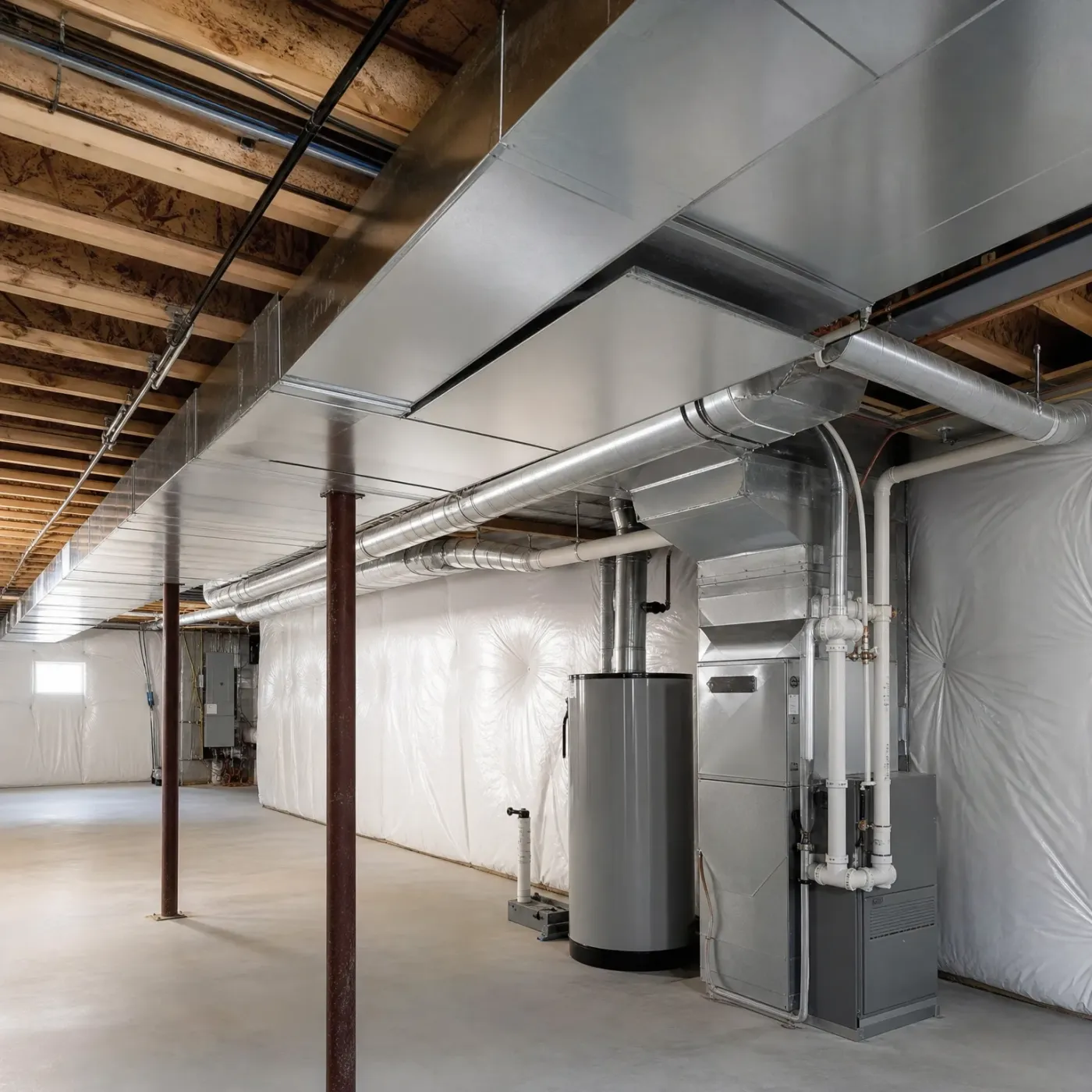
Unfinished basement with concrete floor and walls, exposed wood joists, galvanized sheet-metal ductwork, a furnace unit, a steel support column, and a small window.
Clean, dry ductwork like this moves air with no musty smell and no dark spots around the vents.
Empty unfinished basement with bare concrete walls and floor, showing exposed wooden joists, galvanized sheet-metal ductwork, pipes, and a white vent grille overhead.
Rust on the metal and gaps in the seams let in the moisture mold needs to take hold.

Why would mold be in my ducts if I've never had a leak?

  • Half the homes here were built by 1982

    Half the homes in the county were built in 1982 or earlier, and ductwork that old has had decades of seams and joints to work loose and let moisture in.

  • Heat runs October through April

    Your AC runs June through August here. Every one of those months, the coil puts out condensation, and the duct right past it stays damp long after the unit shuts off.

  • Cooling runs June through August

    Heat runs October through April, seven months straight. That's seven months of a closed-up, dark duct system with almost no airflow in the shoulder weeks between.

ACS 2020-2024 · NOAA nClimDiv 1991-2020

A dimly lit living room corner with a gray wall, framed picture, a table lamp on a wooden side table, a beige sofa with pillows, a ceiling vent, and windows showing flowering trees outside.

Spring afternoon, and the sun through the living room window has gone warm and low enough to catch the ceiling vent at an angle. You see it then: a soft gray ring of dust around the grille, and more of it settled on the bookshelf underneath, the kind you dusted off a week ago and is already back. You pull a chair over and run a finger along the slats. The dust comes away damp-feeling, almost sticky, not the dry kind that blows off the mesa. Somewhere under that is a smell you've been ignoring, faint, a little sour, gone as soon as you stop noticing it. The vent above the couch does the same thing. The one in the hallway doesn't.


Clean It Out or Stop the Cause

Clean the ducts

  • A contractor runs a brush and a vacuum through the full run, so the gray ring around the grille and the dust on the shelf underneath stop coming back as fast.
  • It clears what's already growing in there now, but it doesn't close the gaps in the seams that let moisture in during those June through August months.
  • If the ductwork is from 1982 or earlier, the joints that let moisture in the first time are still loose after the cleaning.
  • Cost and effort are limited to the one visit, with no work on the metal itself, the insulation, or the seams.
  • You'll notice the musty smell lift and the airflow at the vents feel the same as before, with nothing to repair or replace.

Seal and repair the ducts

  • A contractor resets the seams and joints so condensation from the AC running June through August has nowhere to collect.
  • This addresses the reason mold found a way in, not just the mold that's already there.
  • It's more work than a cleaning, since it means getting into the ductwork itself rather than just clearing what's inside it.
  • On ducts old enough to have working-loose joints, from 1982 or earlier, this is what keeps new mold from showing up again next spring.
  • A duct run with tight seams stays dry even through a hot Albuquerque summer, so there's nothing for mold to take hold of.
Empty unfinished basement with bare concrete floor and wall, wood-framed stud walls, exposed joists, galvanized HVAC ducts and pipes overhead, a steel beam and red support column, and a single bare bulb light.

Ductwork moving clean air

This is what a duct run looks like when it's doing its job. The metal is dry, the seams are tight, and no rust has started eating at the joints. Air moves through without picking up anything it shouldn't, so what comes out the vents is just air.

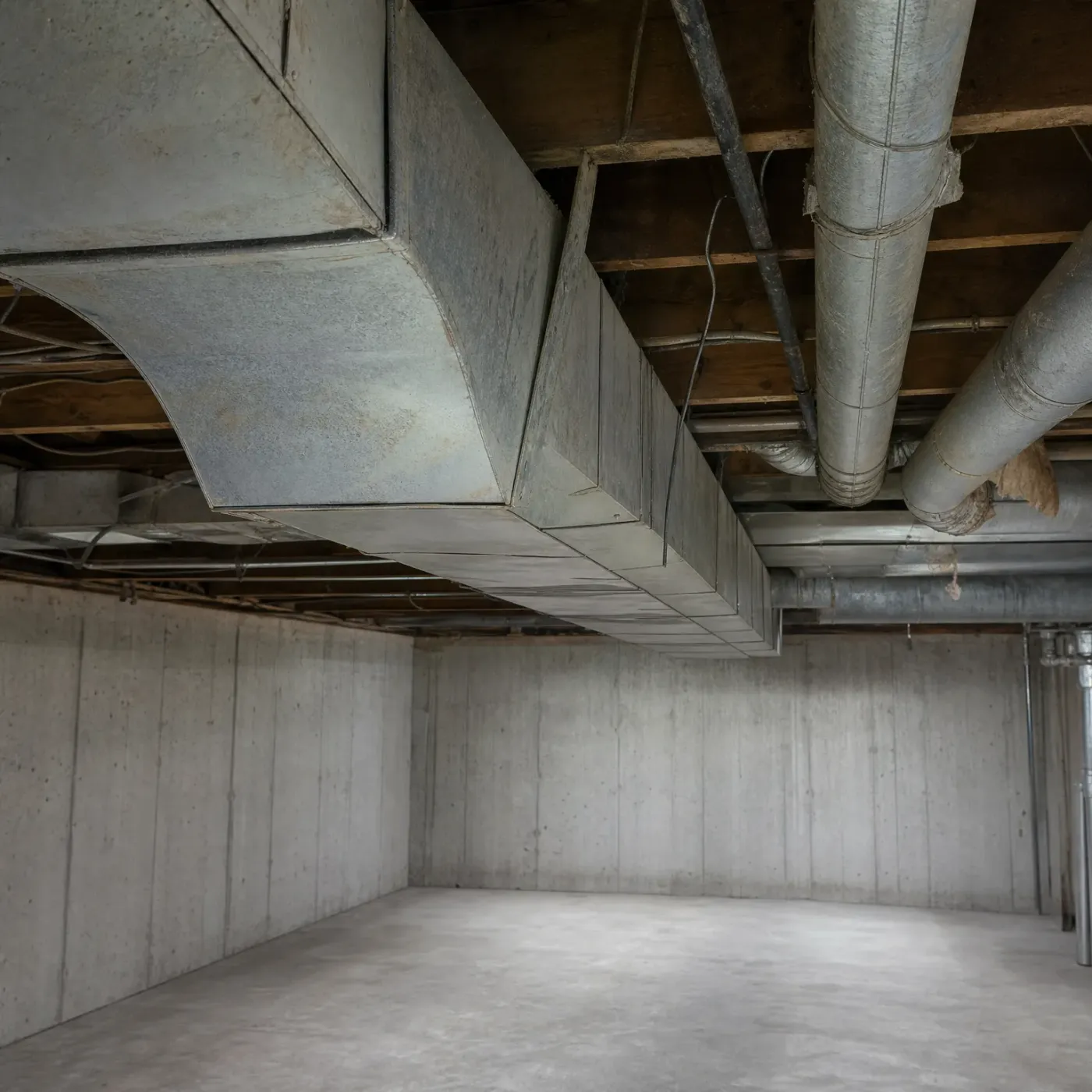
Empty concrete-walled basement with bare floor, showing large galvanized sheet-metal HVAC ducts, insulated pipes, wiring and wooden floor joists overhead.

Ductwork holding moisture

Same kind of basement, same metal ducts, but look closer at the joists and the seams along the ductwork. A gap that's let in even a little humidity over the years gives mold somewhere dark and still to settle in, and from there it rides the airflow into every room on that line.

A smiling man in a green sweater stands at a kitchen counter with a dark mug, with an open-plan dining area and large windows behind him.
A smiling man in a dark green sweatshirt sits at a kitchen island with a gray mug, with cabinets, plants, and a dining area near large windows behind him.
A smiling bearded man in a green sweater sits at a white marble kitchen island with a mug, potted plant and bowl of fruit, in a bright white interior with open shelving and an arched doorway.
A smiling man in a gray long-sleeved shirt stands in a kitchen looking to the side, with open shelves of dishes, a white mug on the counter, a potted plant, and a view through a doorway into a living room.
Unfinished basement with concrete floor, plastic-sheeted insulated walls, exposed wood joists, metal support posts, sheet-metal supply ducts, a cylindrical water heater and a furnace with PVC piping.

One request and it's handed off

Skip searching for someone who cleans ducts in Bernalillo County.

One request and the search for a pro is handled.

Answer a few questions

It costs nothing to send, and you don't have to hire anyone.

Why does my house smell musty when the AC kicks on?

You notice it most in the first few minutes after the AC starts, a damp, closed-in smell that fades once the air's been moving a while. Dust comes off the vents faster than you can wipe it down, and it settles in a ring on the ceiling or the shelf below. Someone in the house might be sneezing more than usual, or waking up stuffy for no clear reason. None of this means the whole system is failing. But mold in the ducts keeps feeding on whatever moisture is in there, and the air carrying it through the house is the same air your household breathes every day. Left alone, it doesn't stay the same size.

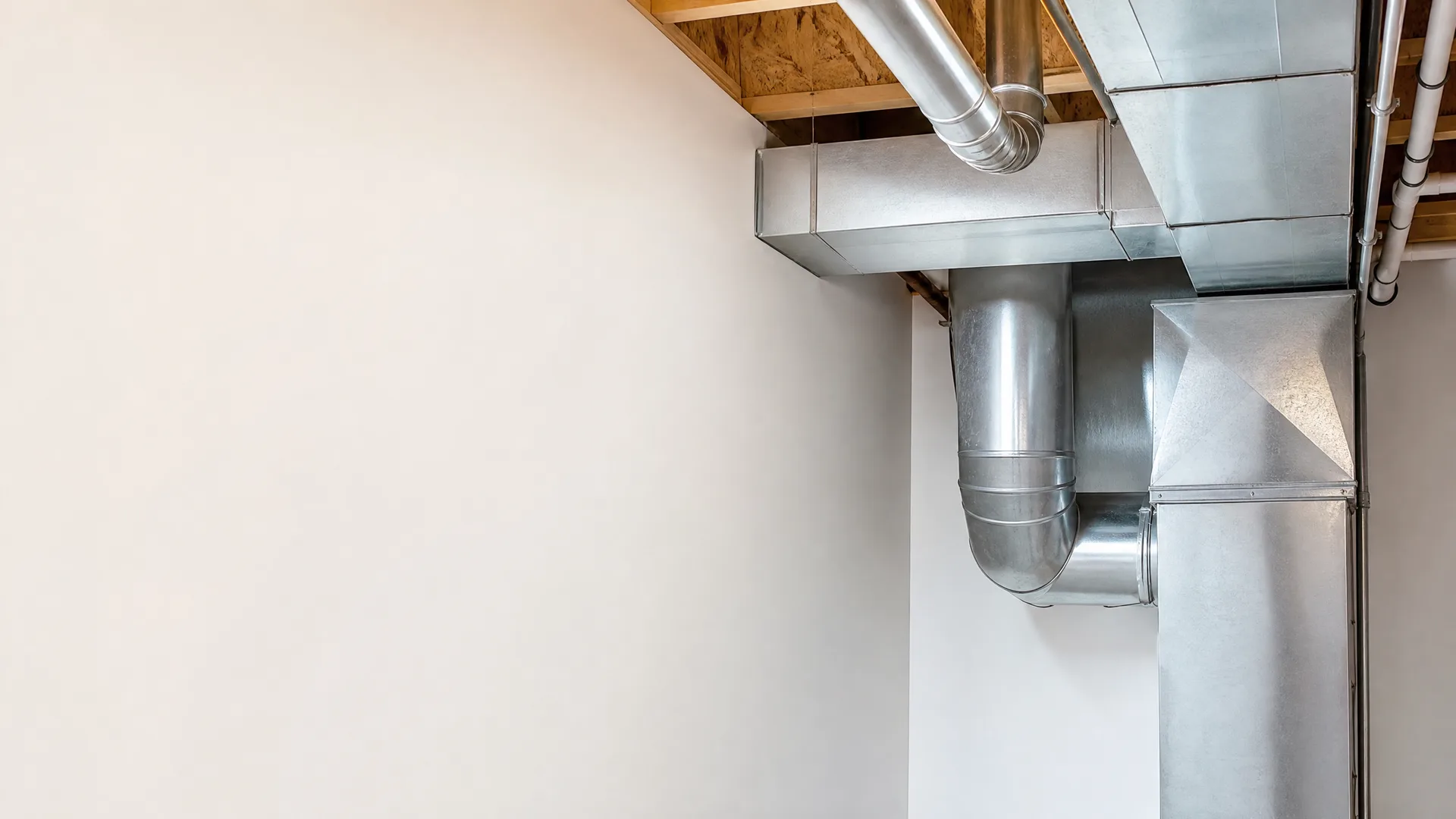
Galvanized sheet-metal ductwork and pipes running along an unfinished basement ceiling beside a plain beige wall, with a gray equipment cabinet below.

Why the evaporator coil stays wet

The evaporator coil sits in the air handler and runs cold condensation drips off it every time the AC cycles, same as a glass of ice water sweats on the counter. That water is supposed to run down the drain pan and out the condensate line. Some of it ends up as moisture in the air moving past the coil and into the first few feet of duct, which is exactly where mold tends to start, not out at the vents.

Galvanized sheet metal rectangular and round HVAC ducts running along a ceiling and down a white interior wall, with exposed wood joists and subfloor above.

What a dirty filter adds to it

A clogged filter slows the air moving across the coil, and a coil that can't shed its moisture fast enough stays wet longer between cycles. That extra time wet is what lets mold take hold near the air handler instead of drying out before the next cycle starts. Swapping the filter on schedule keeps air moving at the rate the system was built for, which is a smaller fix than cleaning but works alongside it.

Power here costs 16.39 cents per kilowatt-hour

At that rate, running the blower longer than you need to isn't free. Moldy ducts make your AC push air through grimy, sometimes blocked passages, so the system works harder to cool the same rooms. A contractor can clean that path so your blower isn't straining against it.

EIA-861 2025

Running the AC less to be safe

Cutting back on the AC through June, July and August feels like it should help, since less cold air means less condensation on the coil. In practice it just means the house sits warmer and more humid for longer stretches, and the duct system still cycles the same damp air every time it does run. The coil still sweats when the compressor kicks on. Mold already working at a seam or a joint doesn't need the AC running constantly, just enough moisture passing by on a regular basis. Dialing back the thermostat doesn't dry out the ducts or close the gaps letting moisture in. It mostly just means fewer hours of the system doing its job, and more hours of a closed-up house holding onto whatever moisture is already inside it.

Having the ducts cleaned instead

A contractor clearing out the ductwork deals with the moisture problem at the source instead of working around it. The brush and vacuum reach the mold that's already taken hold in the duct run, not just the air passing through it once. You can keep running the AC on the schedule that actually keeps the house comfortable in July and August without worrying that every cycle is pushing more spores through the vents. It doesn't reseal a loose joint or stop rust from spreading on its own, so a duct system with real gaps in it can still take on moisture again later. But it clears what's in there now, which cutting back on the thermostat never touches.

A bearded man in a navy t-shirt sits on a beige sofa, laughing while looking toward a laptop screen visible in the lower foreground, with a houseplant, shelves, and a framed picture behind him.
A man with graying hair and a beard in a plaid flannel shirt stands indoors looking out a frosted window at snow-covered trees, with a ceramic mug on the sill.

What this comes down to

  • A gray ring around the vent and a musty smell when the AC starts are signs the ducts are holding moisture, not just dust.
  • Albuquerque's dry air doesn't stop mold once condensation from the coil or a loose seam gives it a damp, dark place to sit.
  • Ductwork from 1982 or earlier has had more time for seams and joints to work loose and let moisture in.
  • Cleaning clears what's growing in the ducts now, but a contractor needs to seal the gaps too or it comes back.
  • Running the AC less through the summer to avoid this only leaves the house warmer without stopping the moisture that feeds mold.
  • Skipping the search for a contractor, the calls, and comparing quotes means getting to the fix without doing that work yourself.

Dry air doesn't protect your ducts the way it protects the rest of your house. The coil sweats every time the AC runs, and a loose seam or joint gives that moisture somewhere to sit in the dark. That's enough for mold, no matter how low the humidity is outside. The gray ring around your vent and the musty smell when the system kicks on are the signs of it, and if your ductwork dates back to 1982 or earlier, it's had more years for the seams to loosen and let moisture in. Cleaning handles what's already growing in there, but it's only half the fix. Unless the gaps get sealed too, the same damp conditions come right back and so does the mold. Running the AC less through the summer doesn't solve any of this either. It just leaves the house warmer while the coil still sweats and the ducts stay just as damp. The actual fix takes both steps done together, by someone who can find the gaps and close them, not just clear what's already there. What you don't have to do is any of the legwork that normally comes before that: looking up contractors, calling around to see who answers, explaining the gray ring and the smell over and over, then sitting with a stack of quotes trying to tell them apart. Send the details once and that part is off your plate.

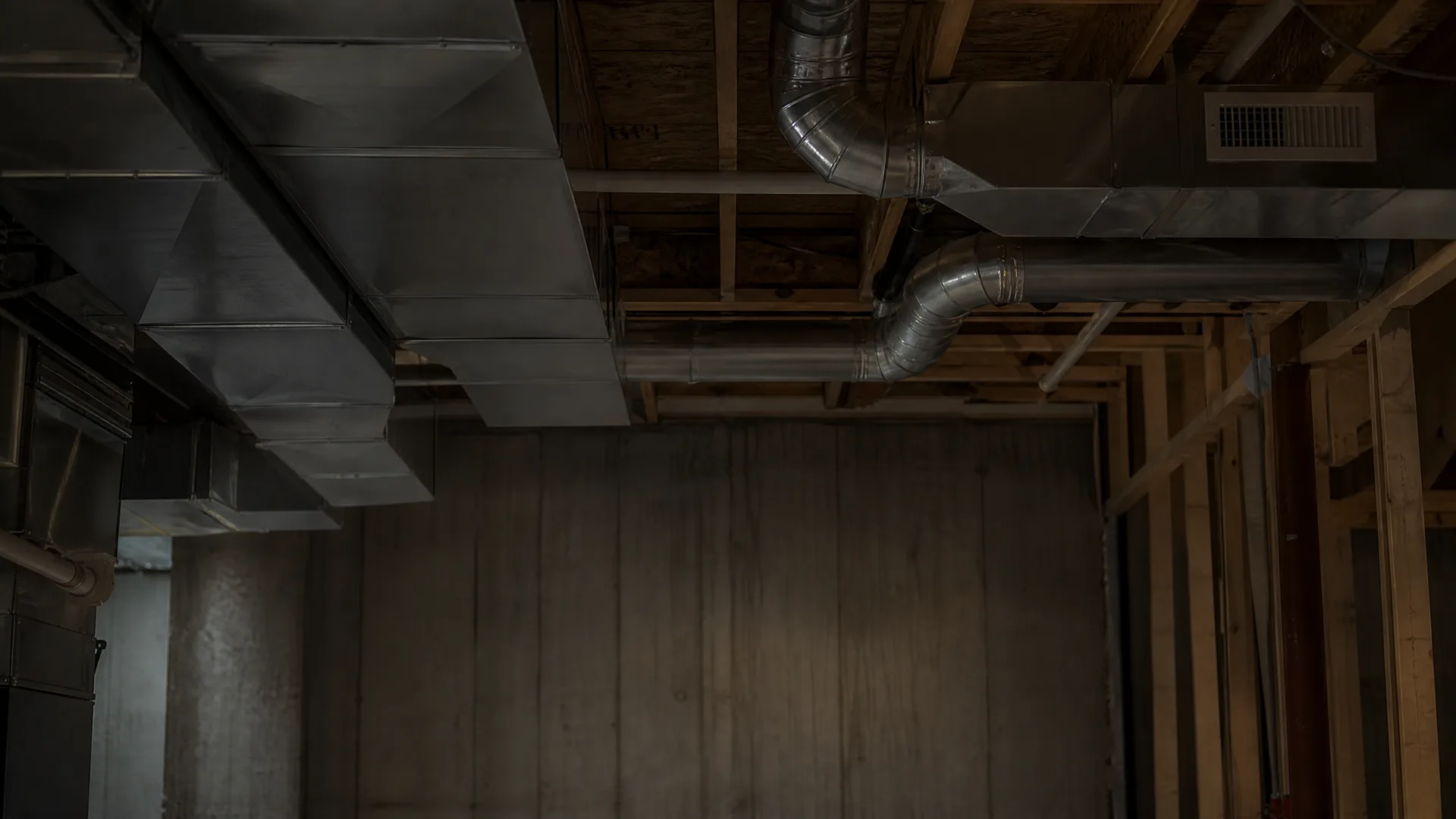
Dimly lit unfinished interior ceiling with galvanized rectangular and round sheet-metal ducts, a wall vent grille, exposed wood framing and joists.

Done looking for a duct system pro

Fill out one short form instead of calling around.

Duct and vent cleaningDucts or ventsBernalillo County, NM
Step 1 of 2

What ZIP code is the job in?