Skip searching for someone who cleans ducts in Sandoval County.
A duct system loses air gradually, and most homes in Rio Rancho never get it checked until the bills or the comfort problems make it obvious. If one room runs hot in summer and cold in winter, if the attic or crawlspace feels warmer than it should, or if your gas furnace or AC seems to run longer than it used to, the ducts carrying that air are worth a look.
Leaky ducts don't just waste conditioned air. In a house that relies on a gas furnace all winter and an AC through the hot, dry summer here, air lost through gaps in the ductwork before it reaches a room is air you paid to heat or cool for nothing. With power costs what they are in Sandoval County, that loss shows up on the bill whether you notice it in the house or not.
Finding out what's actually wrong with a duct system takes someone who can get into the attic or crawlspace, run a pressure test, and tell a disconnected joint from a crushed run or a gap at the plenum. That's not a job for guesswork, and it's not one most homeowners want to spend a Saturday sourcing. You'd normally be looking up duct contractors, calling a few, describing the same symptoms three or four times, then waiting on quotes to compare line by line before you even know who's available.
This page skips that part. Tell it what you're seeing, and it connects you with one licensed contractor local to Rio Rancho, someone who works on duct systems in this area every season and knows what tends to fail first in homes here, whether that's a seam that worked loose or a connection that was never sealed right to begin with. No list of companies calling you back at once, no sorting through bids. Just the one contractor suited to the job, so you can get to the part that matters: finding out what your ducts are actually doing and getting it fixed.
A few signs point to leaky ductwork before any bill proves it. Rooms far from the furnace or the air handler run colder in winter and hotter in summer than rooms close to it. You can hear air moving in the attic or under the house when the system is running, even with every vent closed. Dust builds up fast around the vent covers, because air is being pulled in through a gap instead of filtered through the return. The furnace or AC runs longer than it used to just to hit the temperature you set, because some of the air it's pushing never makes it to the room. In a house here, where the furnace runs hard all winter and the AC runs hard all summer, that lost air adds up on both ends. None of this tells you where the leak is or how bad it is. It tells you the duct system is worth having someone look at before another season of running it that way.
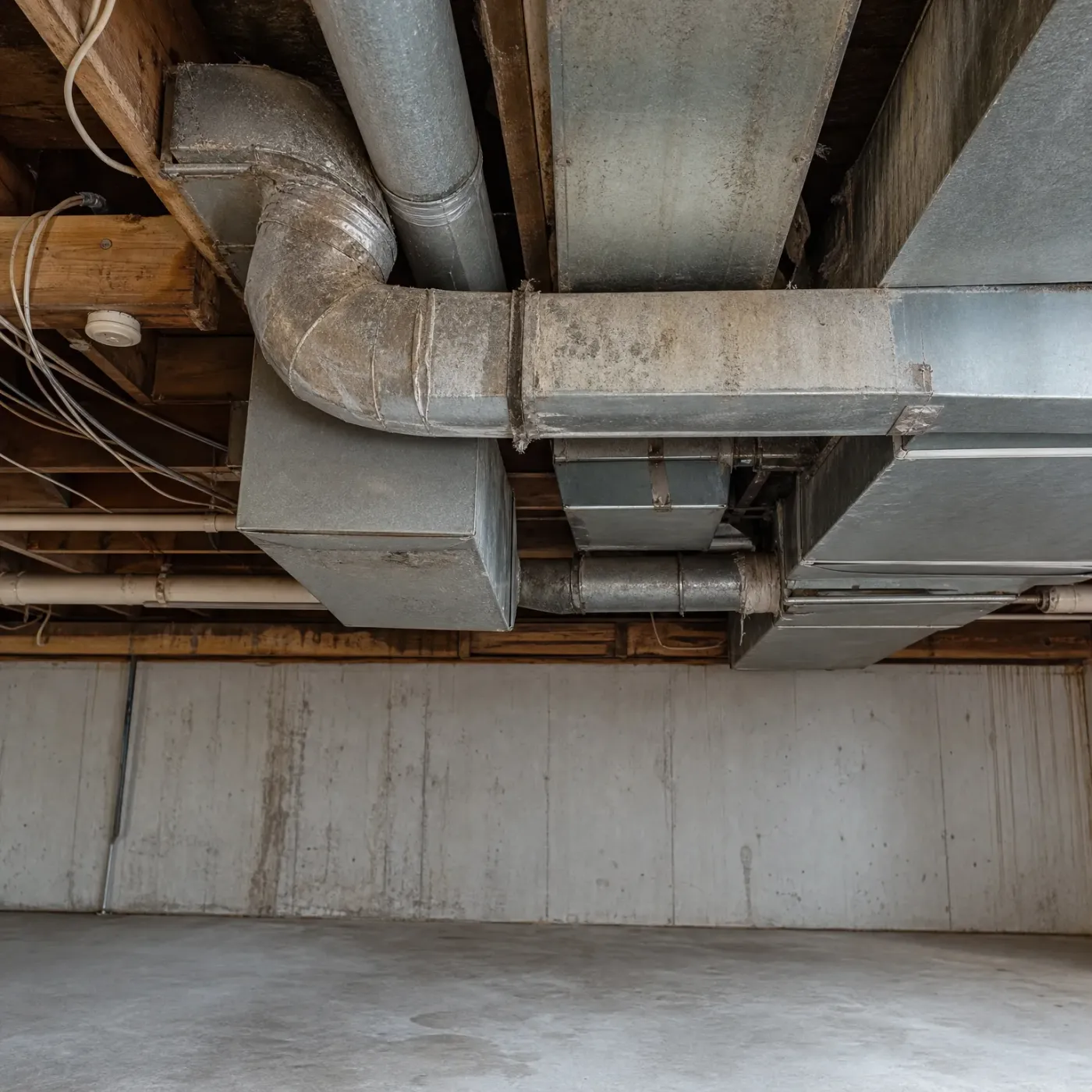
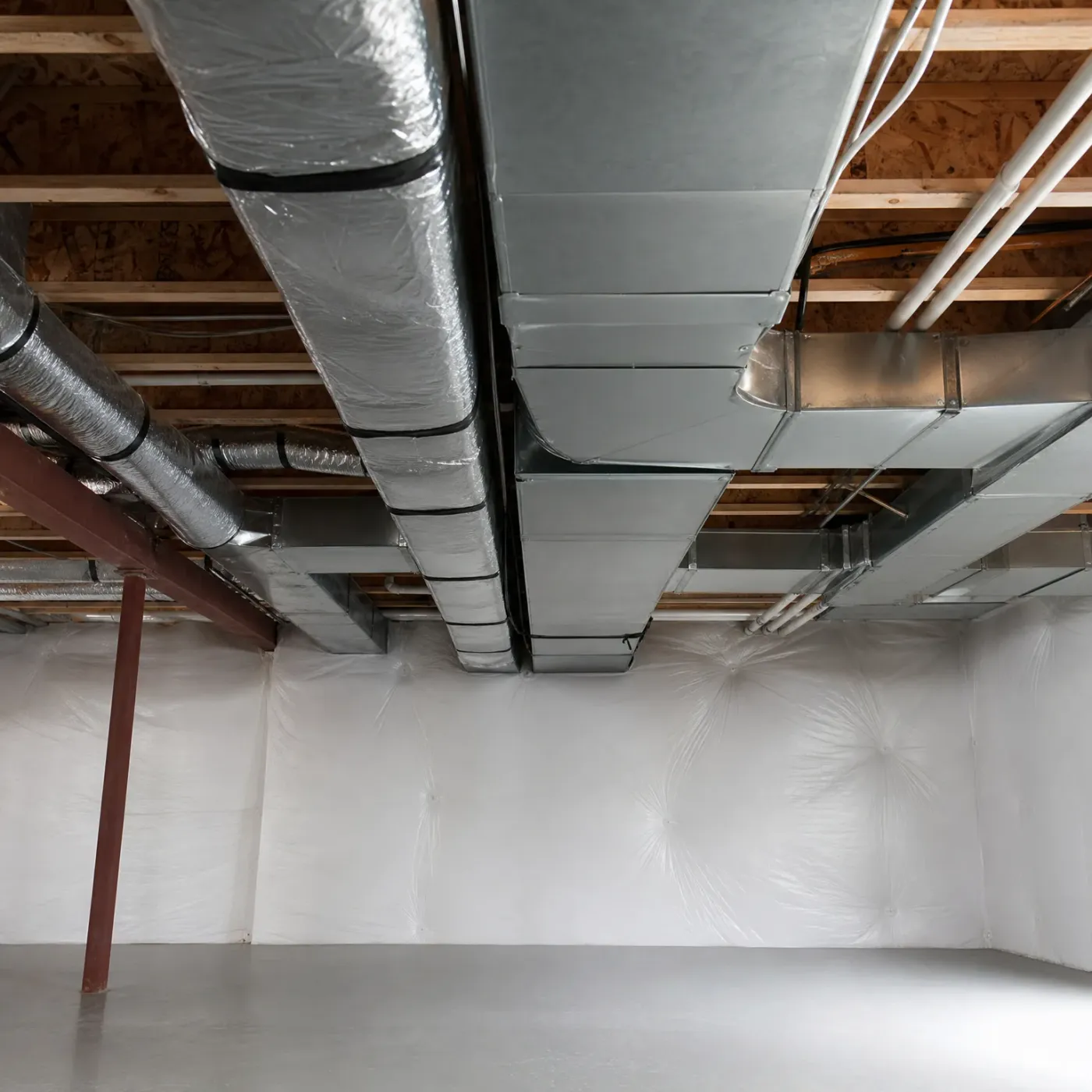
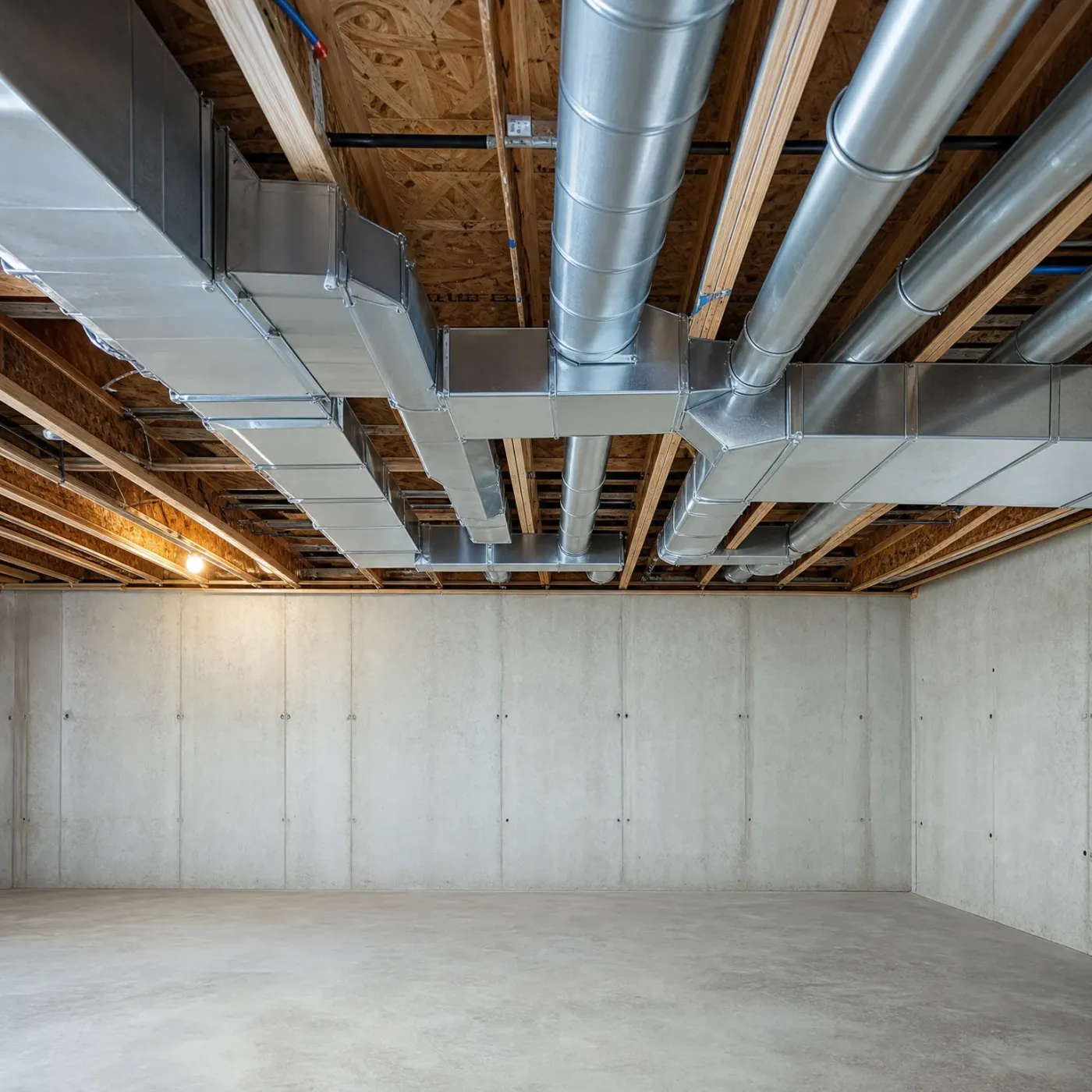
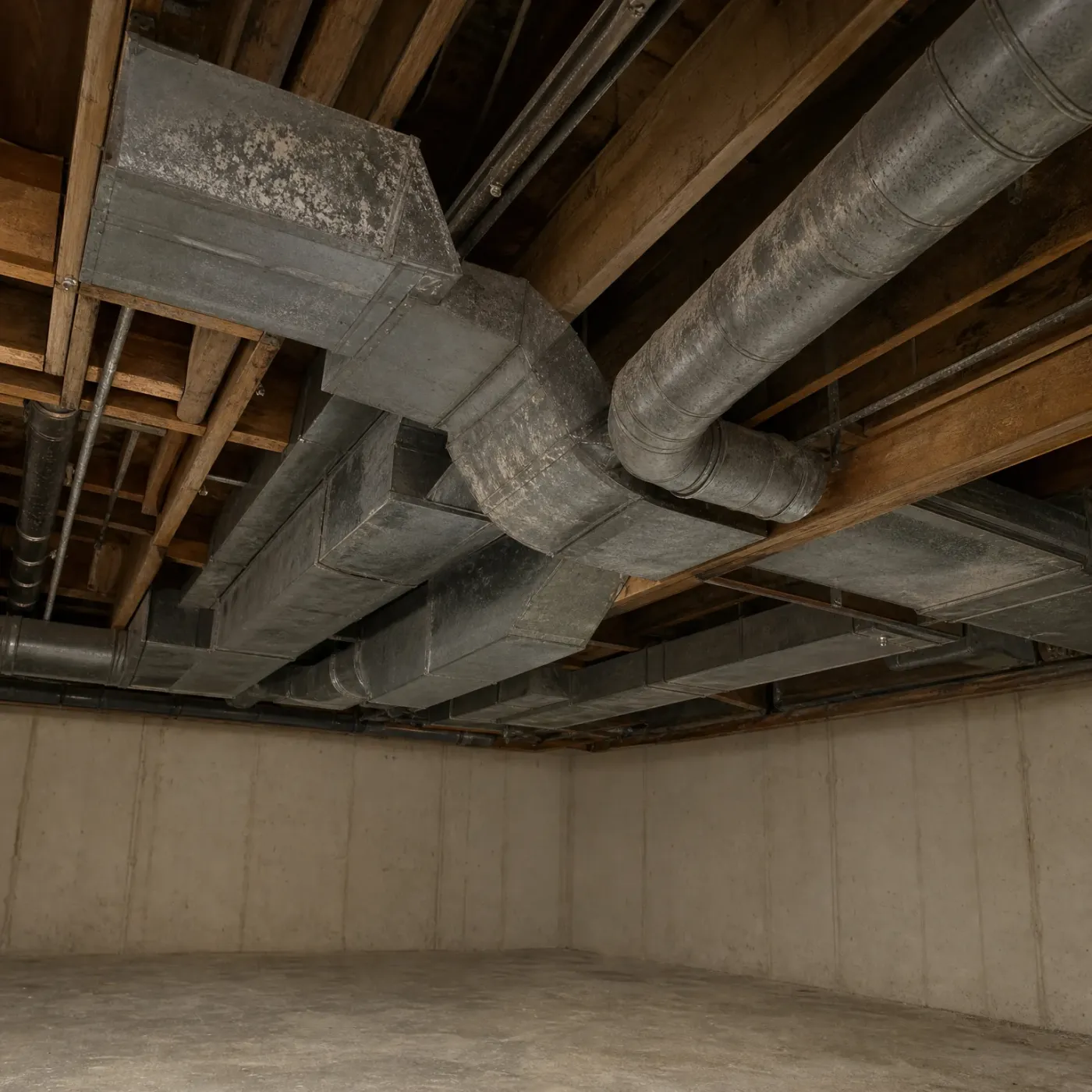
Before you get your ductwork cleaningAfter you get your ductwork cleaning
Why does duct leakage matter so much here?
Half the homes here were built by 1997
Half the homes in Sandoval County date to 1997 or earlier, so the ducts behind your walls may be the originals and worth a look.
Heat runs October through May
Heat runs October through May here, about eight months. Air lost to a leak before it reaches a vent is eight months of paying for air you never feel.
Cooling runs June through August
Cooling runs June through August. Three months is shorter, but a leaky return can pull hot attic air straight into the system and strain it.
ACS 2020-2024 · NOAA nClimDiv 1991-2020
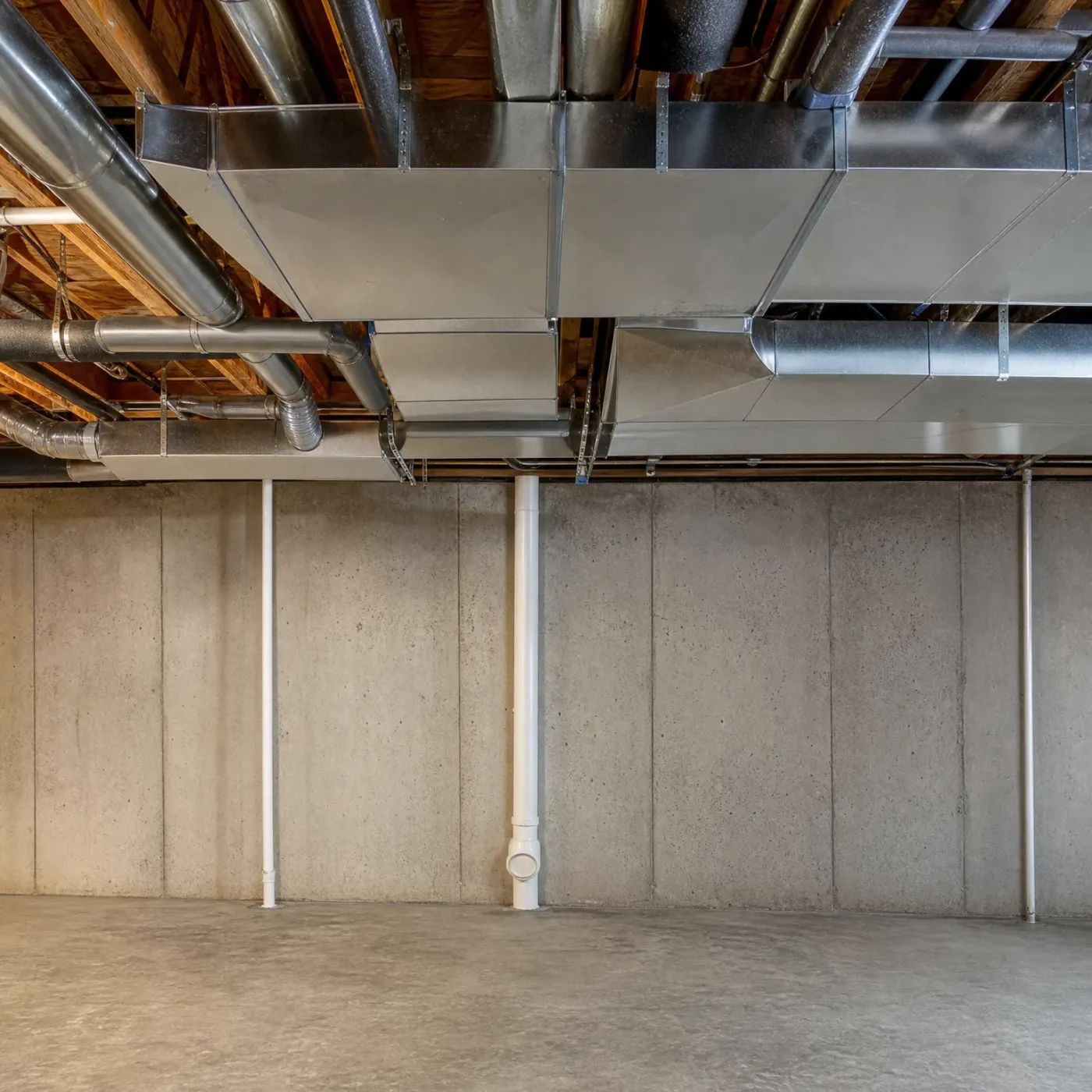
Sealed and holding air
Galvanized trunk lines and round branch ducts run tight between the joists, metal still bright, no gaps at the seams. Air moves from the furnace to each room without losing pressure along the way, so what the thermostat says is close to what each room actually feels.
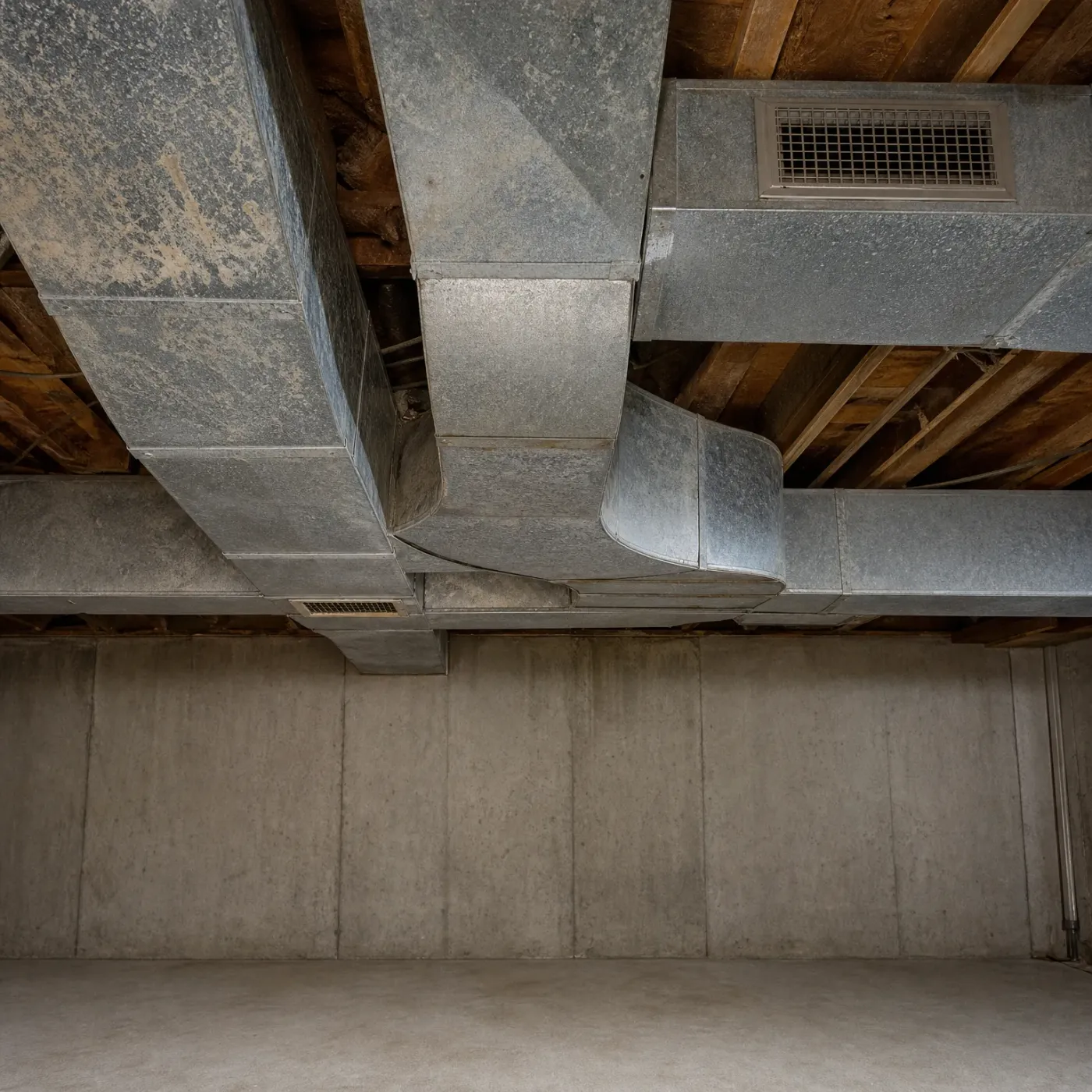
Oxidized seams, air escaping
The sheet metal has dulled and pitted with age, and at the joints that's where air slips out before it reaches the vent. A duct system this old is worth a look, especially if it's never been inspected since the house was built.
Checking for Leaks vs. Getting Ducts Cleaned
Duct Signs You Can Check
Hold your hand near a supply register with the system running. Weak or barely-there airflow in a room far from the furnace points to a leak losing pressure along the way.
Look at the ducts themselves in the attic or crawlspace. Flex duct that has pulled loose at a joint, or metal tape that has dried out and lifted, is a visible leak.
Check a far bedroom against the room with the thermostat. A gap of several degrees between them, in either season, usually traces back to air escaping before it arrives.
Listen near return grilles and duct joints when the blower kicks on. A faint whistle or hiss is air forcing its way out through a seam that was never sealed tight.
Walk the attic or under-house space where ducts run. If it feels noticeably warmer than it should in summer or cooler in winter, conditioned air is leaking into that space instead of your rooms.
What Cleaning Won't Tell You
A cleaning service clears dust and debris from inside the ducts. It does not pressure-test the system or find where a seam has split at a joint.
Ducts can come out of a cleaning visibly cleaner and still lose the same amount of air through gaps at the plenum, the boots, or the branch takeoffs.
A technician cleaning the ducts isn't sealing mastic or replacing collapsed flex, so a leak that existed before the cleaning will still be there after.
Lower dust in the vents after a cleaning can read as the system working better, even while air is still escaping into the attic or crawlspace unsealed.
Cleaning addresses what's inside the ducts, not the connections between sections, so it won't change a hot or cold room that's been that way for years.
1
Air leaves the furnace or air handler through the main trunk line.
2
Branch ducts split off the trunk and carry air toward each room.
3
Gaps at the seams and connections let air escape before it arrives.
4
Lost air pressurizes the attic or crawlspace instead of the room.
What's actually going on in your house
Walk the house with the system running and pay attention to what you feel. A bedroom at the end of the hall that never gets as cool as the rest of the house, or a room that stays chilly in January no matter where the thermostat's set. A hissing or rushing sound from the attic access or near a wall register. Dust settling faster in one room than the others, or a musty smell when the furnace kicks on, which can mean the duct is pulling in attic or crawlspace air instead of delivering what the furnace heated. None of this means the system itself is failing. It means the air it makes isn't getting to the rooms, and the furnace runs longer to make up for what's leaking out along the way.
The pro who gets in touch is licensed in New Mexico and works in Sandoval County.
There's no charge for the request.
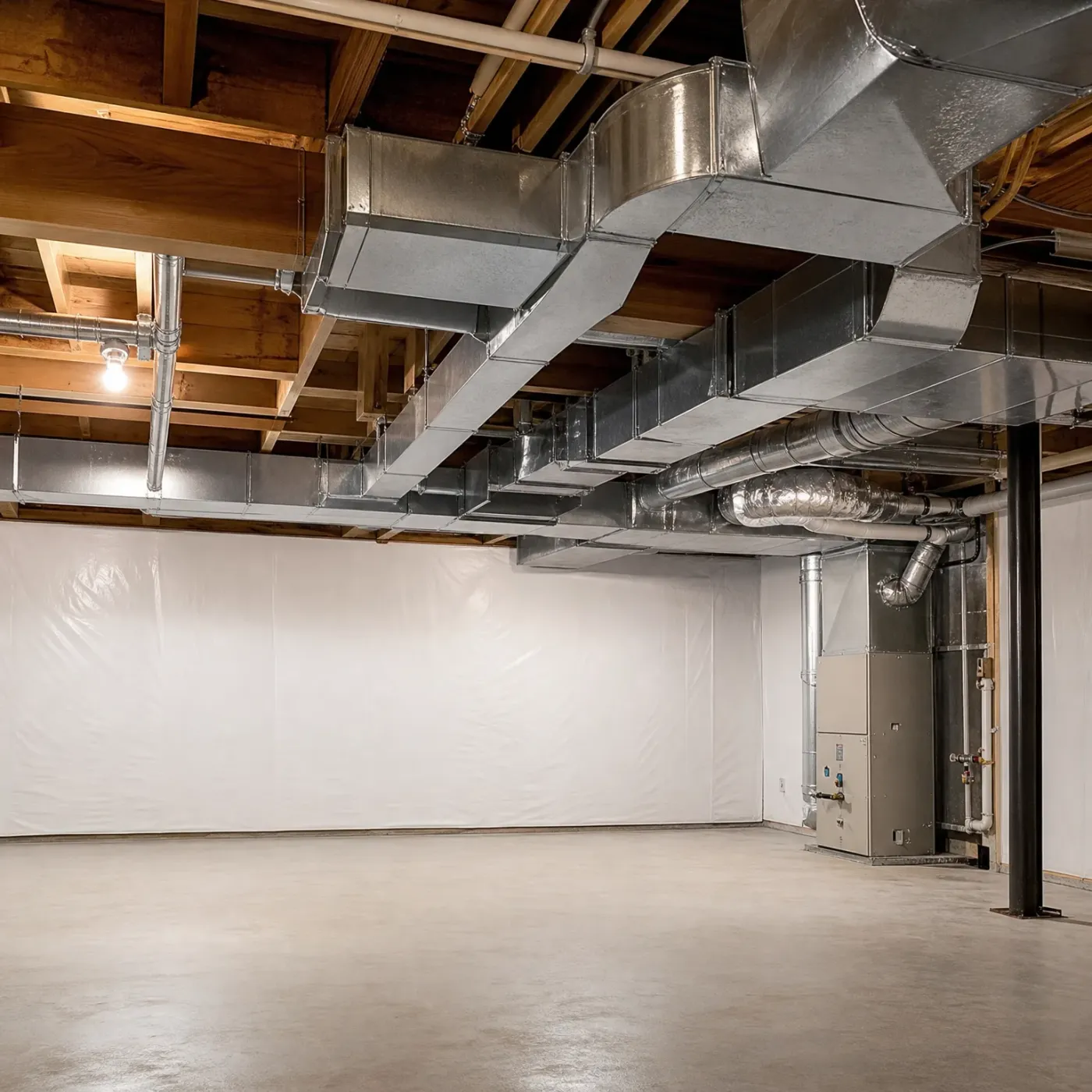
Ducts sealed and supported
This is what ductwork looks like when it's doing its job. The trunk lines run tight along the joists, seams closed, metal holding its shape, with the vapor barrier on the walls keeping outside air where it belongs. Air gets to each room instead of the basement.
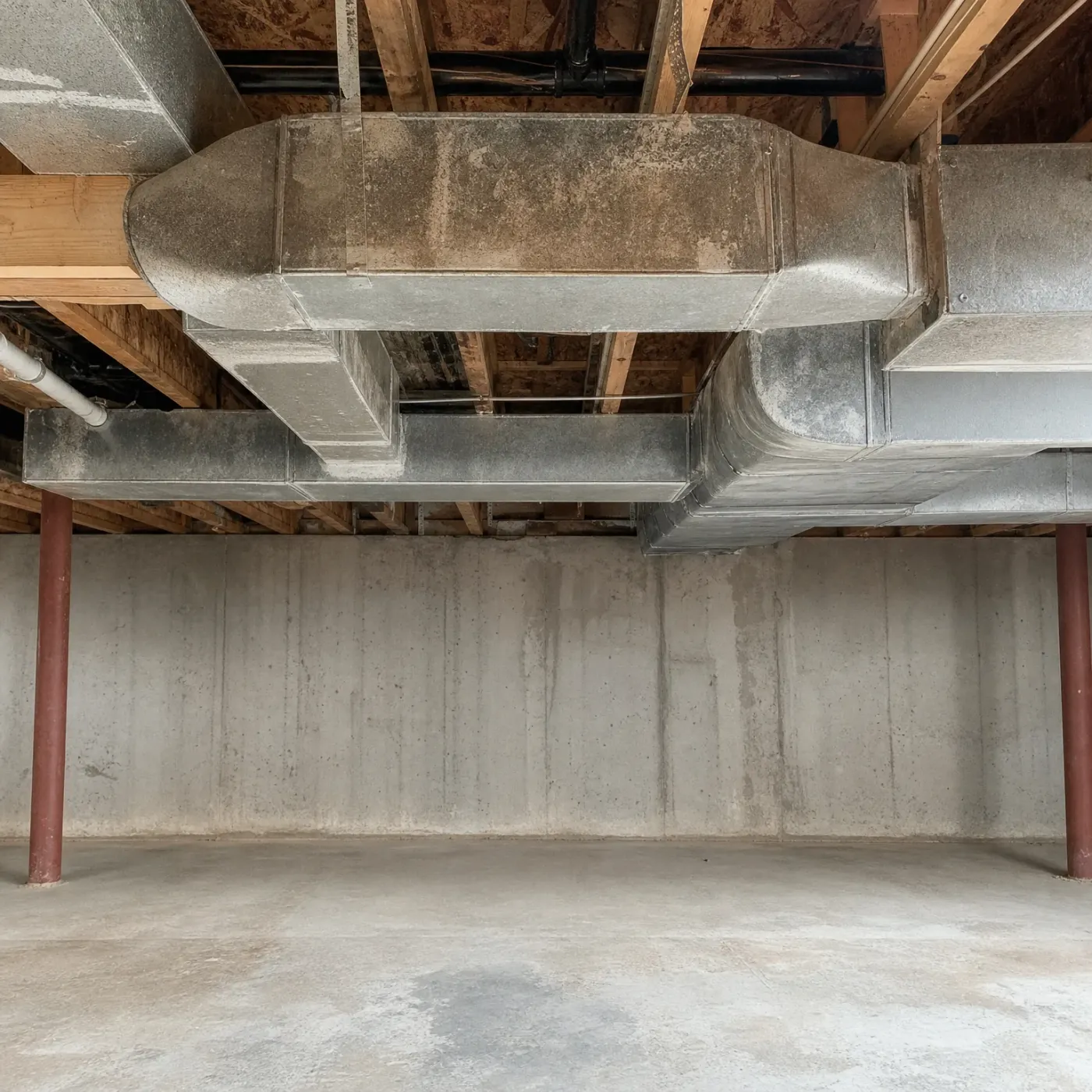
Ducts leaking into the space
Here the ducts branch and turn across bare concrete with no barrier sealing the room off. Air pushed through these runs can slip out at the joints and right angles before it reaches the two registers shown, heating or cooling the basement instead of the rooms upstairs.
Power here costs 16.32 cents per kilowatt-hour
At 16.32 cents per kilowatt-hour, air pushed into the attic instead of your living room still shows up on the bill. A duct system losing a fifth of its air isn't losing a fifth of its cost, since the furnace or AC keeps running to make up the difference. Sealing that loss is the part you can actually get back.
EIA-861 2025
Where Ducts Actually Fail
Dust buildup around a supply register often means the duct behind it has a gap pulling in attic or crawlspace air.
A duct joint sealed with cloth-backed tape loses its grip after a few summers, and the tape peels while the gap stays open.
Flex duct that sags between the joists creates a low spot where air pressure drops and the seam at each end works loose.
A return duct with a gap pulls in attic or crawlspace air and sends it straight to the furnace or air handler.
The boot where a duct meets the floor or ceiling is often just set in place, not sealed, and that joint moves over time.
Mastic applied over a seam years ago can crack if the duct has flexed, leaving a thin line where air slips out unseen.
Every leak starts at a joint, because that's where two pieces of metal or flex duct meet instead of being one continuous piece. The trunk line is built in sections, and each section is connected with a seam, a joint, or a boot. Those connections were sealed once, either with tape, mastic, or both, but neither holds forever. Cloth-backed tape dries out and peels after enough summers in an attic that sits well over 100 degrees. Mastic goes on wet and hardens, and if the duct underneath flexes even slightly from the house settling or from someone walking past it in the attic, the mastic cracks along that flex line. Flex duct adds its own problem. It's meant to run taut between the joists, but if it sags, the low point holds dust and moisture, and the seams at either end take on stress they weren't sealed for. A boot, which is the fitting where a duct drops down to a floor register or up to a ceiling one, is frequently just set into the drywall opening rather than sealed to it, so that gap sits there from the day the house was built. None of this shows up on a thermostat. A dusty ring around a register, a sagging run visible from the attic hatch, tape that's started to curl at the edges. Those are the marks of a specific failure, not a general one, and they point straight to where a duct system is losing the air it's paying to move.
Metal still bright, seams closed tight, ducts running straight between the joists with nothing to lose along the way.
Joints gapped and separating where they meet the trunk line, leaking air into the crawlspace before it ever reaches a room.
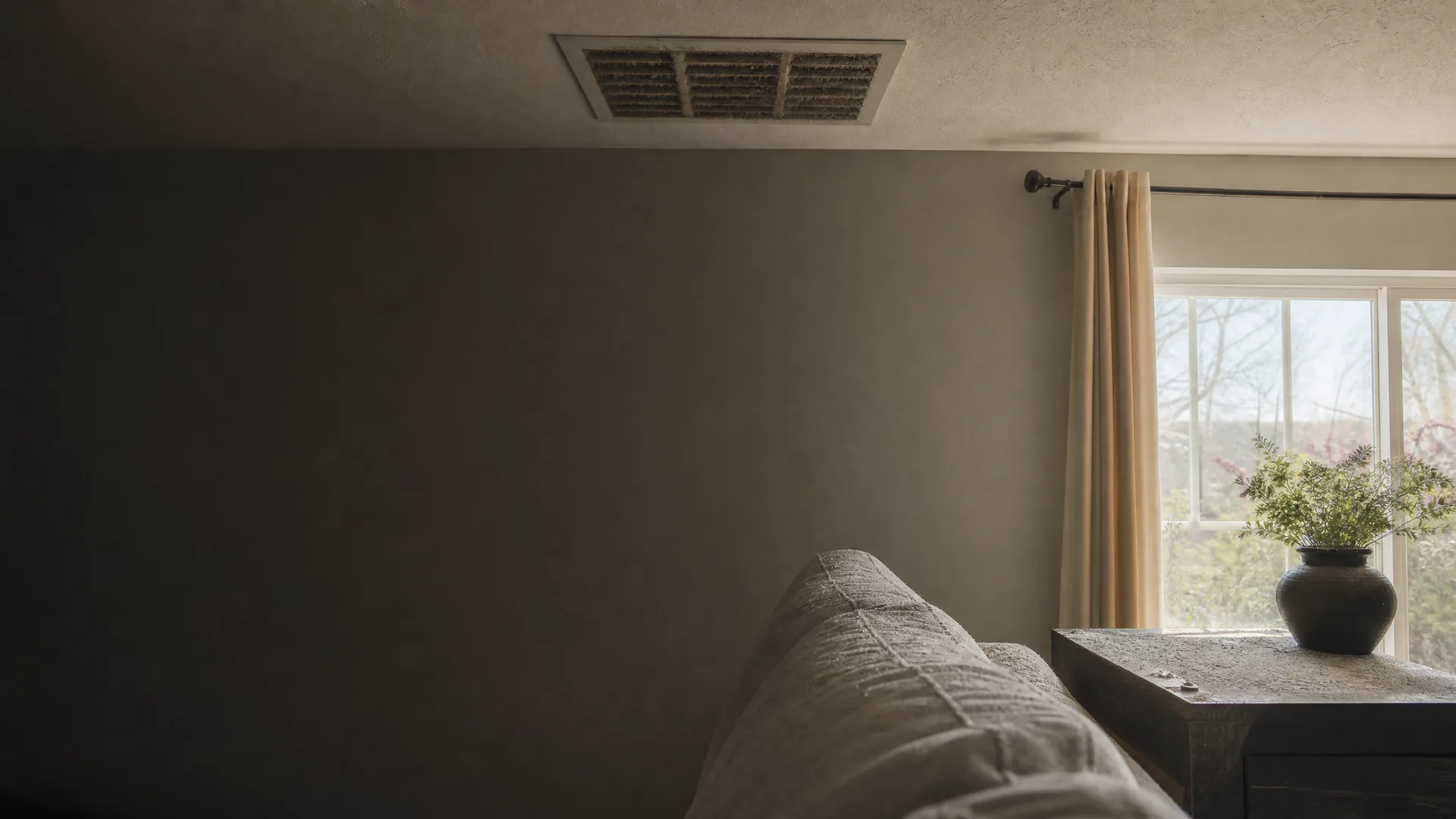
April, and the afternoon sun comes low through the living room window. You're on the couch when you notice it: a gray halo on the ceiling around the vent grille, the kind that wasn't there last spring. You run a finger along the shelf below it and the dust comes off thick, more than the rest of the room. The air handler kicks on in the hall closet and you look up at the grille, waiting to feel the air move. It barely does. Outside, Rio Rancho is already warming toward the months where the system runs most of the day, and you're left wondering how long that vent has been doing this.
What this comes down to
A room that won't hold its temperature, air you can hear moving where it shouldn't, dust that keeps coming back around a register: any one of these means air is leaving the ducts before it reaches you. The furnace and the AC keep running to make up for it, and the power bill carries that cost every month, whether or not anyone ever opens a wall to look.
Finding out who can actually check your ducts usually means calling a few companies, explaining the same thing three times, and sitting with quotes that don't match up. Submitting this request skips that part. It goes to one licensed contractor working in Rio Rancho and the rest of Sandoval County, someone who deals with duct systems like yours every season and knows which joints and connections tend to give out first in houses built here. You get one call, not five, and it's with someone who already knows the kind of ductwork this area has.
Ductwork Cleaning
No phone calls to make
A licensed pro who works in Sandoval County gets your request.