Mini Split Installation in Raton, NM
Tell us about the house, and a licensed contractor who covers Colfax County will get in touch.
Tell us about the job
It takes about a minute.
Nine months of heat every year, down to 17 degrees
Raton needs heat from September through May. That is nine months of the year asking a mini-split to keep a home warm, with winter nights averaging 17°F from December through February. A heat pump has to work harder to pull warmth out of air that cold, so the unit installed here needs to be sized and rated for real winter, not mild spring weather.
Any mini-split heat pump installed new has to meet 7.5 HSPF2 for heating and 14.3 SEER2 for cooling, the federal minimum for split-system heat pumps. Summer afternoons here average a mild 81°F, so the cooling side of the unit has an easy job. The heating side is what matters most in Colfax County, and it runs most months of the year.
- 9 months
- September through May, your system heats
- 17°F
- the average winter night it heats against
- 81°F
- the average summer afternoon it cools against
New Mexico requires HVAC contractors to hold a state license.
New Mexico licenses HVAC contractors through the Construction Industries Division, and that license belongs to the contractor, not to this job. It means the state has tested and recorded this contractor before letting them take on work like a mini-split installation. It does not mean the state inspects the mini-split once it is in your home.
That check comes from your local building office instead. In most cities and counties, installing a mini-split needs a permit before the work starts and an inspection once it is finished, and that inspection is what looks at the work itself, the wiring and the refrigerant lines and the mounting, not the contractor's license.
Source: New Mexico Regulation and Licensing Department
- Is a mini split worth it?
- For a house here, yes, especially since heat is needed nine months of the year, September through May. A mini split is a heat pump, so the same unit heats and cools with no ductwork to install or lose air through. With winter nights averaging 17°F, look for a cold-climate model built to keep producing heat at low outdoor temperatures rather than switching to backup heat too soon. A contractor can look at your house and tell you what size and how many zones make sense.
- How many rooms can a mini split cover?
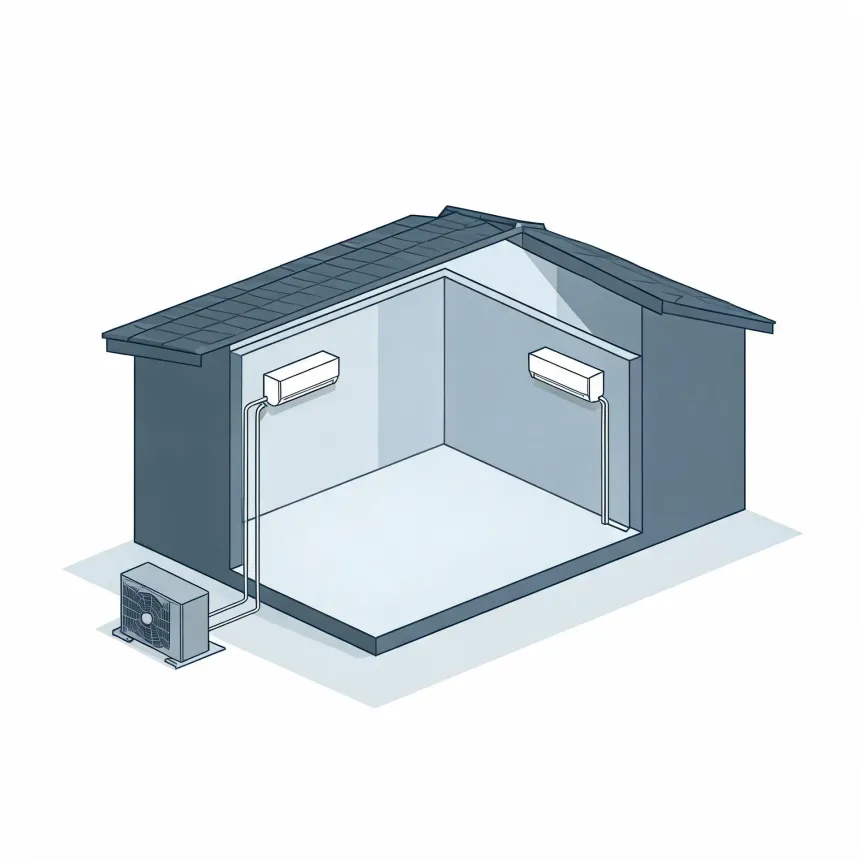
- A single indoor unit is built to heat and cool one room or one open area well. If you need coverage in several rooms, a multi-zone system runs more than one indoor unit off a single outdoor compressor, and each indoor unit is sized and placed for the room it serves. How many zones one outdoor unit can run depends on the equipment, so a contractor will size the system to your house room by room.
- Can a mini split heat a whole house?
- It can, if enough zones are installed to reach every room you want heated. A single indoor unit only heats the space it's mounted in, so whole-house coverage means a multi-zone system sized for each room, or several outdoor units on a larger house. Given that heat is needed here from September through May and winter nights average 17°F, a contractor sizing the system will want to confirm the equipment keeps up at those low temperatures without leaning too hard on backup heat.