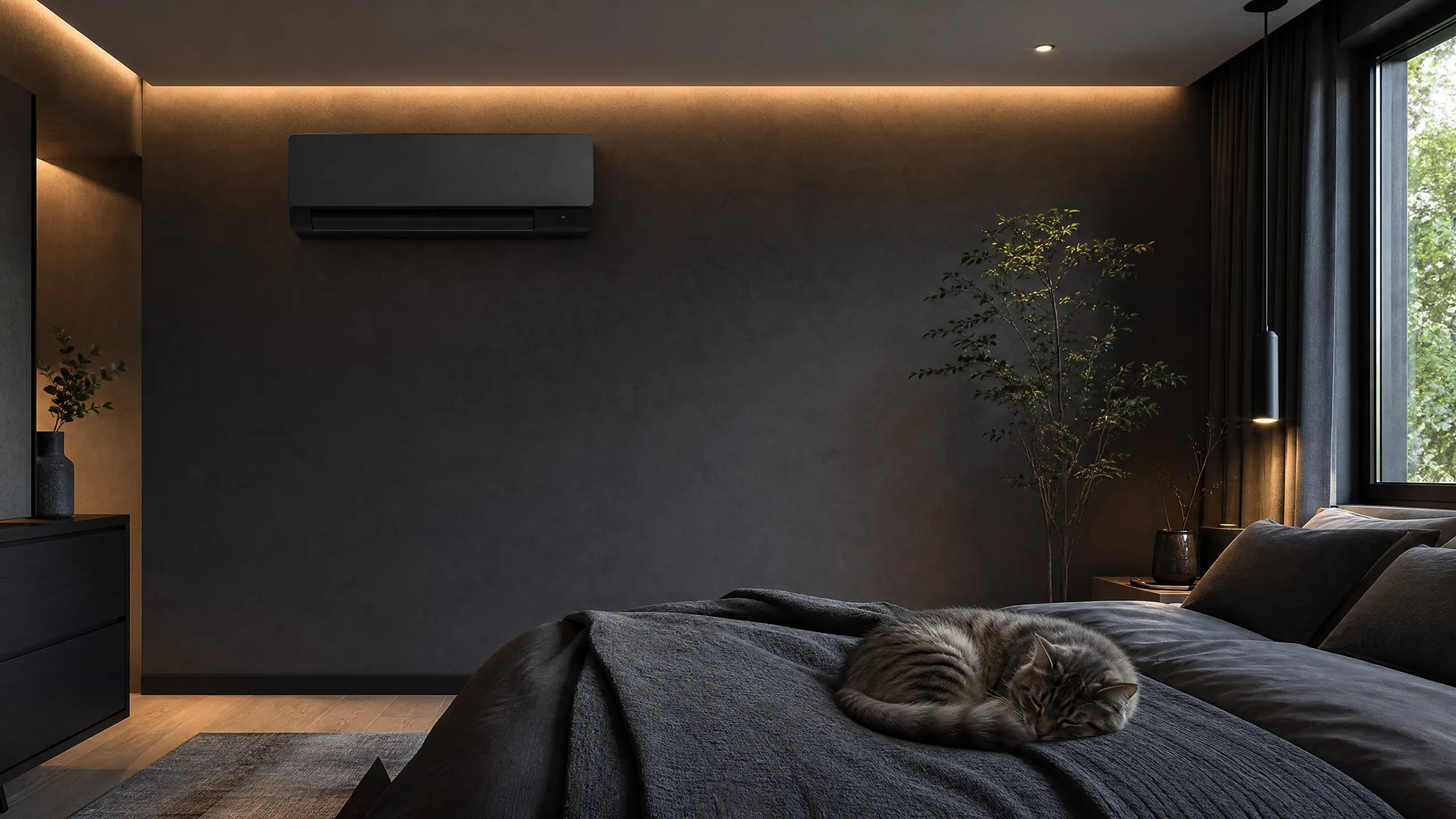
Mini Split Installation in Farmington, NM
A new system here will heat from October through May and cool from June through August every year. Tell us about the house, and a licensed contractor who covers San Juan County will get in touch.
Tell us about the job
It takes about a minute.
San Juan County asks a mini-split to work almost all year
Farmington needs heat or cooling 11 months out of the year. Winter nights average 20°F from December through February, and a mini-split has to hold its own against that cold, night after night, from October clear through May. Then summer flips it around, with afternoons averaging 88°F for three straight months.
A new ductless system installed here falls under the same federal rule as any other split-system heat pump. If it was built on or after January 1, 2023, it has to meet 14.3 SEER2 for cooling and 7.5 HSPF2 for heating. That is the floor, not a special ductless allowance, so any unit going into your home needs to clear it.
- 8 months
- October through May, your system heats
- 3 months
- June through August, it cools
- 20°F
- the average winter night it heats against
- 88°F
- the average summer afternoon it cools against
NOAA nClimDiv, 1991–2020 normals
New Mexico requires HVAC contractors to hold a state license.
The Construction Industries Division tests and licenses HVAC contractors across New Mexico, San Juan County included. The license belongs to the contractor, not to any single job, so the same license that qualifies someone to install a mini-split in Farmington covers their next job in Aztec or Bloomfield.
That license is what stands behind the person doing the work. Most cities and counties also require a permit for a mini-split installation, with an inspection once the work is done, and that inspection is where someone outside the contractor checks that the unit went in correctly.
Source: New Mexico Regulation and Licensing Department
- Is a mini split worth it?
- For most homes it is, especially if a room runs on electric resistance heat or a window unit now. A mini split moves heat instead of generating it, so it puts out more heat per watt of electricity than baseboard or a space heater. Down to 20°F on a winter night it still has heat to give, which matters here since that is the average low from December through February. The other case where it earns its keep is a room with no ductwork at all, like a converted garage or an addition, where running new ducts would mean tearing into walls.
- How many rooms can a mini split cover?
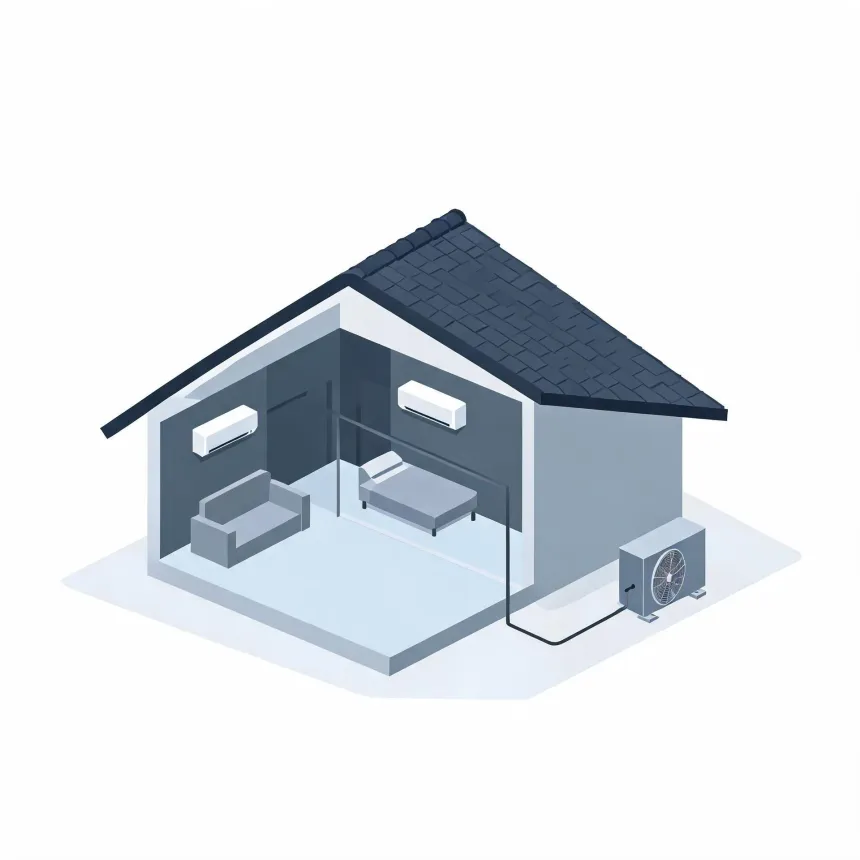
- A single outdoor unit can run one indoor head or several, depending on the system. Single-zone systems cover one room or open area. Multi-zone systems split the same outdoor unit's capacity across two to eight indoor heads, each with its own thermostat, so a bedroom and a living room can run at different temperatures at the same time. A contractor sizes the system to the square footage, ceiling height, and window exposure of each room, not just the room count, so the right number of zones depends on the house.
- Can a mini split heat a whole house?
- Yes, with enough indoor heads and enough outdoor capacity. A multi-zone system can put a head in every room that needs one, and each head heats its own space. Homes here need heat from October through May, eight months of the year, so the outdoor unit has to be sized for that stretch and rated to keep working on a 20°F night, not just handle a mild day. A contractor works this out room by room rather than as a single whole-house number.