



Profile view of a bearded man wearing a dark baseball cap and a dark gray T-shirt against a plain off-white background.

Is duct cleaning worth it in Farmington, NM

Duct and vent cleaningDucts or ventsSan Juan County, NM
Step 1 of 2

What ZIP code is the job in?

Is duct cleaning worth it in Farmington, NM?

You've been hearing mixed things about duct cleaning, and with the dust that blows through Farmington, you're wondering if it actually does anything for your house or if it's a service that mostly just sounds good. You're not looking to spend money on something cosmetic. You want to know if it changes anything about how your system runs or the air you breathe.

It depends on what's built up in your ducts, and in this area that's usually more than average

San Juan County sees a lot of blowing dust and dry dirt, and homes here pull that into the return air all year. If your ducts haven't been cleaned in several years, or if you can see dust kicking out of the vents when the blower kicks on, cleaning them clears out buildup that a filter alone never catches, since the filter only stops what passes through it after the fact. It's less useful if your system is newer, your filter gets changed on schedule, and nobody in the house deals with allergies or dust sensitivity. A contractor who services homes in this area can look at your ductwork and tell you whether it's actually dirty enough to matter, rather than selling you a cleaning you don't need.

  1. A tech opens supply and return vents to reach the ductwork.

  2. A vacuum unit attaches to the system to pull debris out.

  3. Brushes or air whips knock dust loose inside each duct run.

  4. Loosened dust and sand get pulled into the vacuum as it goes.

How much does your duct system really run each year?

  • Half the homes here were built by 1986

    Half the homes in San Juan County were built in 1986 or earlier, and ductwork that old has had decades to collect dust and gaps.

  • Heat runs October through May

    Heat runs eight months a year here, October through May, so warm air is moving through those ducts most of the year.

  • Cooling runs June through August

    Cooling adds June through August on top of that, which means the same ducts handle both jobs almost year round.

ACS 2020-2024 · NOAA nClimDiv 1991-2020

With sand and dust blowing through Farmington most of the year, a duct system pulls in more than it would somewhere greener. If your ducts haven't been cleaned since the house was built, there's a real case for having a contractor take a look.

If you're already changing the filter on schedule and nobody in the house has new allergy symptoms, cleaning the ducts probably won't change much you can feel. A dirty filter in dusty air does more to your airflow than dust sitting in the ducts themselves.

An older man with gray hair and a beard, wearing a dark coat flecked with snow, stands smiling in a dimly lit home hallway with lamps, a framed picture, and a wooden door.
A gray-haired, bearded man in a dark coat dusted with snow stands just inside an open door of a warmly lit home, looking off to the side.
An older bearded man in a dark snow-dusted coat and gray scarf stands just inside a dimly lit home entry, with a framed picture, lit table lamp, and an adjoining room with a fireplace behind him, and snow visible through the open door.
A gray-haired bearded man in a dark coat and scarf dusted with snow stands smiling in a dimly lit entryway with a white front door, a side table with a lit lamp, an oval mirror, and a patterned rug.

What a cleaning actually removes

A clean duct run has bare metal or bare board, no dust coating the inside. Dust buildup narrows the path air moves through, and in a return duct that's pulling in sand from outside, that layer can be thick after years without attention. Pet hair, insulation fragments, and construction dust from any remodeling work settle in the slower-moving air near vent boots and duct turns. None of it is visible from the vent cover, which is why homeowners usually can't tell by looking whether it's needed.


What a cleaning won't fix

Duct cleaning clears what's inside the ducts. It doesn't seal a leaky joint, repair a crushed flex run, or fix a duct that was sized wrong when the house was built. If a room runs hot or cold no matter the season, that's usually an airflow or sizing problem, not a dust problem, and cleaning the ducts won't change it. A contractor who inspects the system before cleaning can tell you which issue you're actually dealing with, since the fix for each one is different.

A woman wrapped in a thick fleece blanket sits on a sofa holding an open book, beside a lit table lamp and a frost-covered dark window.
A woman in a cream knit sweater sits in an armchair indoors, eyes closed and smiling, beside a window showing yellow and orange autumn foliage, with a mug on a wooden side table and shelves holding vases behind her.

What This Means for Your House

  • A dust-coated supply duct feeding a bedroom means more dust settling on furniture there within days of cleaning.
  • Sand pulled in through a return duct narrows the airflow path, so a room farthest from the furnace runs warmer or colder than the rest.
  • A furnace or AC pulling air through a dust-lined duct works harder to move the same amount of air through the house.
  • A filter changed on schedule still won't catch what's already settled inside ductwork built before the house had one.
  • A household with allergies notices dust in the air sooner than one without, since both breathe whatever the ducts are carrying.
  • A duct system that hasn't been opened since the house was built is carrying whatever moved in with that first batch of dust.

Every house in Farmington pulls air through the same path, over and over, for years at a stretch. Whatever is sitting inside that ductwork goes wherever the air goes. A bedroom at the end of a long run gets whatever has built up along the way, not just what the furnace or AC put out that day. That shows up as dust on the dresser a day after you wiped it down, or as a room that never quite matches the thermostat setting because sand and dust have narrowed the duct enough to slow the air getting there. The equipment feels it too. A furnace or AC moving air through a duct lined with dust has to work harder to push the same volume through the house, since the path it's moving air through is narrower than it was the day it was installed. None of that gets fixed by the filter. A filter catches what's coming through right now; it does nothing for what's already settled on the inside walls of ducts that may have gone decades without being opened. For a household dealing with allergies, that difference is the first thing noticed, since everyone in the house is breathing air that passed through the same ducts on its way to every room. None of this means a crisis is building behind the wall. It means the ductwork is carrying a history, and a house that's kept up tends to be a house where someone eventually asks what that history looks like.

Power here costs 13.92 cents per kilowatt-hour

At 13.92 cents a kilowatt-hour, power here isn't expensive, but a blower working harder to push air through dust-coated ducts still adds up on that meter every month. Clean ducts let the air move the way the system was built to move it, so the fan doesn't have to strain to do its job.

EIA-861 2025

Basement interior with galvanized rectangular and round sheet-metal ductwork and copper piping running below a wood-joist ceiling, above a concrete wall and bare concrete floor.
Before you get your ductwork cleaning
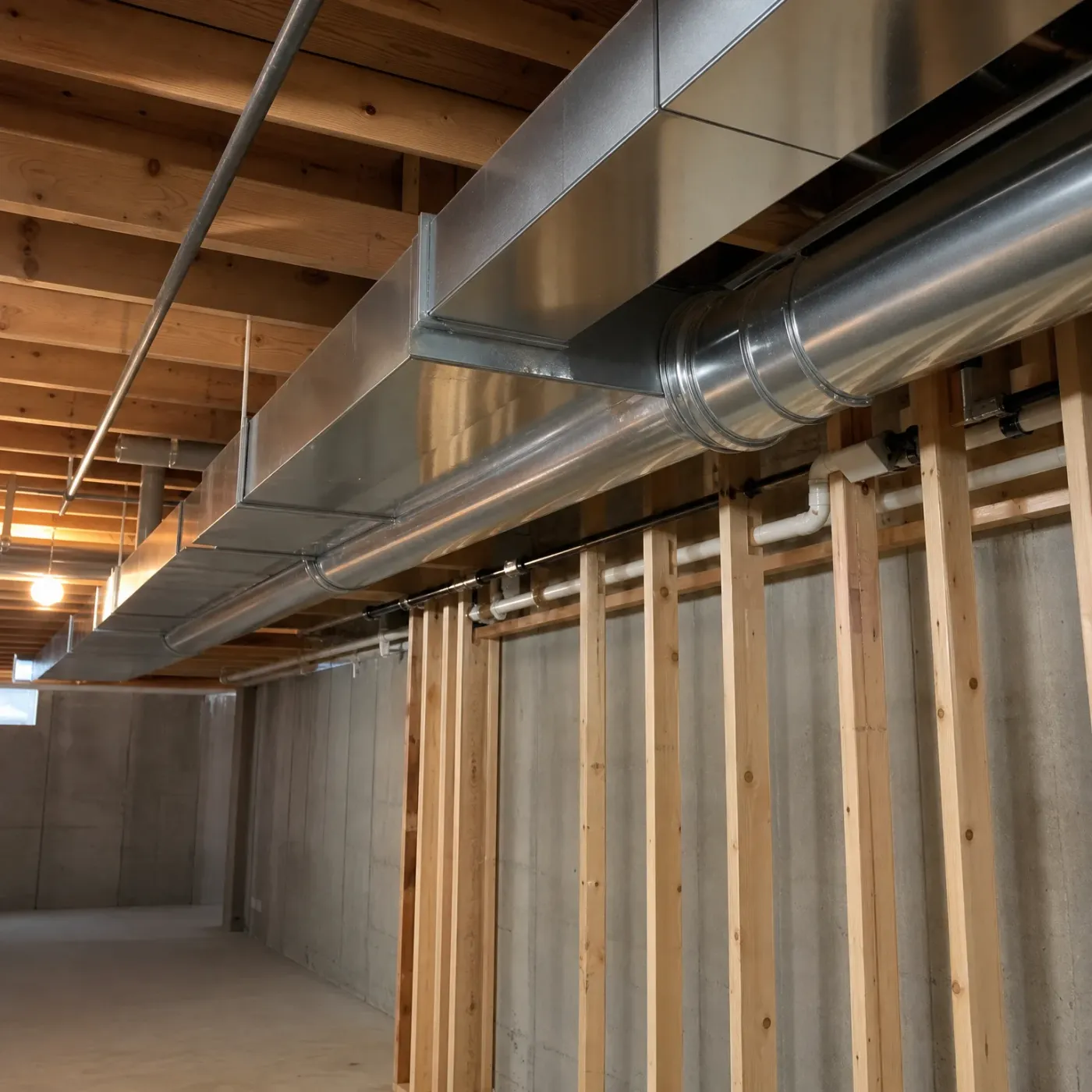
Unfinished basement with bare concrete walls and floor, exposed wood joists, and large sheet-metal HVAC ducts and pipes running along the ceiling.
After you get your ductwork cleaning
Unfinished basement with exposed wood joists, galvanized rectangular and round ductwork, piping, stud framing against concrete walls, and a bare hanging light bulb.

Get matched with a duct system pro in San Juan County

The pro who gets in touch is licensed in New Mexico and works in San Juan County.

Get matched with someone who does this kind of work in San Juan County.

Find a licensed pro

No charge to send it. You decide if you hire them.

Should You Clean Your Ducts Now

Worth cleaning

  • Your house was built in 1986 or earlier, which is enough time for sand and dust to pack a thick layer inside the return runs.
  • You can see dust pushed out around vent covers or settling fast on furniture near a supply duct.
  • Someone in the house has allergies or breathing trouble that gets worse indoors and you haven't changed anything else that would explain it.
  • You just finished a remodel, and drywall dust or sawdust likely got pulled into the system while the work was going on.
  • A room farthest from the furnace runs noticeably warmer or colder than the rest, which can mean a duct run is narrowed enough to matter.
  • You've never had the ducts cleaned since the house was built, and the furnace has been running eight months a year since then.

Probably skip it

  • The ducts were cleaned within the last few years and nothing has changed since, no remodel, no new pests, no new dust complaints.
  • Vent covers look clean when you pull them off and there's no visible coating on the metal just inside.
  • Nobody in the house has new or worsening allergy symptoms, and the air moving through each room feels about the same as always.
  • You've kept up with filter changes on a regular schedule, which cuts down a lot of what would otherwise collect in the ducts.
  • The house is newer and hasn't had decades of sand blowing through Farmington to work its way into the system.
  • You're chasing a specific problem, like a bill that's climbing for no clear reason, and a tech hasn't yet confirmed the ducts are the cause.
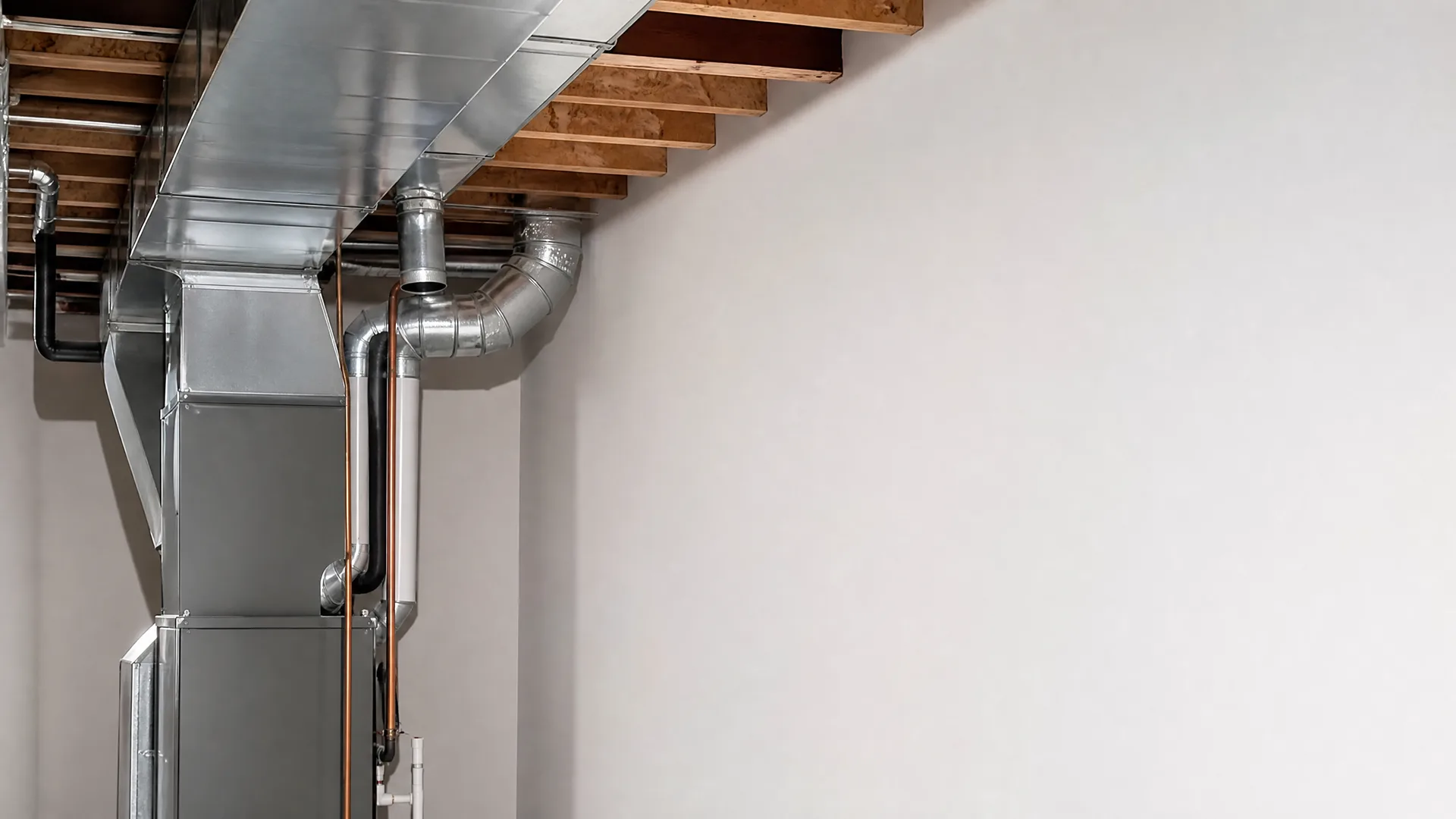
Basement interior showing a furnace with sheet-metal ductwork, a round flue pipe and copper lines running beneath exposed wooden floor joists next to a plain light-colored wall.

Skip it this year

If your ducts were cleaned within the last few years, or the house is newer and you haven't noticed dust around the vents, there's not much to gain right now. A system that's moving air freely doesn't get better than freely. Spending money to clean ducts that aren't loaded with dust just moves money around, not air.

Interior corner of a building with a large blank white wall beside an unfinished ceiling showing wood joists, galvanized sheet-metal ductwork, and white and copper pipes.

Get it looked at

If nobody's touched the ductwork since the house was built, or you're seeing dust collect fast on furniture near a vent, a contractor who works on these systems around Farmington can tell you in minutes whether what's built up inside is worth clearing out. They'll know what San Juan County dust does to a duct run over the years, because they see it every week.

A man in a dark jacket and khaki pants walks through an open gate in a stone wall toward a woman standing in the open front doorway of a single-story white house with a dark shingled roof and river-rock accents.

What this looks like in your house

Walk your rooms and check the vent covers. If the one in the bedroom farthest from the furnace has a gray ring of dust around it, or the air coming out feels weaker than the one near the thermostat, that's the duct system telling you something. Sand and dust settle fastest in the runs that are longest or hardest for the blower to reach, so the far rooms show it first. A system pulling clean air moves it evenly. One that isn't, won't.

If you've checked and you're seeing it, a local contractor who services duct systems around Farmington every year can tell you what's actually built up in there and whether it's worth clearing out. You'd be matched with one contractor, not a handful calling you back at once, someone who already knows what sand and dust do to ductwork in this part of New Mexico and can look at your specific runs instead of guessing from a list of symptoms.

A mug and a small round vase sit on a wooden windowsill beside sheer and heavier curtains, with blurred autumn trees seen through the rain-speckled window and a sofa with cushions and a throw in the foreground.
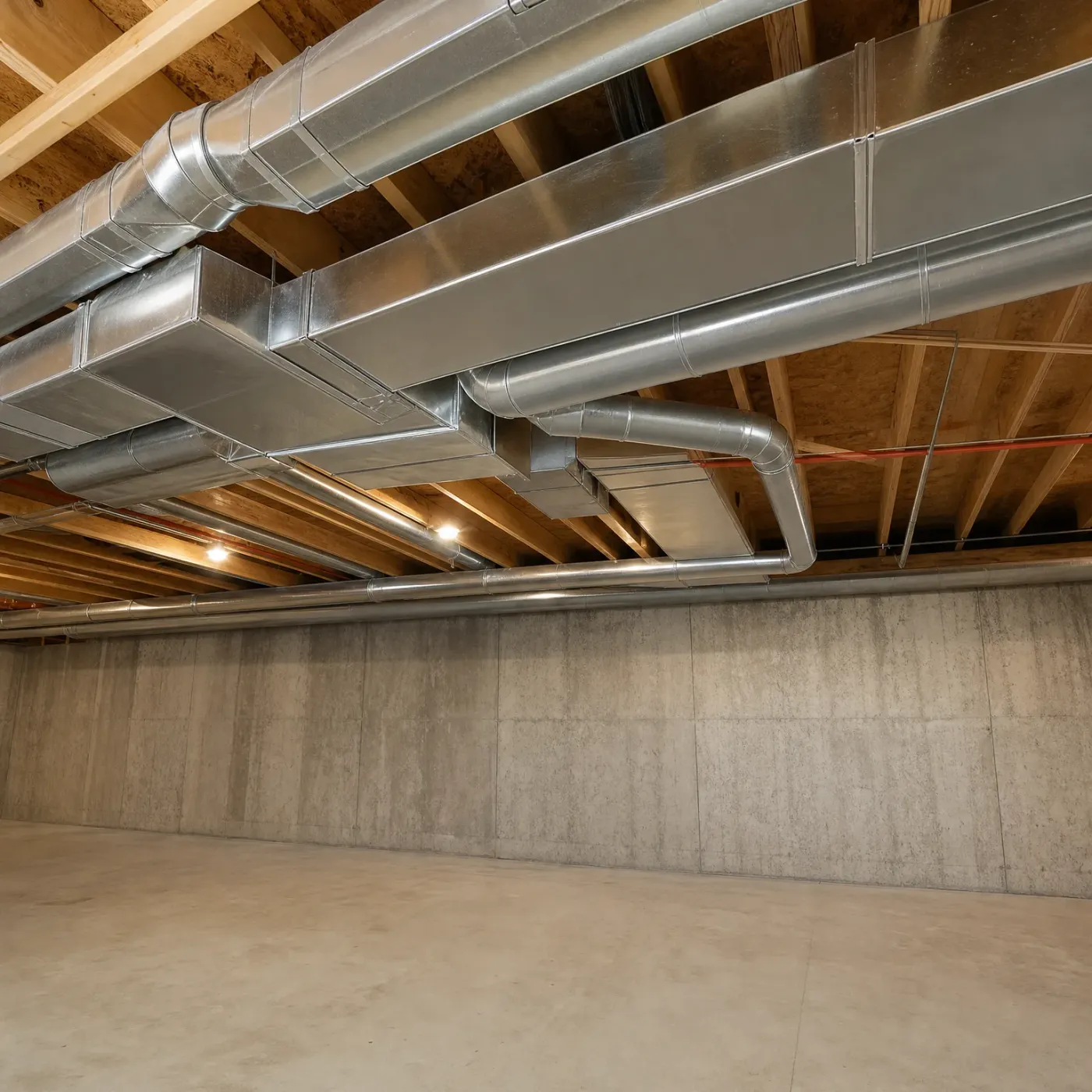
Unfinished basement with bare concrete floor and walls, showing galvanized sheet-metal HVAC ducts, pipes and recessed lights beneath a wood-joist ceiling.

Ducts working the way they should

Bare metal, no dust coating the inside of the run. Air moves through at full force because nothing's narrowing the path. A system like this doesn't need cleaning yet, no matter how old the house is.

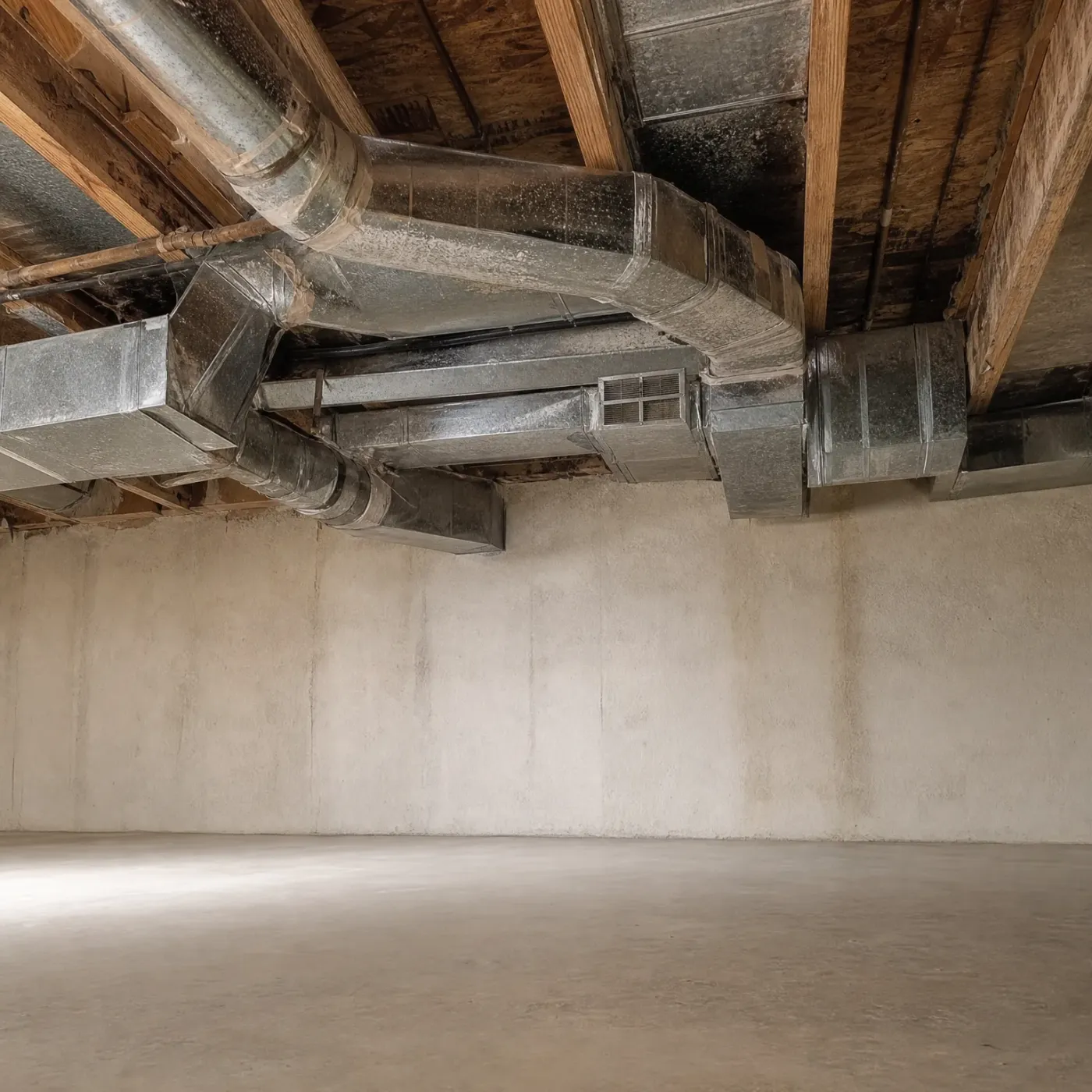
An empty basement room with bare concrete walls and floor, with galvanized sheet-metal HVAC ductwork and a vent grille running along the wooden joist ceiling.

Ducts carrying years of buildup

That dark coating on the metal is years of dust and sand packed along the inside. Air still gets through, but less of it, and the blower has to push harder to move the same amount of heat or cool air into your rooms.

So is it worth it? If your house was built in 1986 or earlier and nobody's touched the ductwork since, or you can see dust around the vent covers and feel weak airflow in the rooms farthest from the furnace, yes, a cleaning is worth having done. If the ducts have been cleaned in the last few years or the house is newer and nothing's showing up at the vents, there's nothing to gain by paying for it now. A local contractor who works on San Juan County ductwork all year has seen what Farmington's sand and dust do to a return run over decades, and knows the difference between a system that needs clearing out and one that's just old. When you ask for a look, it goes to one licensed contractor who handles this equipment regularly, not a handful of companies competing for the job. That means someone familiar with how homes here are built and what their ducts tend to collect, looking at your actual system instead of guessing from a list of symptoms.

Dark standing-seam metal roofs of wood-sided buildings in the foreground, with a single spruce tree, grassy hills, conifer forest, and snow-streaked mountain peaks behind.

Find a duct system cleaning pro in San Juan County

Find a local pro

There's no charge for the request.

A local contractor can look at your vents and tell you in minutes whether sand and dust have built up enough to matter, instead of you guessing from a gray ring around a vent cover. One visit, one company, and you'll know if cleaning is worth doing this year or if your ducts are still moving air the way they should.