


Side profile of a bearded man wearing a faded dark blue baseball cap and a matching dark T-shirt against a plain light gray background.

Birds nesting in a dryer vent in Las Cruces, NM

Duct and vent cleaningDoña Ana County, NM
Step 1 of 3

What kind of equipment?

Why do birds keep nesting in my dryer vent?

You've pulled lint out of the vent, maybe even pulled out part of a nest, and the birds come right back. It's usually house sparrows or starlings, and they don't give up after one try. You want to know why your dryer vent in particular keeps drawing them, and whether anything short of blocking it for good is going to work.

The vent hood looks like a ready-made cavity to a bird looking for one

A dryer vent opens to the outside through a hood with a flap, and that flap is the problem. Once a bird pushes it open and gets a few twigs inside, the flap no longer seals shut, and the opening stays easy to use. House sparrows and starlings build in the spring and will come back to the same spot year after year if it worked before. Out here, with Las Cruces summers running hot and dry for months, the vent also stays warm and dry inside compared to a tree branch, which makes it worth the effort to a bird. The fix isn't just clearing it out. It's putting a cover on that keeps the birds out without choking off the airflow your dryer needs to vent properly.

A gray-haired bearded man in a dark snow-dusted coat and scarf stands inside a dimly lit home entryway, with a hallway, framed picture, lit table lamp and staircase behind him.
An older man with gray hair and a beard, wearing a dark snow-dusted coat, stands in a warmly lit home entryway with a hallway, console table with lamp, patterned rug, and living room visible behind him.
An older man with gray hair and a beard, wearing a dark coat dusted with snow and a blue plaid scarf, stands smiling in a dimly lit entryway with a window, framed picture, table lamp and staircase behind him.
A gray-haired man in a dark coat dusted with snow stands in a warmly lit home entryway, with a lamp, sofa, window and white staircase banister behind him.

What does a nest in that vent actually put at risk?

  • 2.58 people per household on average

    With 2.58 people in the average Doña Ana County household, that dryer likely runs several loads a week, and a blocked vent means every one of those loads takes longer to dry.

  • Half the homes here were built by 1991

    Half the homes in the county were built in 1991 or earlier, so a lot of vent runs are older metal duct that birds can wedge into more easily than the smooth rigid pipe used today.

  • Power here costs 11.06 cents per kilowatt-hour

    Power here runs 11.06 cents per kilowatt-hour, and a dryer fighting a blocked vent pulls more of it every single load until the nest is cleared out.

ACS 2020-2024 · EIA-861 2025

How Birds Get In

  • Most residential dryer vents end in a flapper hood, and the flap is what a bird treats as a doorway into a sheltered cavity.
  • Once lint collects on the hood or in the first few feet of duct, it reads to a sparrow or starling as ready nesting material.
  • Birds build in spring, so a vent that looked clear in January can have a nest packed into it by April.
  • A nest doesn't just block airflow, it holds moisture against the ductwork every time the dryer runs.
  • The flapper itself can get pinned open by twigs and grass, which leaves the vent open to the next bird even after one nest is cleared.
  • A full duct clean removes the nest and the lint bed underneath it, not just what's visible at the hood.

The hood at the outside end of your vent has a flap on it, meant to swing open when the dryer's running and seal shut when it's not. That flap is the whole problem. A sparrow or a starling doesn't see a dryer vent, it sees a small sheltered opening at a good height off the ground, out of the weather and out of reach of most predators. If lint has built up around the hood or just inside the duct, that's soft material sitting right there, and a bird looking to build will use it. Spring is when this happens. A vent you checked in January and found clean can have a nest wedged into it by April, because that's when birds are pairing up and building, not when they feel like it the rest of the year.

Once a nest is in there, it's not just sitting in the way of the airflow. It holds onto moisture every time the dryer runs and that moist heat pushes against it, and damp nesting material against sheet metal duct isn't something that dries out and goes away on its own. The flap itself can end up part of the problem too. Twigs and grass stems get caught in the hinge and prop it open, so even after a nest is pulled out, the hood stays propped for the next bird to move in. That's why clearing what you can see at the hood doesn't always solve it. A full cleaning gets the nest and the lint bed that's built up behind it, further down the duct than a hand can reach.

A woman wrapped in a thick textured blanket sits on a sofa with an open book on her lap, beside a lit lamp and bookshelf, with a frost-patterned window behind her.
A smiling older woman with gray hair in a loose bun wearing a ribbed beige sweater stands in a dimly lit kitchen beside a window showing darkness outside, with a loaf of crusty bread on a wooden board in the foreground.

A dryer vent pro near you

A nest doesn't clear itself out once the birds move on. Sticks and lint pack into the duct and stay there, and every dryer cycle after that pushes hot, damp air against that blockage instead of outside. Pulling the visible nest from the hood doesn't tell you what's sitting further back in the line, and with sparrows or starlings this time of year, a flap that looks clear today can have new material behind it by next week. A contractor who works dryer vents around Las Cruces and the rest of Doña Ana County sees this pattern every season, nest after nest in the same style of hood, and knows where birds pack material that a homeowner can't see from the yard. Getting matched with one means someone local looks at your vent specifically, not a general checklist, and you're not fielding calls from five companies trying to figure out which one to trust with it.

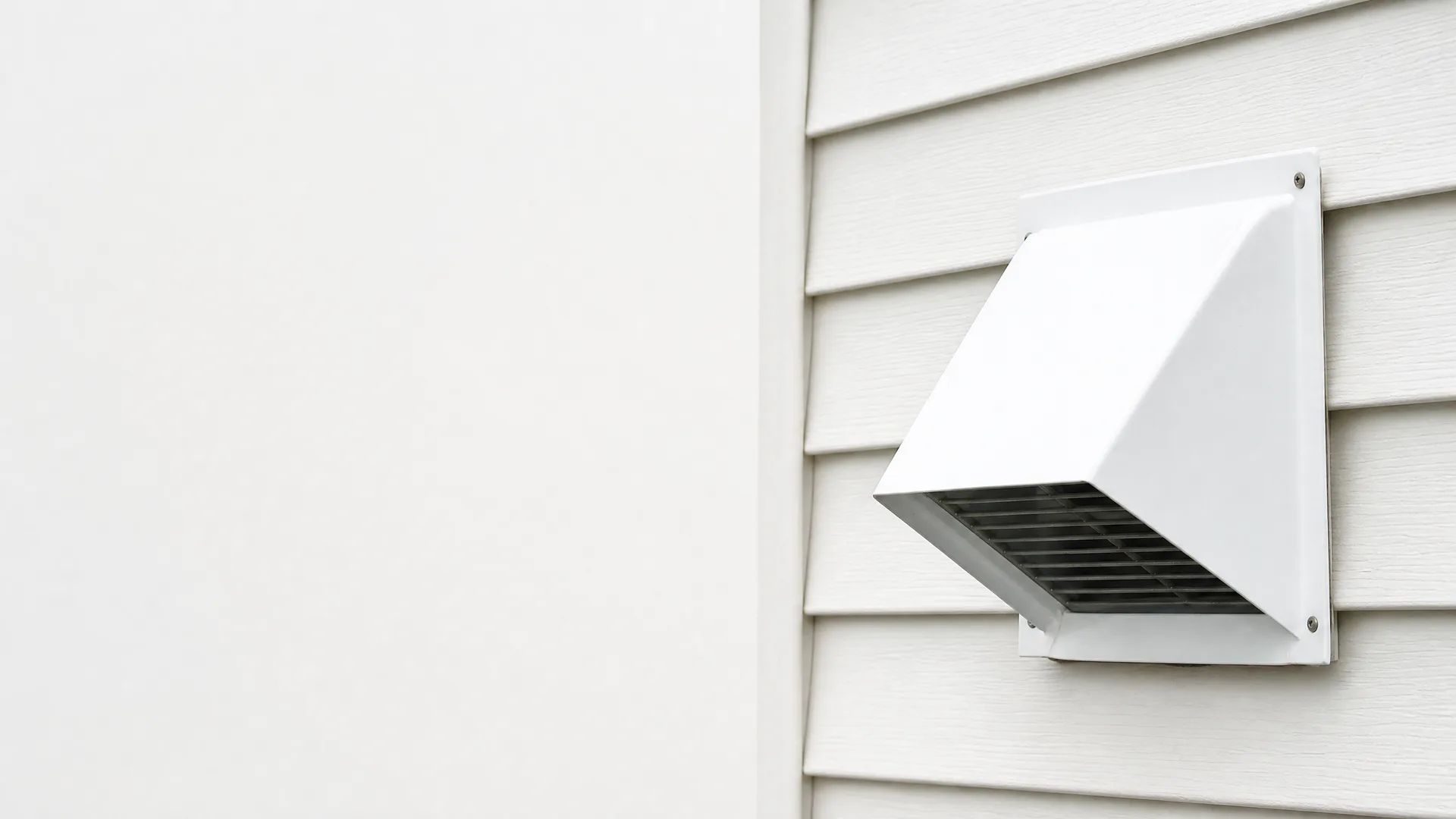
A white hooded dryer vent cover with a screened opening mounted on beige horizontal lap siding, with a blank white area filling the right side of the frame.

Leaving the vent alone

Nothing stops the nest from growing. Starlings add to a nest they've already started, and the duct behind the hood keeps filling with sticks and lint through the spring. Each load of laundry pushes more moisture into that packed material instead of outside. By summer, when the dryer runs most, the vent is doing less and less of its job, and the motor and heating element are working against a blockage they weren't built to push through.

A white hooded exterior vent cover with louvered grille mounted on light-colored horizontal lap siding, next to a blank wall corner.

Having the vent cleared

A contractor who works on vents in Doña Ana County every season knows where birds build in a flapper hood and how far back the nest usually reaches. Clearing it means pulling the nest material out of the full run of duct, not just what's visible at the hood, and checking that the flap still closes on its own once it's done. That's what keeps the next bird from reading the hood as an open door.

A man in a dark polo shirt and cap, seen from behind, walks up a paver path toward a woman standing in the open front doorway of a single-story stucco and stone house.

What this means for your laundry room

You notice it first in the dryer. Clothes that used to come out dry in one cycle need a second one, and the top of the dryer feels warmer than it used to. That's hot, damp air backing up into the duct because it has nowhere else to go. Run your hand near the outside hood while the dryer's going. Weak airflow, or none at all, means the blockage is already there, nest or no nest.

A local contractor who clears these vents every spring knows what a sparrow nest looks like three feet back in the duct versus what's just lint, and won't guess at it. Once you request service, you're matched with one licensed contractor near Las Cruces, not a handful of companies calling you back at once. They'll look at your vent, your hood, and what's actually built up inside before they tell you what it needs.

Living room interior with a light sofa holding a dark green cushion and a brown knit throw, a tall leafy plant by a black-framed window, a wooden coffee table with a round tray, and wooden shelves holding vases and books.
A white hooded dryer vent with a square screwed-on flange mounted on gray horizontal lap siding, above a concrete foundation wall edged with gravel stones.

Vent hood clear

This is what a clean hood looks like. The flap sits closed against the siding, and it only lifts when the dryer is running. No lint showing, no gap for a bird to push through. Air moves out fast each cycle, which is what keeps it this way.


A lint-clogged hooded dryer vent mounted on light gray horizontal lap siding above a concrete foundation wall.

Vent hood blocked

Lint has built up around the opening until the flap can't fall shut anymore. That gap stays open whether the dryer is running or not, and it's exactly what a sparrow or starling is looking for in early spring. Once the flap sticks, the vent stops doing its job.

A white plastic hooded dryer vent with a lint-covered screened opening mounted on beige horizontal vinyl siding above a concrete foundation.
Before you get your dryer vent cleaning
A white hooded louvered vent mounted on beige horizontal lap siding above a stucco foundation wall bordered by river rock gravel.
After you get your dryer vent cleaning
  1. A sparrow or starling finds the hood flap propped open by lint.

  2. The bird carries sticks through the flap into the duct.

  3. It packs the nest against the first bend in the pipe.

  4. Lint keeps sticking to the nest with every load you dry.

A white hooded dryer vent cover mounted on beige horizontal vinyl siding above a concrete foundation wall with gravel at the base.
A clear hood sits flush against the siding, and the flap only lifts when the dryer is pushing air through it.
A square plastic dryer vent hood mounted on light-colored horizontal lap siding above a concrete foundation, with gray lint clogging its screened opening.
Lint packed against the screen gives a bird somewhere to grip and something to build with.

2.58 people per household on average

With close to three people in most Doña Ana County households, the dryer is probably running most days of the week, not once in a while. A nest blocking that vent means every one of those loads is fighting a clogged duct instead of venting outside.

ACS 2020-2024

A dryer vent with a bird's nest in it doesn't fix itself, and pulling what you can reach from the hood only clears what you can see. The sticks and lint packed further back stay put until someone opens the duct and takes it out. Once that's done, the flap sits flush again and your dryer runs the way it did before any of this started. A contractor who works on vents across Doña Ana County all season has seen this exact problem more times than most homeowners ever will, in houses built the same way yours was, with the same hoods and the same sparrows and starlings looking for a way in every spring. You'll hear from one contractor, local to the area, not a handful of companies competing for your callback. They'll know what to check first because they've checked it before.

Corner of a house with cream horizontal lap siding and tree shadows, beside a covered porch with a square column, wooden deck, steps, white balusters, and a shrub at right.
Corner of a white clapboard house with a multi-pane wood window in warm low-angle sunlight, with hydrangea shrubs and other green foliage growing along the base and dark trees behind.
A wooden front door with divided-light glass panes set under an arched entry on a white shingled house, with a black wall lantern, a tall gray planter, flowering shrubs, and a flagstone walkway.
Exterior corner of a house with cream horizontal siding, a dark-framed three-section window, and a stone veneer foundation, with white hydrangeas and clipped shrubs along a paved walkway and tree branches overhead.
Corner of a white-clad house with a dark-framed grid window, dark downspout and eaves, surrounded by trimmed hedges, shrubs, white hydrangeas and a leafy tree in sunlight.

Get matched with a dryer vent pro in Doña Ana County

A licensed pro who works in Doña Ana County gets your request.

Find a local pro

You only hire the pro if you want to.