Mini Split Installation in Santa Fe, NM
A new system here will heat from October through May and cool from July through August every year. Tell us about the house, and a licensed contractor who covers Santa Fe County will get in touch.
Tell us about the job
It takes about a minute.
Santa Sante Fe County asks a mini-split to work most of the year
Heat is on here from October through May, eight months of the year, with winter nights averaging 20°F from December through February. That is a long, cold stretch for a heat pump to pull warmth out of the air, night after night, without falling behind.
Summer is short by comparison, just July and August, with afternoons averaging 84°F. Ten months of the year the house is asking a mini-split for one job or the other, heat or cooling, so it has to handle both well. Any new one has to meet the federal minimum for split-system heat pumps, 14.3 SEER2 for cooling and 7.5 HSPF2 for heating, and that is the floor, not a target to aim for.
- 8 months
- October through May, your system heats
- 2 months
- July through August, it cools
- 20°F
- the average winter night it heats against
- 84°F
- the average summer afternoon it cools against
NOAA nClimDiv, 1991–2020 normals
New Mexico requires HVAC contractors to hold a state license.
The license comes from the Construction Industries Division, and it belongs to the contractor, not the job. The state tested this contractor before handing it out, and it keeps a record of who holds one. That license does not get reissued for every mini-split someone installs. It is the contractor's standing, and it follows them from one job to the next.
For this installation, the county or city building office is what checks the work itself. A mini-split install needs a permit in most places, and an inspection once it is in, separate from anything the state license covers. The license tells you the contractor was vetted. The permit and inspection tell you this particular job got looked at by someone local before it was called done.
Source: New Mexico Regulation and Licensing Department
- Is a mini split worth it?
- For most homes here, yes, especially in rooms that never had good heat or cooling to begin with. A mini split handles both jobs with one system, and it works down into cold weather far better than an old window unit or electric baseboard. Winter nights here average 20°F, so the unit chosen has to be rated for that kind of cold. Talk to a contractor about which model holds its output at those temperatures before deciding.
- How many rooms can a mini split cover?
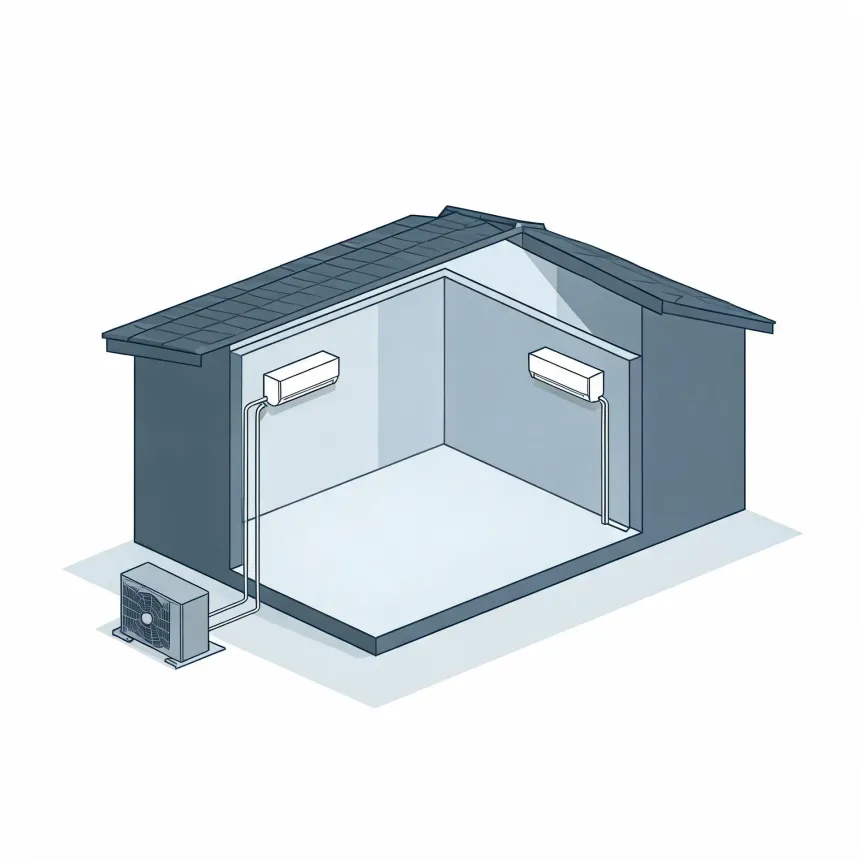
- It depends on the outdoor unit. Some outdoor units run a single indoor head, others run several, each one heating and cooling the room it's mounted in. The layout of the house matters as much as the room count, since a head only reaches the space it's in. A contractor will look at the square footage, the ceiling height, and how the rooms connect before sizing the system.
- Can a mini split heat a whole house?
- It can, if there's an indoor head in every room that needs heat, or if the layout is open enough for a few heads to cover it. A house with a lot of closed-off rooms needs more heads to do the job right. Since homes here need heat from October through May, sizing the system for real winter performance matters more than it would somewhere milder. A contractor can walk the house and say how many heads it would take.