Mini Split Installation in Las Vegas, NM
A new system here will heat from October through May and cool from June through August every year. Tell us about the house, and a licensed contractor who covers San Miguel County will get in touch.
Tell us about the job
It takes about a minute.
Eleven months a year, your mini-split is working
San Miguel County asks a lot of a heat pump. Winter nights average 22°F from December through February, and a mini-split has to pull heat out of air that cold and push it inside. Come summer, afternoons average 87°F and it switches to pulling heat out of the house instead. Between the two, homes here need heat or cooling 11 months of the year, with only a short stretch that asks nothing of the system.
A new unit installed today has to meet the federal minimum for split-system heat pumps, 14.3 SEER2 for cooling and 7.5 HSPF2 for heating. That is the floor, not a target, and with this many months of runtime, the unit you pick is doing real work most of the year.
- 8 months
- October through May, your system heats
- 3 months
- June through August, it cools
- 22°F
- the average winter night it heats against
- 87°F
- the average summer afternoon it cools against
NOAA nClimDiv, 1991–2020 normals
New Mexico requires HVAC contractors to hold a state license.
The Construction Industries Division tests contractors before issuing that license, and keeps a record of who holds one. It's tied to the contractor, not to any single job, so the license that qualifies someone to install a furnace or water heater is the same one that covers a mini-split going into your home.
In most cities and counties in New Mexico, installing a mini-split needs a permit from the local building office, with an inspection once the work is done. That inspection is separate from the license itself, and it's what checks the work after the contractor is done rather than before they were hired.
Source: New Mexico Regulation and Licensing Department
- Is a mini split worth it?
- For the right house, yes. A mini split heats and cools without ductwork, so it works well in a room addition, a garage conversion, or a house that never had ducts to begin with. Winters here run cold enough, down to 22°F on average overnight in December through February, that the unit needs to be sized and rated for real heating, not just touch-up warmth. A contractor can tell you whether a mini split fits your house better than central air or a furnace replacement would.
- How many rooms can a mini split cover?
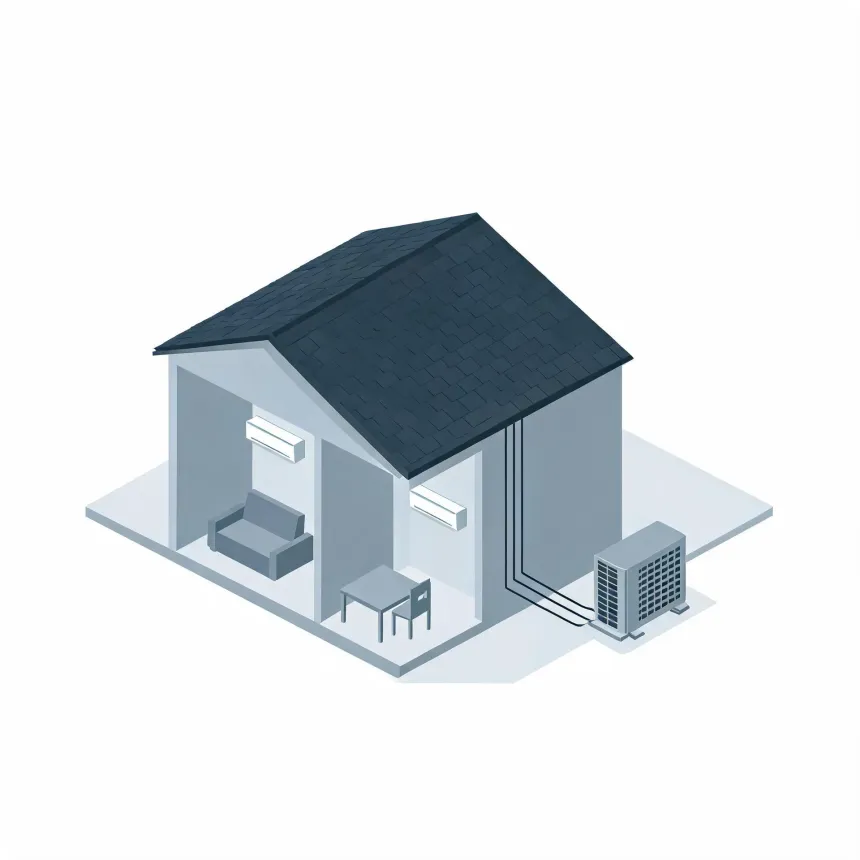
- One outdoor unit can run up to eight indoor heads, so it can cover several rooms at once. Each indoor head is matched to the room it heats and cools, and each one can be set to its own temperature. A contractor sizes the outdoor unit and picks the number of heads based on the rooms you want covered, so the system that fits a two room addition looks different from one covering a whole floor.
- Can a mini split heat a whole house?
- It can, if it's designed for the whole house from the start. That means enough indoor heads to reach every room, and an outdoor unit sized for the heat the house loses on the coldest night, not an average one. Homes here need heat from October through May, eight months of the year, so undersizing shows up fast. A contractor can work out whether whole-house coverage makes sense for your layout or whether part of the house is better served another way.