
HVAC Repair in Los Alamos, NM
If your system quits, tell us what it's doing and a licensed contractor who covers Los Alamos County will get in touch.
Tell us about the job
It takes about a minute.

Nine months of heat, and nights near zero
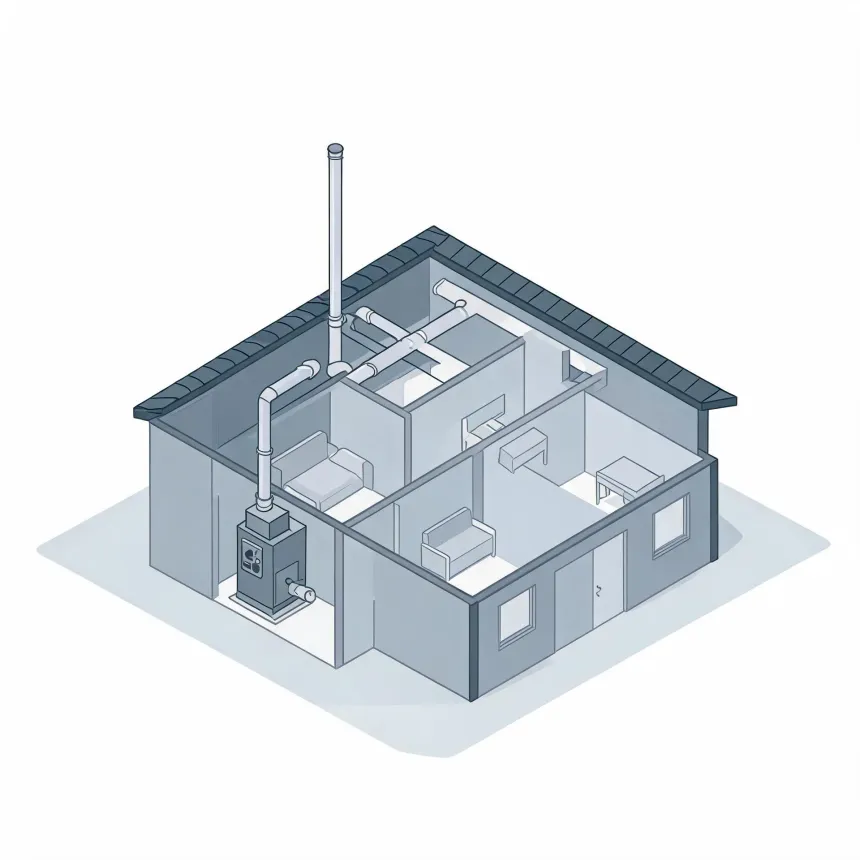
Your furnace in Los Alamos County runs from September through May. Winter nights average 19°F, so the burner is cycling on and off most hours of the day to keep up. Most homes here heat with gas, and every one of those cycles puts wear on the igniter and the flame sensor. When one of those fails, the furnace won't light at all.
Summer only asks the other end of the system to do a little work, with afternoons around 80°F. Storms are the bigger risk here. Los Alamos County has seen 31 winter storms and 11 damaging wind events over the past ten years, and either can knock out power. Most furnaces need electricity to run even with a gas flame, so an outage means no heat until power is back.
- 9 months
- September through May, your system heats
- 19°F
- the average winter night it heats against
- 80°F
- the average summer afternoon it cools against
A new furnace and air conditioner would cut about $100 a year off heating and cooling for a typical Los Alamos County home.
Estimates for a typical Los Alamos County home, compared with an older unit built to the previous federal minimum, from EIA household energy data, New Mexico fuel prices and NOAA climate normals. Your home will differ.
Repair makes sense when one part has failed.
Replacement makes sense when the furnace's heat exchanger is cracked, the air conditioner's compressor has failed, or repairs keep coming.
New Mexico requires HVAC contractors to hold a state license.
The Construction Industries Division tests and licenses HVAC contractors before they can legally take on work like this. That license belongs to the contractor, not to any single job, so it travels with them from house to house rather than getting issued fresh each time.
For a heating and cooling repair, that license is what stands behind the person working in your house. It means the state has tested this contractor and keeps a record of them, which is the protection a homeowner has here.
Source: New Mexico Regulation and Licensing Department
- Why is my heat not working?
- The most common cause is the igniter, especially after a furnace has been running for months straight. If the igniter is weak or cracked, the furnace tries to start, fails, and shuts itself down as a safety measure. A dirty flame sensor causes the same shutdown, and so does a clogged filter that starves the furnace of airflow. With winter lows here dropping to 19°F, a furnace that keeps shutting down needs attention quickly, since the house will cool fast without it.
- Why is my system running but not cooling the house?
- Check the filter first. A filter clogged with dust blocks airflow across the coil, and when air cannot move past it, the coil can ice over and stop cooling the air at all. If the filter is clean, the problem is more likely low refrigerant from a leak or a failing part in the outdoor unit, and that calls for a licensed contractor. Homes here rarely need cooling, so a system that struggles on the handful of warm afternoons a year is often one that has not run enough to reveal a problem sooner.
- What can I check before calling for HVAC repair?
- Start with the filter. Pull it out and hold it up to a light. If you cannot see light through it, replace it, since a blocked filter alone causes many of the no-heat and no-cool calls a contractor gets. Next check the thermostat has power and is set below room temperature for heat or above it for cooling. If the system still will not run, check the breaker box, since a tripped breaker will stop a furnace or air conditioner outright. Beyond that, a licensed contractor is the next step. New Mexico requires HVAC contractors to hold a state license, issued through the Construction Industries Division, to do this kind of repair work.