
HVAC Installation in Silver City, NM
A new system here will heat from October through April and cool from June through August every year. Tell us about the house, and a licensed contractor who covers Grant County will get in touch.
Tell us about the job
It takes about a minute.

Silver City asks a lot of a heating and cooling system
Heat runs October through April here, seven months a year, on nights that average 27°F. Cooling picks up June through August, when afternoons reach 87°F. Ten months of the year, one system or the other is working.
A furnace or heat pump sized for those winter lows, and an air conditioner sized for those summer highs, will hold up better than one picked to just get by. Power matters too. Grant County has seen 11 winter storms and 46 damaging wind events over the past ten years, and 13% of New Mexico households went at least a day without power in 2024. Whatever gets installed should start back up on its own once the power does.
- 7 months
- October through April, your system heats
- 3 months
- June through August, it cools
- 27°F
- the average winter night it heats against
- 87°F
- the average summer afternoon it cools against
NOAA nClimDiv, 1991–2020 normals
New Mexico requires HVAC contractors to hold a state license.
New Mexico licenses HVAC contractors through the Construction Industries Division. That license is held by the contractor, not issued for each job, so it is the company's standing with the state that backs the work, not a one-time approval for your installation.
For this kind of job, installing a furnace and air conditioner or heat pump, the local building office typically requires a permit, with an inspection once the work is done. That inspection checks the installation itself, separate from the license the contractor already holds.
Source: New Mexico Regulation and Licensing Department
- When should I replace my HVAC system?
- Replace it when repairs keep coming or the system can't keep up anymore. Once a furnace or air conditioner needs a major part like a heat exchanger or compressor, a contractor can tell you whether it's worth fixing or past the point that makes sense. Homes here run the heat October through April and the air conditioner June through August, so a system that struggles in either stretch is working most of the year, not just a few weeks. If you're patching the same unit every season, replacing it stops the cycle.
- Should I replace my furnace and air conditioner at the same time?
- If both are old, yes. A furnace and air conditioner installed together are matched to work as one system, and replacing only one can leave the new part running against an old blower or old coil it wasn't sized for. Winters here average 27°F and summers reach 87°F, so both sides of the system carry real work most of the year. If one unit is still young, a contractor can tell you whether it's worth pairing now or waiting until it needs replacing on its own.
- What happens during an HVAC installation?
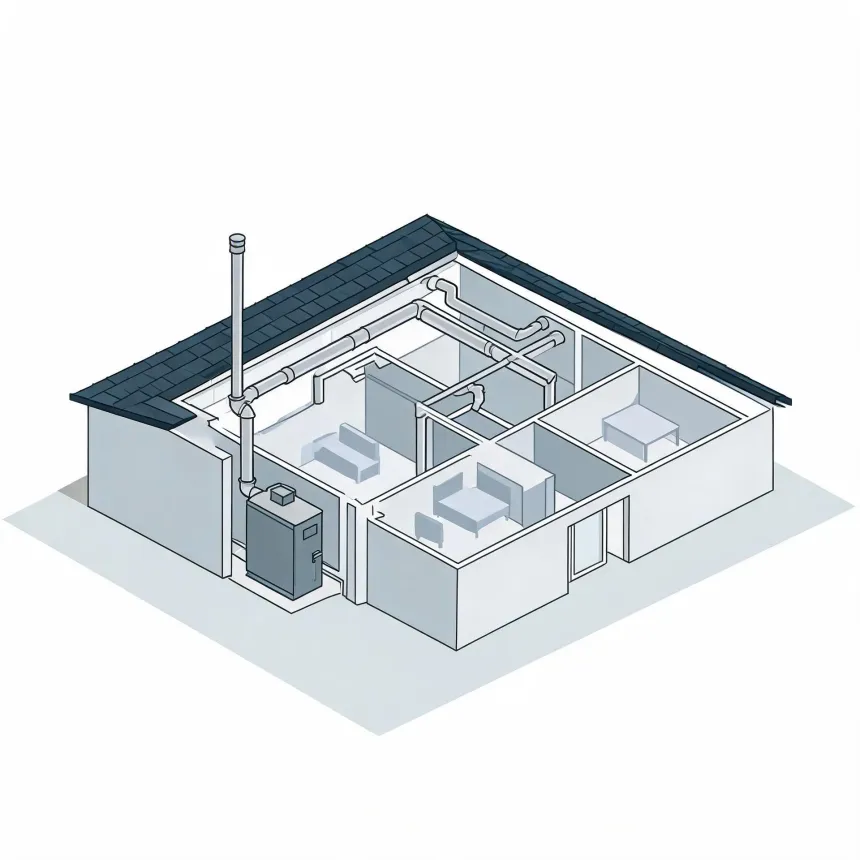
- A contractor removes the old furnace and air conditioner, or heat pump, and sets the new equipment in its place, then connects it to the ducts, the gas line or electrical circuit, and the refrigerant lines. They check that the new unit is sized correctly for the house before running it, since a unit that's too big or too small won't heat or cool evenly. This work needs a permit from the local building office, and the job gets inspected once it's done. After installation, the contractor runs the system through a full heating and cooling cycle to make sure it's working the way it should.