Dryer taking too long to dry in Rio Rancho, NM

Send the form and finding a dryer vent cleaner is handled.

Hand it off

Why is my dryer taking forever to dry clothes?

You load the dryer, run a full cycle, and the clothes come out still damp. So you run it again. Maybe a third time. It used to take one cycle. Now it takes two or three, and the laundry room gets noticeably warmer than it used to. Something changed, and it's worth figuring out before the dryer has to work this hard every time you do a load.

A clogged dryer vent is the most common cause

When a dryer runs longer than it used to, the vent is usually the reason. Lint builds up inside the vent duct over time, not just in the trap you clean after every load. As the duct narrows, the moist air from your clothes can't get outside fast enough, so the dryer keeps running to finish the job. You'll usually notice the dryer running hotter than normal, or the outside vent hood barely pushing air when the dryer is on. A vent that's been cleaned recently should push air out strongly enough to feel it from a few feet away. If yours doesn't, lint is the likely culprit, and it's worth having the full vent run checked rather than just the trap.

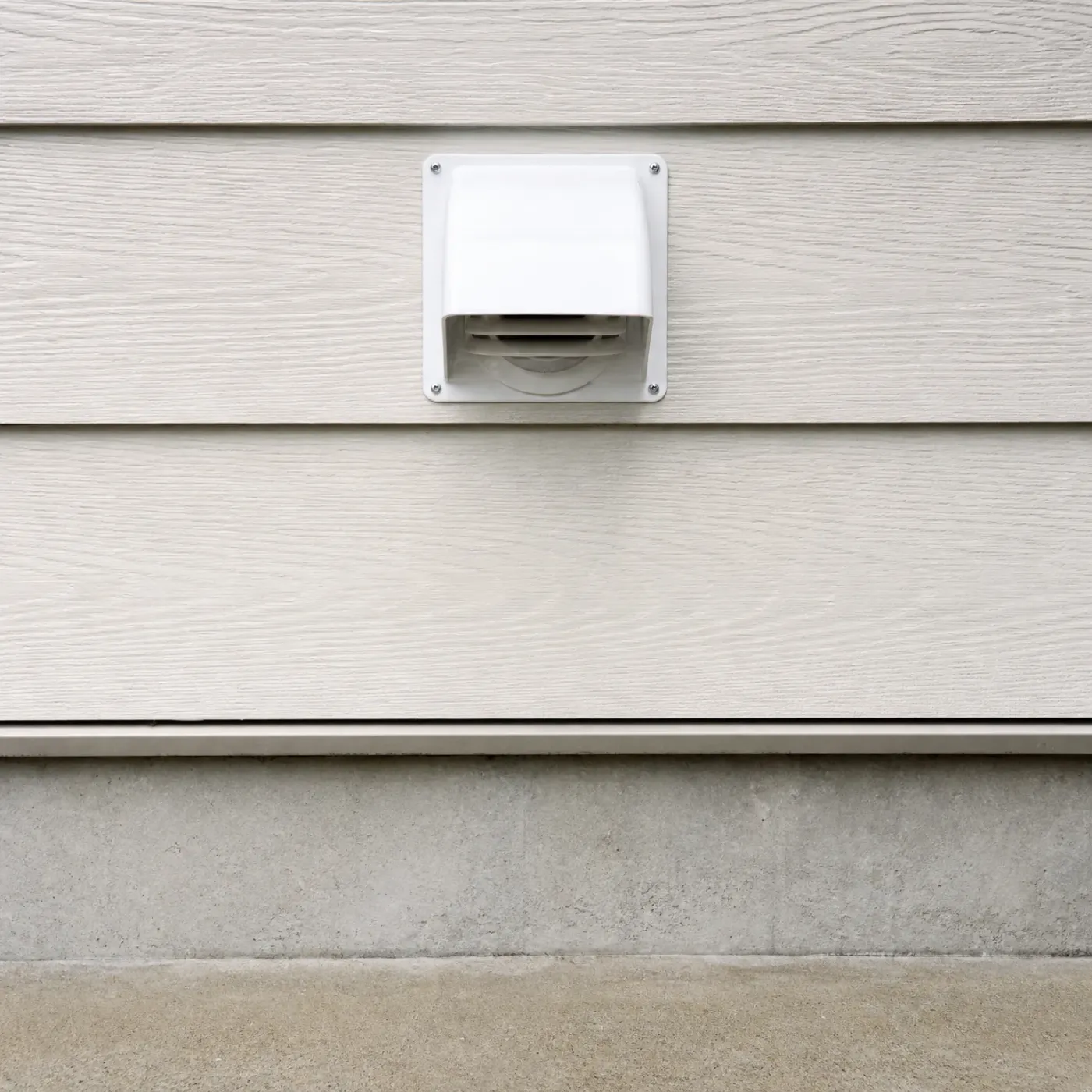
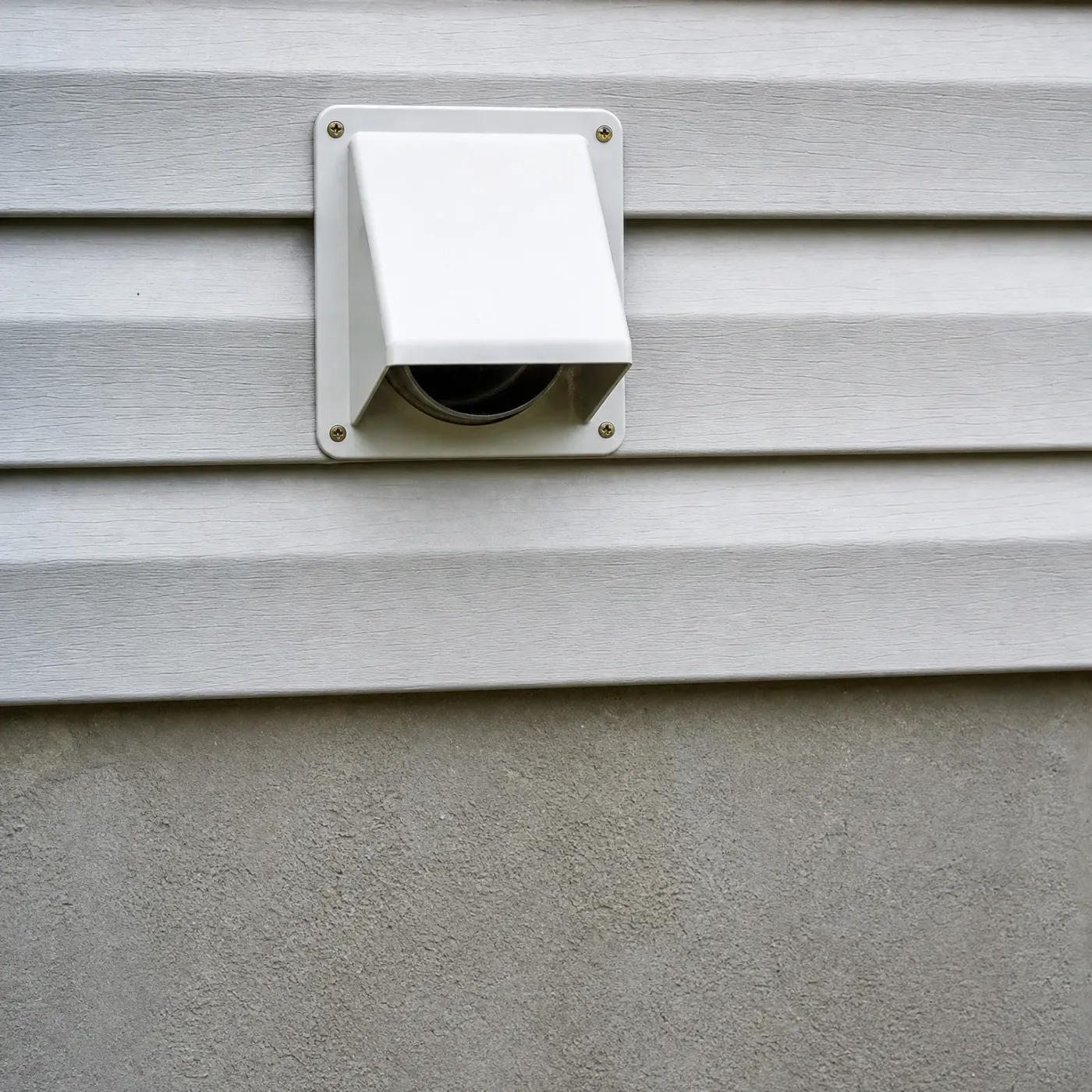
A white hooded dryer vent with a square mounting plate screwed onto light gray horizontal vinyl siding, above a gray stucco-textured lower wall.

Vent clear and open

This is what the hood should look like. The flap hangs loose and swings open with no resistance when the dryer kicks on. Warm, moist air pushes out fast, the flap stays open through the whole cycle, and a cycle still takes about an hour.
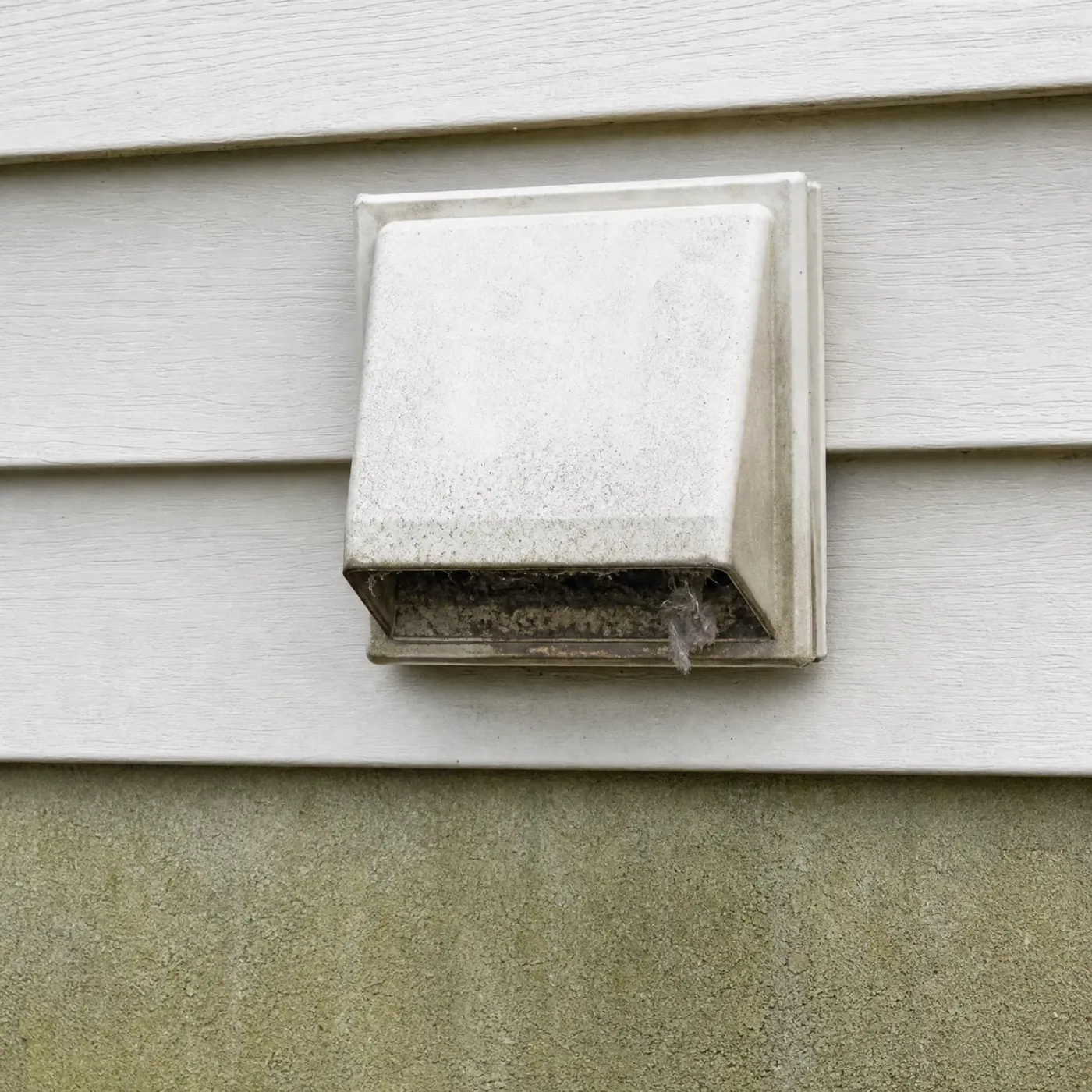
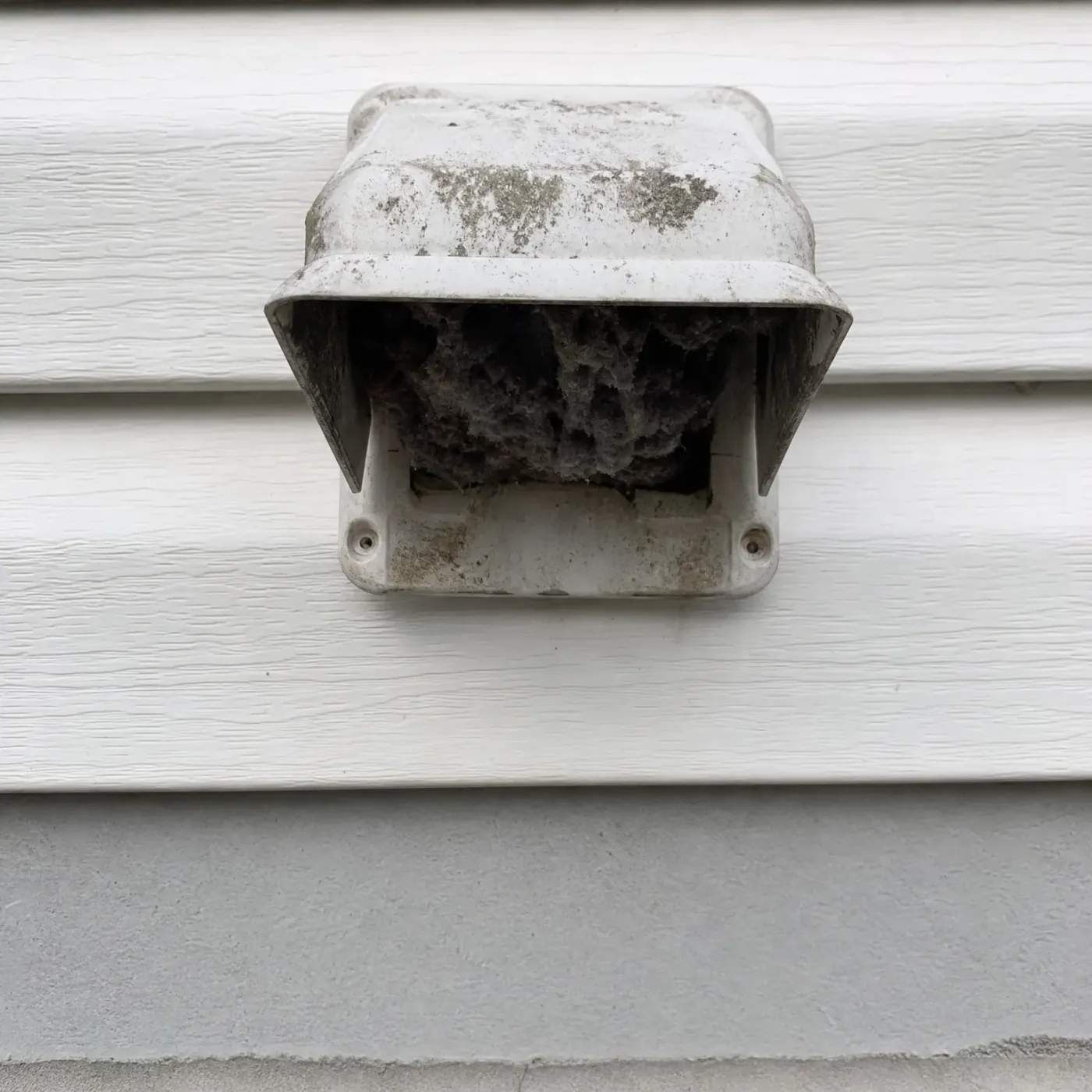
A white plastic dryer vent hood mounted on light-colored horizontal lap siding, with lint caught in its lower opening and a green-stained foundation wall below.

Vent packed with lint

Here the flap barely moves because lint has built up inside the opening and caught on the edges. Air that should rush out just seeps past the clog. The dryer runs longer trying to push air through, and lint like this is what slows your drying time and strains the motor.

Why does a slow dryer hit some Sandoval County homes harder than others?

  • 2.68 people per household on average

    With 2.68 people in the average household here, laundry runs often, and a dryer that needs two cycles instead of one adds up fast over a week.

  • Half the homes here were built by 1997

    Half the homes in Sandoval County were built in 1997 or earlier, which means more years for lint to pack a vent run before anyone thinks to check it.

  • Power here costs 16.32 cents per kilowatt-hour

    At 16.32 cents per kilowatt-hour, every extra cycle a clogged vent forces costs more here than it would somewhere with cheaper power.

ACS 2020-2024 · EIA-861 2025

How a Clogged Vent Slows Drying

  • Lint builds up inside the duct itself, not just in the trap screen, narrowing the path air has to travel.
  • A clogged vent forces the dryer to recirculate hot, damp air instead of pushing it outside, so clothes stay wet.
  • The thermal fuse can blow when airflow drops, and once it does the dryer may run with no heat at all.
  • Rigid metal duct moves air better than the coiled foil or plastic kind, which traps lint at every ridge.
  • Every extra foot of duct and every turn it makes cuts down how much air actually makes it outside.
  • A dryer venting straight out a short, straight wall runs a full cycle faster than one tied into a long duct run.

A dryer dries by pushing hot air through wet clothes and then pushing that air, now carrying the moisture, out through the duct. Lint doesn't stop at the trap. Enough of it gets past the screen and builds up along the inside of the duct over time, and that buildup narrows the path the air has to travel. As it narrows, less air moves, and the dryer starts pushing some of that hot, damp air back into the drum instead of getting it outside. Clothes come out of a cycle still carrying moisture they should have lost. Run the dryer long enough against that kind of resistance and the thermal fuse can blow, a small safety part that cuts the heater off when it senses the airflow isn't there. Once it blows, the drum still turns but no more heat comes out. The duct material matters too. Rigid metal duct gives air a smooth path. Coiled foil or plastic duct has ridges, and lint catches on every one of them, so it fills in faster. Length and turns work against the dryer as well. A vent that runs straight out a nearby wall clears a cycle's worth of moist air with little effort. A vent that runs thirty feet and turns twice has to push that same air much farther, against much more resistance, before it ever reaches outside.

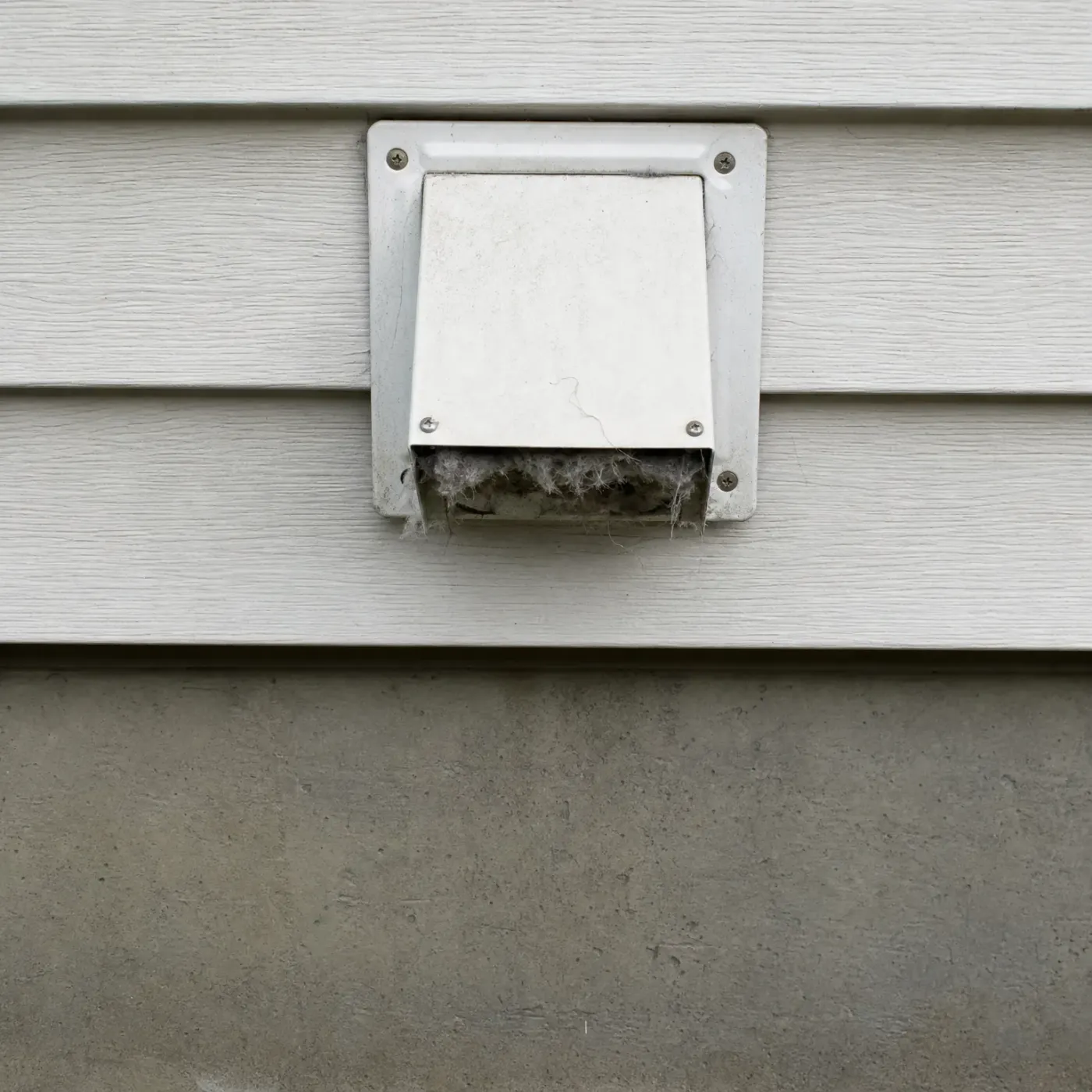
A white plastic dryer vent hood with a hinged flap mounted on light grey horizontal lap siding, with lint clogging the opening beneath the flap and a concrete foundation wall below.
Before you get your dryer vent cleaning
A white hooded dryer vent with a grille mounted on tan horizontal lap siding above a concrete slab.
After you get your dryer vent cleaning

Run a load twice because the first cycle didn't finish and you've paid for two cycles of heat and tumbling instead of one. That's not a one-time thing either. It happens every laundry day, week after week, and power in Sandoval County isn't cheap to begin with. The damp clothes themselves are a problem before you even get them folded. Leave them in a warm drum too long and they start to smell musty, and the room they're drying in stays hot and sticky long after the dryer shuts off. Inside the machine, a blocked vent means the dryer is working harder than it was built to, running hotter for longer, which leans on the heating element and the thermal fuse more than it should. Left alone, the lint packed into the duct doesn't stay the same. It builds with every load until the dryer is barely drying anything. Months of that kind of strain is how a dryer that should last years starts to wear out early.

What a Slow Dryer Costs You

  • A dryer that needs two or three cycles to finish a load is pulling double or triple the electricity that one cycle should, and with power costs what they are in Sandoval County, that shows up on the bill every month.
  • Clothes sitting damp in the drum for longer than usual pick up a musty smell, and the laundry room itself stays warm and humid well after the cycle ends.
  • A blocked vent makes the dryer run hotter than it should, which puts extra strain on the heating element and the thermal fuse.
  • If lint keeps packing into the duct instead of venting outside, the restriction gets worse load after load until the dryer barely dries anything at all.
  • A dryer running hot and long for months at a time is the kind of strain that shortens how many years it lasts.
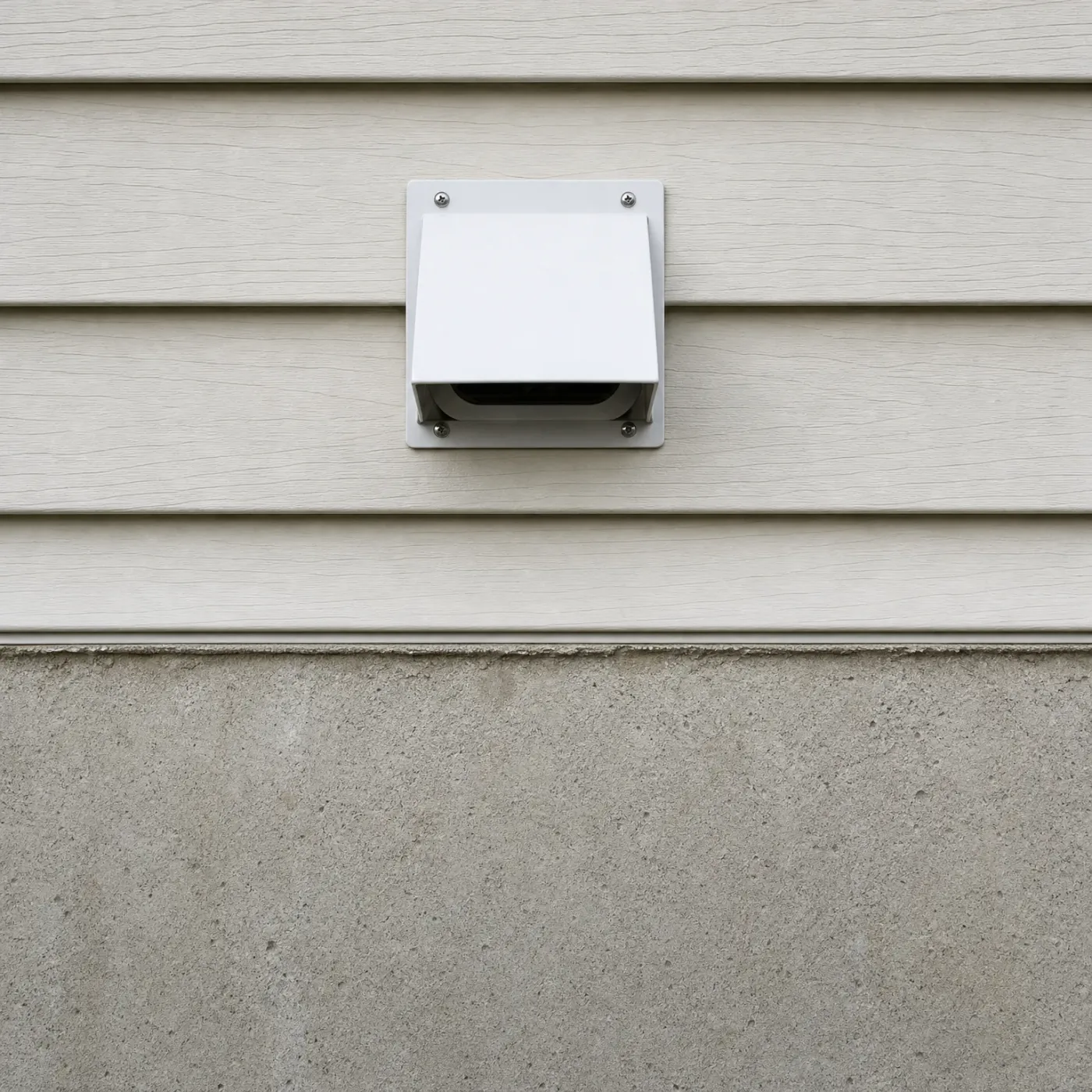
A white hooded dryer vent with a louvered flap mounted on beige horizontal lap siding above a concrete foundation wall.
The flap swings open the moment the dryer starts and the screws holding the cap are clean against the siding.
A white plastic dryer vent hood on horizontal lap siding, clogged with thick gray lint and dirt, above a lighter concrete foundation wall.
Lint has packed the opening solid, and the dirt and mildew on the cap show air hasn't moved through it in a while.
A bearded man in a dark blue T-shirt sits on a gray couch, smiling and looking down to his left, with a bookshelf and a bright window behind him.
A bearded man in a plaid flannel shirt looks out a window at snow-covered conifer trees, with a steaming ceramic mug on the sill and wooden shelves holding dishes and a plant behind him.

Stop chasing a dryer vent pro

The pro who gets in touch is licensed in New Mexico and works in Sandoval County.

You're not committing to anything by asking.

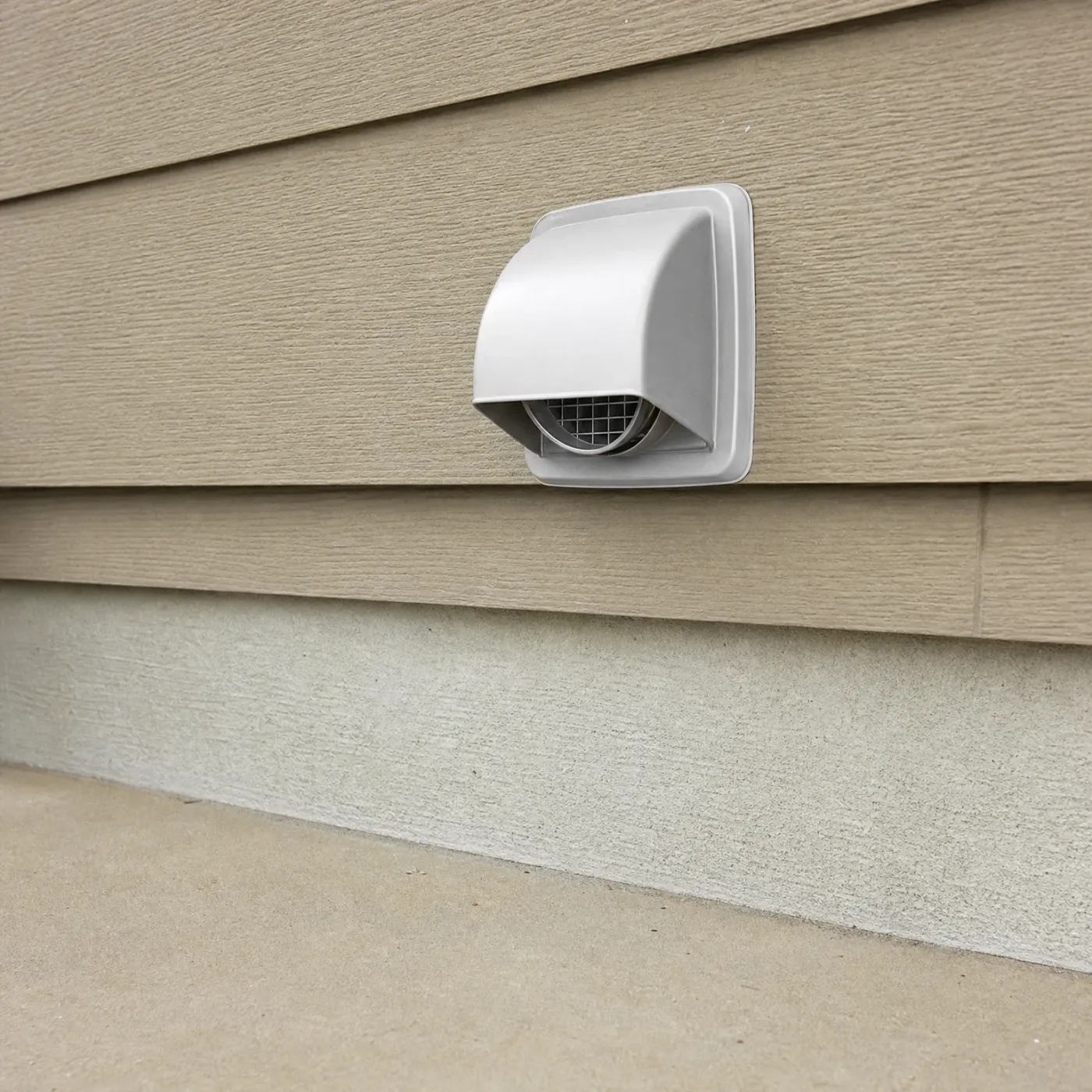
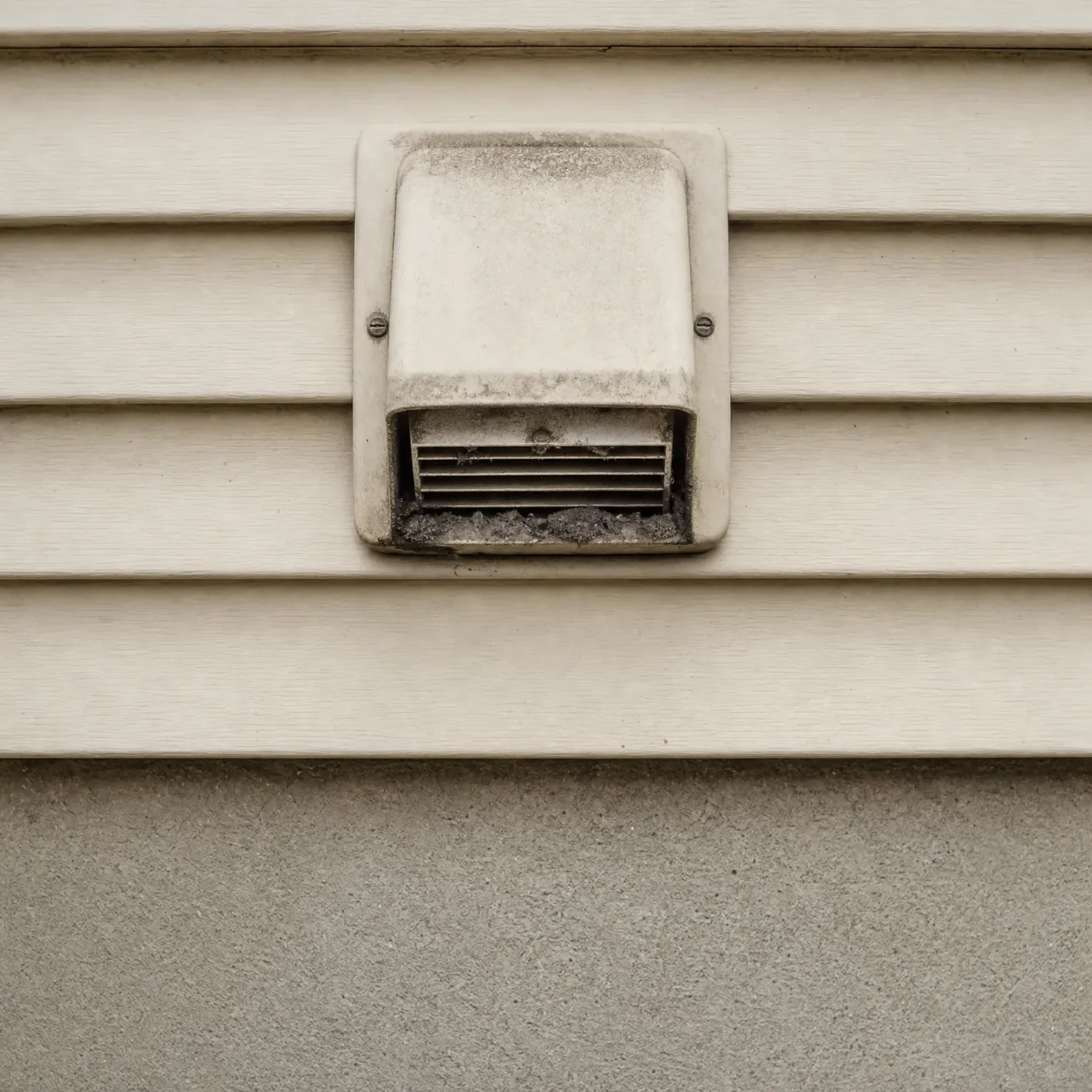
A white hooded dryer vent with a square mounting plate fastened to beige horizontal lap siding above a concrete foundation wall.

The cap sits clean and the flap moves

This is a vent doing its job. The cap is free of buildup, the screws are clean against the siding, and the flap swings open the second the dryer starts, giving the hot, wet air a clear path outside.

A dusty plastic louvered dryer vent hood screwed into beige horizontal vinyl siding above a gray stucco foundation wall, with lint buildup around the slats.

Lint has sealed the opening shut

This cap hasn't moved air in a while. Lint and dust have packed into the louvers until the opening is nearly solid, so instead of venting outside, the moisture has nowhere to go but back into your dryer.

What are you noticing with your own dryer right now?

Touch the front of the dryer partway through a cycle and it feels hotter than it should, almost too hot to rest your hand on. The laundry room holds a warm, damp smell that lingers after the cycle ends. Towels and jeans come out heavier than they should, still cool and damp at the seams. You might notice the outside vent hood barely puffs air when the dryer is running, or not at all. Lint collects faster around the trap, sometimes even behind the dryer on the floor. Left alone, that trapped heat has somewhere to go, and it is not out the vent. A dryer working this hard, cycle after cycle, is also a dryer running hotter than it was built to run.

A smiling man in a green long-sleeve shirt stands at a dark kitchen counter with a ceramic mug, with wood cabinets, white tile backsplash, and a window and dining table behind him.
A smiling man with wavy dark hair and a beard, wearing a navy sweater, sits at a kitchen counter with a gray mug, with a dining table, potted plant and windows behind him.
A bearded man in a dark green sweater smiles and looks to his right while seated at a white kitchen counter with a gray mug, with windows and greenery behind him.
A smiling man in a dark navy sweater stands in a home interior beside a counter with a white mug, with a kitchen, hallway and potted plant in the background.

2.68 people per household on average

With close to three people in most Sandoval County households, laundry piles up fast and the dryer runs most days of the week. A vent that's even partly blocked turns every one of those loads into two cycles instead of one.

ACS 2020-2024

A white plastic hooded dryer vent with a louvered opening mounted on gray horizontal lap siding, beside a plain light-colored wall surface.

You clean the lint trap every load

That screen catches most of the lint, and an empty one feels like you've done the job. But it only catches what's in the drum. The rest rides the airstream down the duct and sticks to the walls further in, past where you can see or reach. The trap being clean tells you nothing about what's built up in the fifteen or twenty feet of duct between the dryer and the outside wall.

A white hooded dryer vent cover screwed to beige horizontal lap siding on an exterior house wall, with a blank wall at left.

You still run two cycles a load

A clean trap and a load that still comes out damp after one cycle means the problem isn't the screen. It's further down the line, in the duct itself or at the hood outside. Each extra cycle is the dryer running longer to push air through a path that's narrower than it should be. The trap being clear just rules out the one spot you can check yourself.

A dryer that takes two or three cycles to dry one load has a blocked vent, and clearing that path is what brings it back to one. That's the whole fix. Once the duct is open again, the hot air that used to circle back into the drum goes outside where it belongs, and the dryer stops working twice as hard for the same load. Sandoval County contractors who clean vents for a living see the same lint-packed ducts and sealed-shut flaps in house after house, because the dryers here run on the same gas lines and pull the same power everyone else's does, and they know within a few minutes of looking whether the blockage is at the cap, deep in the duct, or somewhere in between. You'll get matched with one local contractor for this, not a handful competing for your callback, so the person who shows up already knows what a packed vent in this area usually looks like before they ever open the cap. From there it's a straightforward job: clear the line, check the flap moves freely, and hand the dryer back to you working the way it did when it was new.

A single-story house with horizontal siding and large windows lit from within at dusk, beside a lawn, low path lights and a dark gravel driveway, with pine trees and a distant waterway under an orange and blue sky.

Dryer Vent Cleaning

Send one request and you're done looking

Duct and vent cleaningSandoval County, NM
Step 1 of 3

What kind of equipment?

  • A ceramic table lamp with a tapered beige shade sits on a wooden side table with a drawer, beside a shallow wooden bowl holding a stone sphere and a potted green plant, next to an upholstered chair with a knit throw.
    • Get matched with a Sandoval County pro who cleans dryer vents.
    • Get matched with a pro who works on dryer vents in Sandoval County.
  • A potted green trailing plant in a textured ceramic pot with saucer sits on a wooden side table beside a small wooden bowl, with a ceramic table lamp, framed picture, and sunlit window nearby.
    • Send the form and the dryer vent cleaning stops sitting on your list.
    • After this form, you can stop searching for a dryer vent pro.
  • A beige upholstered armchair with a green cushion and knit throw sits beside a tall indoor plant and a wooden side table holding a potted plant near a bright window.
    • Skip searching for someone who cleans dryer vents in Sandoval County.
    • Answer a few questions instead of calling shop after shop.
  • A beige upholstered armchair with a striped cushion and fringed throw sits beside a window with sheer curtains, next to a wooden side table holding a dark ceramic lamp, with a potted tree in a woven basket behind and a jute rug on the dark wood floor.
    • The pro who reaches out is licensed in New Mexico.
    • Only one pro gets your request, so you hear from one company.