Send the form and the air conditioner tune-up stops being something to remember.
Closing vents in rooms you don't use sounds like it should help. It doesn't, and in a lot of homes it works against you.
Your air conditioner moves a fixed amount of air no matter how many vents are open. Shut a few, and that air has nowhere to go. Pressure builds in the ductwork. The system has to push harder to move the same volume, and in a dry heat state like New Mexico, where the AC already runs long hours through the summer, that extra strain shows up as higher bills and more wear on the parts that keep it running.
A system fighting its own ductwork is a system more likely to need a repair mid-summer, usually on the hottest day, when you'd rather not be making calls. The coil can freeze. The blower motor works harder than it was built to. None of that is obvious from inside the house. What you notice is a room that still feels warm, or a bill that climbs for no reason you can see.
A contractor who services AC systems in New Mexico every summer knows what this kind of strain tends to break first in homes here, and can look at your ductwork and your vents and tell you whether anything needs adjusting, or whether the real issue is somewhere else entirely.
Once you send the request, that search stops being something you have to do. You're not chasing quotes or waiting on hold with a call center. One local contractor gets matched to your home, licensed to work on your system, and the rest of the legwork is off your plate.
Fill out the form below and let someone who knows this equipment take it from here.
Does closing vents in unused rooms help my AC in New Mexico?
With summers here running hot and dry, it makes sense to want to help your AC along, especially in rooms you keep shut most of the year. Closing vents feels like it should cut the work your system has to do and save you something on power. But the way your air conditioner moves air doesn't work the way that idea assumes, and knowing why matters before you start shutting doors and vents all summer.
No, closing vents doesn't help your AC
Your air conditioner's blower is built to push a set amount of air through your ductwork. Close off vents and that air still has to go somewhere, so pressure builds in the ducts instead. That extra pressure can force air out through small gaps and seams, which means some of the cool air you paid to make never reaches any room at all. The blower motor also has to work harder against that pressure, and in a hot New Mexico summer that adds up over months of steady use. Instead of lowering your bill, closed vents can push it up while leaving your system working harder for less cool air delivered.
Vents left open
Every vent in the house stays open, so air moves the way the system was set up to move it. Pressure stays even, the coil stays cold enough to pull moisture out of the dry air, and the unit cycles the way it's supposed to through the hottest part of the summer.
Vents closed off
Closed vents push air back toward the furnace, and that extra pressure finds the weak points. It can leak out at duct seams in the attic or force the coil to run colder than it should. Dust and debris build up faster, and a unit working against itself wears down sooner.
What the blower actually does
The blower is set to move a certain amount of air, and it runs that way whether two vents are open or twenty. It doesn't sense closed rooms and ease off. Close enough of them and the air it's already moving has to find a way out. Some escapes through duct seams and gaps around the blower itself, which is air that never reaches a single room. The rest backs up in the trunk line, raising pressure the system wasn't built to push against.
Why the coil pays for it
Lower airflow across the coil means less heat gets pulled out of the air passing over it. In a dry climate like New Mexico's, that coil is already working with air that gives up less moisture than it would somewhere humid. Starve it further and it can drop below freezing, icing over. Once that happens, airflow drops even more, and the system is cooling less while running the same amount, sometimes more, to get there.
A system pushed that way for a summer or two can end up short on refrigerant, or with a coil that's iced over, and neither of those tells you what's wrong just by looking at the vents. You need someone who can get a gauge on the line and check the airflow across the coil, not just guess. A local contractor who works on these systems all summer has seen this exact pattern, the house where half the vents got closed to save money and the AC started struggling instead. They'll know what to check first. Send the request and a licensed contractor near you in New Mexico takes it from there, the one contractor, so you're not fielding calls from five companies while your house sits hot. That part stops being something you have to manage.
Why Closed Vents Raise Pressure
Static pressure is the resistance your blower works against, and closed vents raise it past what the duct system was built to handle.
Every duct run is sized off a design calculation called a Manual D, which assumes a set number of vents open and moving air.
High static pressure pushes air past the gaps around the blower door and through duct seams instead of out the vents you left open.
The evaporator coil needs steady airflow across it to stay above freezing, and reduced airflow is the most common reason coils ice over.
A blower working against higher resistance pulls more amps, and that shows up on the power bill even though less cool air is reaching the rooms you use.
Supply vents and return vents work as one system, so closing supply vents without touching the returns unbalances the pressure even further.
Every duct system in your house was sized against a calculation called a Manual D, done when the system went in. That math assumes a certain number of vents open and air moving through all of them. Close several, and the blower is still pushing the same volume of air it was built to push. That air has to go somewhere, so the pressure inside the ducts climbs past what the system was designed to hold. Contractors call this static pressure, and it's the resistance the blower works against every time it runs. Once that resistance gets high enough, air starts finding its own way out, through gaps around the blower door, through seams in the ductwork, anywhere it can leak rather than where you wanted it to go. Meanwhile the rooms still getting air often get less of it, because the whole system is working harder to move the same amount through fewer openings. The evaporator coil depends on steady airflow across it to stay above freezing. Cut that airflow down and the coil is the first thing to suffer, icing over in a system that otherwise checked out fine. None of this is a return-vent problem versus a supply-vent problem. Supply and return work as one loop, and closing one side without the other just adds more imbalance to a system already working against itself.
All vents open, pressure steady, the coil cold enough to handle a dry New Mexico summer.
Vents shut, pressure climbing against that disconnect box, pushing the unit toward a frozen coil.
A summer dew point of 45°F is what the National Weather Service puts as the average across New Mexico homes for June, July and August. That's dry air, dry enough that sweat evaporates fast and a house can feel bearable even past 90 degrees outside. Your air conditioner isn't working hard to wring water out of air that doesn't have much to begin with, so the coil stays colder and the system cycles off sooner than it would somewhere humid. Close vents and raise the pressure in that system, though, and you take away the one advantage this dry air was giving it.
NASA POWER T2MDEW county cells weighted by homes
Why does one room stay hot while the AC runs all day
You notice a room or two in the house that stays warm no matter how long the AC has been running, usually one with a vent you keep shut because nobody uses it. Walk through the house and the air coming out of the open vents feels weaker than it used to. Maybe the unit is cycling more than it did last summer, running longer to hit the same temperature. If you go out and look at the outdoor unit, there can be a thin line of frost on the copper line even though it's 95 degrees out. Left alone through a full New Mexico summer, that frost is a sign the coil is icing over, and a coil that ices over repeatedly is working toward a repair bill, not away from one.
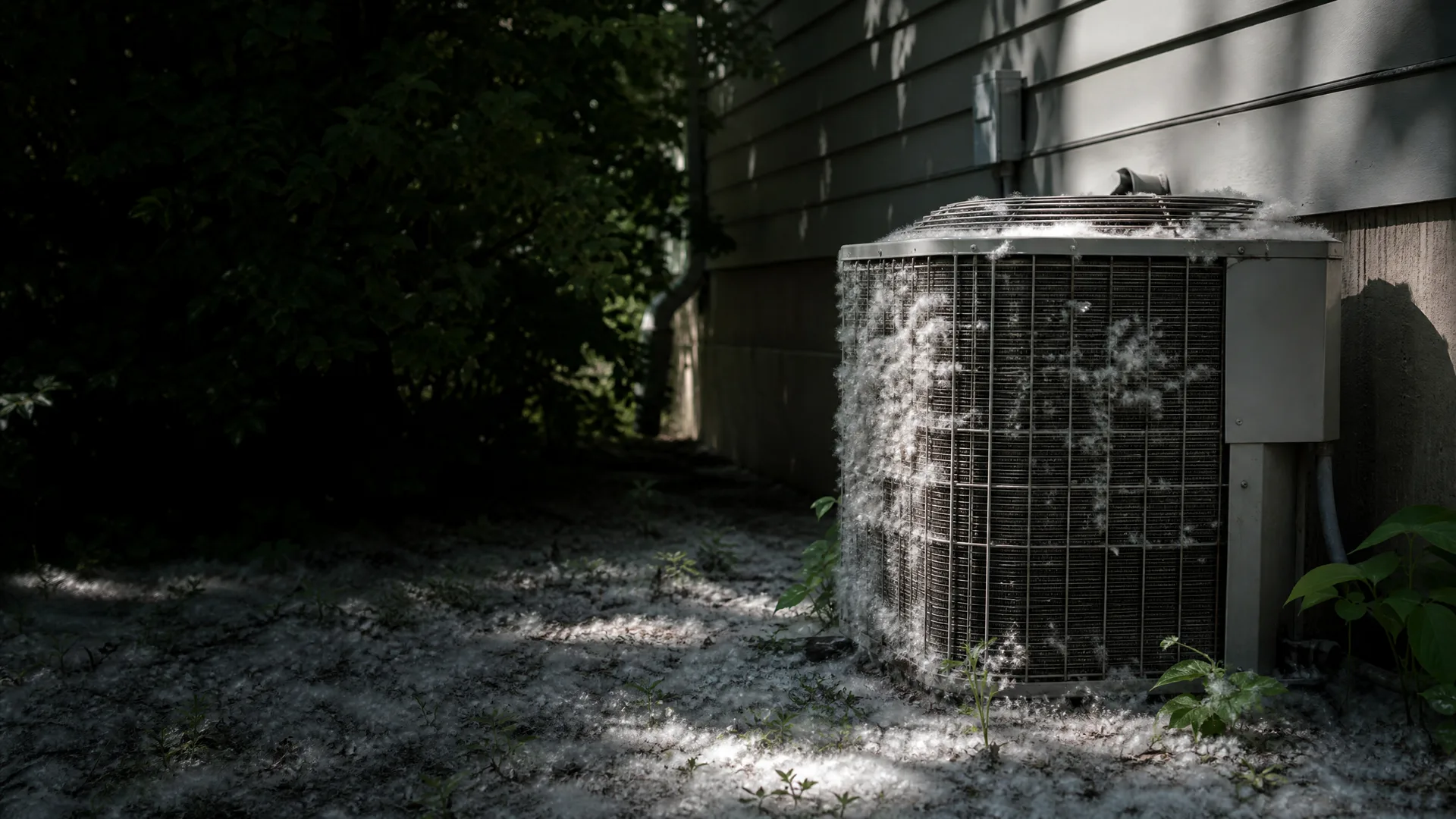
Late May, early afternoon, and the cottonwoods along the ditch behind the house have let go. The fluff drifts across the side yard in loose clumps, catching in the weeds and piling up against anything that sticks out of the ground. Your condenser sits where it always has, humming through the heat, and when you walk past you notice the fins have gone white, matted over like a screen door left unwashed. You crouch down and see the fluff packed in deep between the metal ridges, thick enough that you can't see the coil behind it. The unit is still running. It just sounds like it's working harder to do it.
Power costs 14.85 cents per kilowatt-hour statewide
At 14.85 cents a kilowatt-hour, every extra hour your AC spends fighting pressure it doesn't need shows up on the bill. Closed vents don't lower that rate, they just make the unit run longer against itself to cool the same house.
EIA-861 2025 statewide residential average
Leave the vents open. Your air conditioner was sized and ducted for the house the way it is, every vent moving its share of air, and that's the setup that keeps pressure where it belongs and the coil cold enough to do its job in a dry New Mexico summer. If a room still runs warm, or the system's been cycling long and hard against closed vents for a summer or two, that's worth having a contractor look at directly rather than guessing from the vents. A local contractor who services AC systems through these summers knows what tends to fail first in a system pushed that way, whether it's a coil starting to ice or refrigerant running low, and checking it is quick for someone who does it every season. You'd be handed to one contractor, not a handful, so there's no pile of calls to sort through, just someone who already knows this equipment looking at yours.