
Mini Split Installation in Truth or Consequences, NM
A new system here will heat from October through April and cool from June through September every year. Tell us about the house, and a licensed contractor who covers Sierra County will get in touch.
Tell us about the job
It takes about a minute.
What a mini-split has to handle here in Truth or Consequences
Eleven months out of the year, your mini-split is doing something. Heat from October through April, cooling June through September. Winter nights average 27°F, so the heat pump side needs to keep working down into real cold, not just take the edge off a mild evening. Summer afternoons average 90°F, which is steady, manageable work for the cooling side, not a strain.
A new unit installed today has to meet the federal minimum for split-system heat pumps, 14.3 SEER2 for cooling and 7.5 HSPF2 for heating. That's the floor for any mini-split manufactured from 2023 on, ductless or not. Almost half the homes here still heat with gas, so if you're adding a mini-split rather than replacing one, sizing it for how much of the heating load it needs to carry matters as much as sizing it for the room.
- 7 months
- October through April, your system heats
- 4 months
- June through September, it cools
- 27°F
- the average winter night it heats against
- 90°F
- the average summer afternoon it cools against
NOAA nClimDiv, 1991–2020 normals
New Mexico requires HVAC contractors to hold a state license.
New Mexico issues this license through the Construction Industries Division. It covers the contractor, not the job, so it was tested and put on record before this installation came up, and it stays with them for the next one too.
For this mini-split, that license is what stands behind the person doing the work. The installation will also need a permit from the local building office in most cities and counties, with an inspection once it's done. That inspection is what checks the work itself, separate from the contractor's license.
Source: New Mexico Regulation and Licensing Department
- Is a mini split worth it?
- For most homes here, yes, because you need heat or cooling 11 months of the year and a mini split does both from the same unit. Winter lows average 27°F and summer afternoons run near 90°F, so the system works hard in both directions. A heat pump mini split covers that range without needing a separate furnace and air conditioner. A contractor can size it to your house and confirm what output you need at those temperatures.
- How many rooms can a mini split cover?
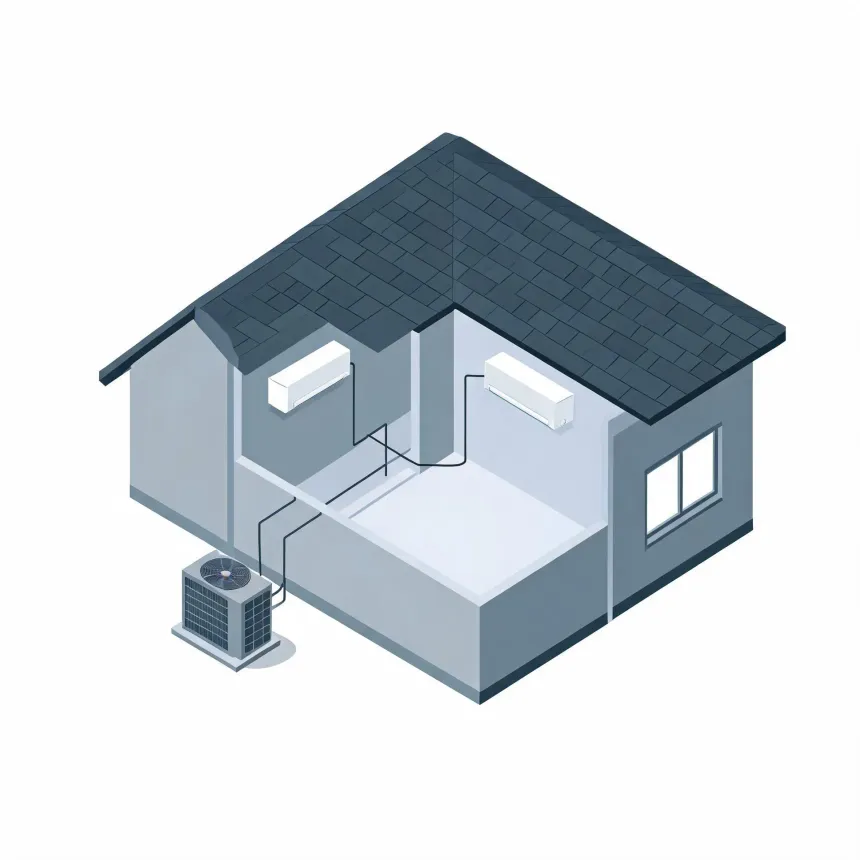
- A single outdoor unit can run one indoor head or several, so coverage depends on how many heads you install, not on the outdoor unit alone. Each indoor head heats and cools the room it's mounted in. A contractor will look at your floor plan and tell you how many zones the house needs.
- Can a mini split heat a whole house?
- Yes, if it's sized and placed for the whole house rather than one room. That means either enough indoor heads to cover every room you want heated, or a layout that lets air move between spaces. With winter lows averaging 27°F here, the heat pump has to be rated to keep working at that temperature, which a contractor will check before recommending a unit.